English Pubs: United Kingdom Guide to Names and Styles
Why so many English pubs are called the Red Lion, the Crown or the Royal Oak, how inn signs evolved, and what the commonest English pub names mean.
On this page
English pub names are mostly a paper trail of loyalty, trade and travel, which is why the Red Lion, the Crown and the Royal Oak turn up in almost every town. Learn to read that trail and a walk down any high street becomes a short course in local history, with the sign doing the talking. This guide unpacks the commonest names, explains how the signs themselves worked, and shows how regional building styles change the look of a pub before you even step inside.
It is not a list of pubs to tick off. Instead it groups names by what they were doing: claiming Royal favour, advertising a trade, marking a religious site or flagging up a coaching stop. If you want the practical side of ordering once you are through the door, our guide to the British pub covers the basics.
Why English pubs have names at all
Before widespread literacy, a painted board or a carved post outside an alehouse did the job a nameplate does today: it told a traveller which building sold drink and which did not. A recognisable image mattered more than the words underneath it, so a Lion, a Crown or a tree could be understood at a glance by someone who could read nothing at all. That is why so many signs are pictures first and lettering second.
Names also distinguished one alehouse from another in a street where several competed, and they gave a landlord something to hand down with the lease. A signboard became a form of branding, repainted when the licensee changed but keeping the same familiar symbol. The result is the layered, sometimes contradictory naming you still see on old buildings, where the carved stone sign and the modern painted board disagree.
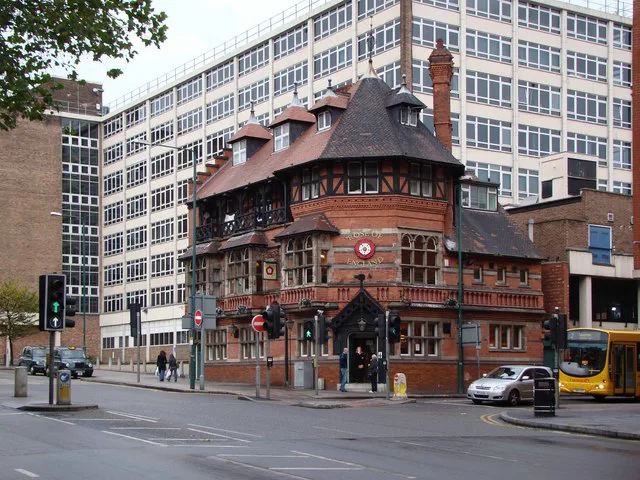
How inn signs worked: painted boards, carved posts and signs hung over the street
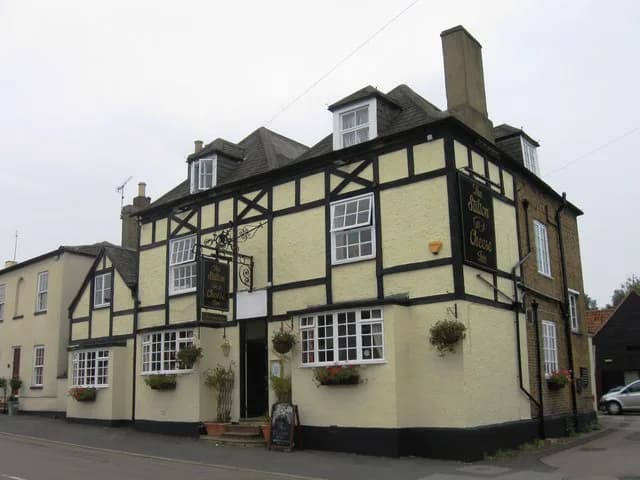
The classic arrangement is a bracket projecting over the pavement with a painted board hanging from it, so the image swings into view along the street rather than sitting flat against the wall. Older or grander inns sometimes used carved wooden or stone posts and painted reliefs instead, which survive better than timber boards and often outlast the business they advertised. Look up rather than straight ahead when you walk: the bracket ironwork is often the oldest thing on the frontage.
Signs were repainted regularly, and not always faithfully, which is why the same name can appear with a red Lion on one pub and a golden one on the next. Brewery names, tied-house marks and later corporate liveries often sit alongside or underneath the traditional image, so a sign can carry three or four layers of ownership history at once. Treat the painting as evidence of taste and fashion at the time it was done, not as a reliable record of the pub's origin.
The sign tradition feeds into everything else about the English pub: the beer, the room and the welcome. Our British Pubs guide is the place to start before you judge a house by its frontage alone.
Royal and heraldic names: the Red Lion, the Crown, the Royal Oak, the White Hart and the King's or Queen's Head
The Red Lion is the most widespread of the heraldic names, drawing on the Lion rampant used in Royal and noble Arms, and it spread as a badge of allegiance as much as a decorative choice. The White Hart follows the same logic, a white stag being a familiar heraldic device associated with particular noble houses and later with Royal hunting forests. Both names say something about whose favour the house wanted to advertise.
The Crown and the King's Head or Queen's Head are even more direct statements of loyalty, and they were renamed as monarchs changed, which is why some pubs carry a name that sits oddly with their carved stonework. The Royal Oak is a different sort of Royal name: it refers to the oak in which Charles II is said to have hidden after the Battle of Worcester, so it became a quietly political badge for royalist landlords. A pub called the Royal Oak is usually making a point, not describing a tree.
Reading these names in situ is easier when you know what the sign is doing. A Crown above the door, a Lion on a bracket and a set of Royal initials carved into a lintel are all part of the same conversation between the house and the Crown. Few of these names carry a documented founding story per pub, so the sign and the stonework are the honest evidence.
Trade and craft names: the Bricklayers Arms, the Carpenters Arms, the Wheatsheaf and the Plough
Trade names did the opposite job to Royal ones: instead of flattering a patron, they told you who drank there. The Bricklayers Arms and the Carpenters Arms suggest a house built for or near a working trade, while the Plough and the Wheatsheaf point to the farming calendar. In a market town or a former industrial district these names function as a small map of the local economy.
The Wheatsheaf is a sheaf of wheat, and it sits comfortably alongside the Plough in arable country where the agricultural year shaped the drinking year. The Bricklayers Arms is more urban, and it often appears in streets that grew up around building work. Neither name guarantees anything about the beer today, but both tell you what the street used to do for a living.
If a name like the Carpenters Arms has survived a century of change, it is worth asking what the building was before it sold beer: a workshop, a house, a coaching stop. The answer usually shows in the ceiling heights and the thickness of the walls. The same instinct for reading a room applies to food, where our guide to pub food sets out what a proper kitchen looks like.
Religious and coaching names: the Cross Keys, the Angel and the coaching inn
The Cross Keys takes its image from the crossed keys of Saint Peter, so it originally marked a religious association or a site near a church, abbey or pilgrimage route. The Angel is a more general heavenly sign, and it often turns up on older streets where a religious house once stood or where a landlord simply wanted a protective image over the door. Both names sit in a long tradition of signs that asked for blessing as well as custom.
Coaching names tell a transport story. Names like the Coach and Horses, the White Horse and the Bell marked a stop where horses were changed, and the building often had a yard, stabling and a wide arch for carriages. When the railways took the coaching trade away, many of these houses became ordinary pubs and hotels, which is why a town-centre pub can still have an unexpectedly large back yard.
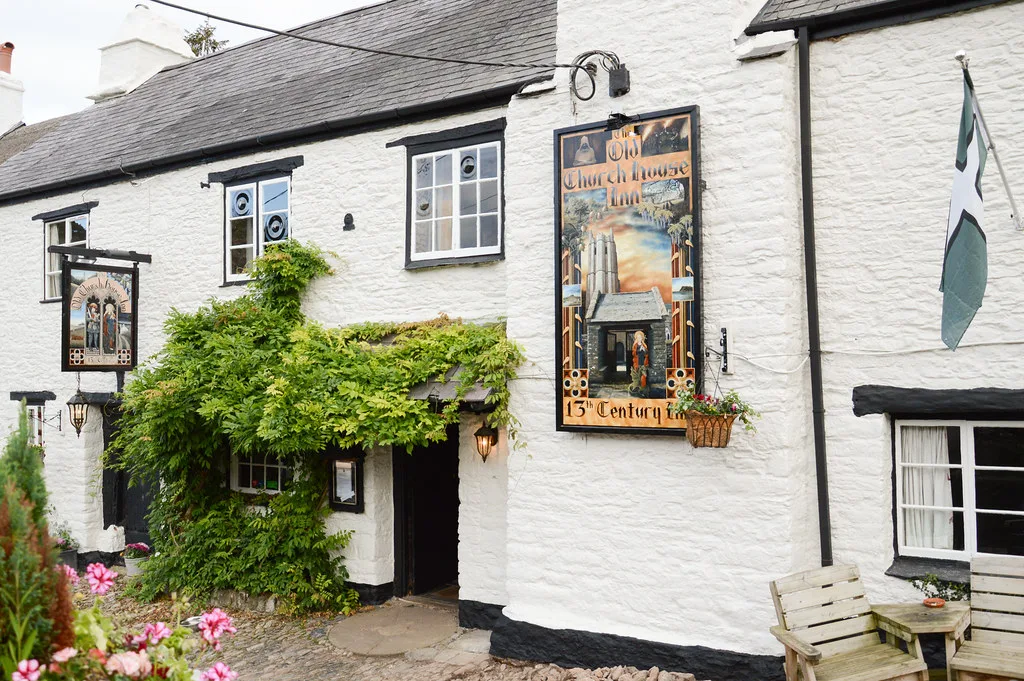
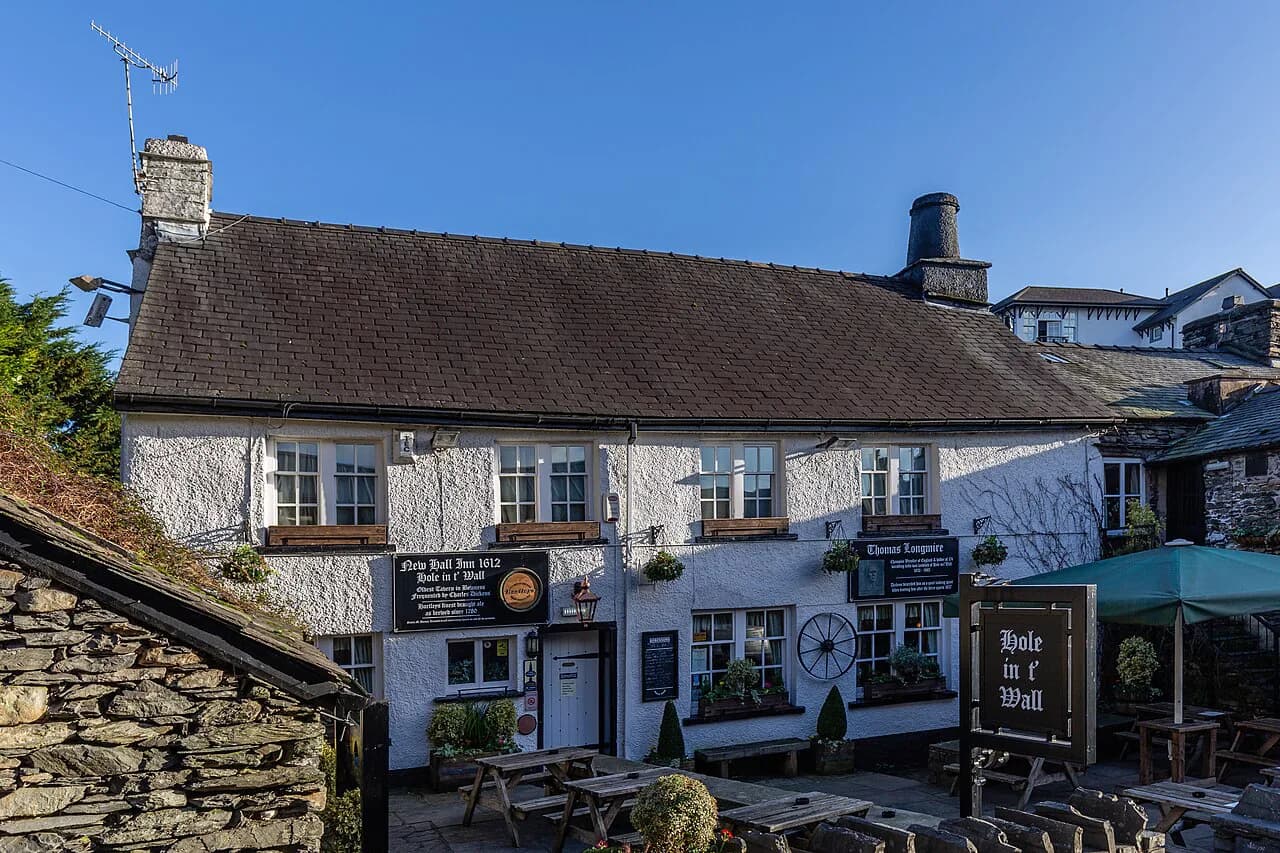
The whitewashed slate look of Lake District and moorland pubs versus red-brick town locals
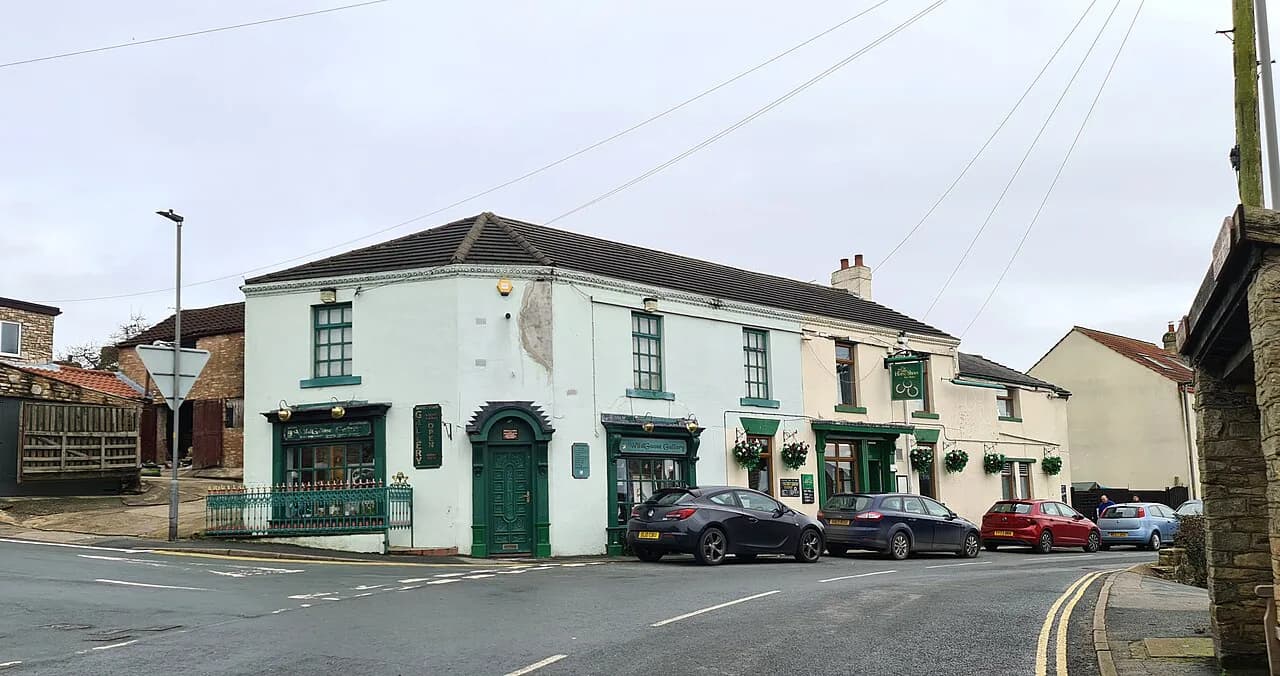
The name is only half the sign; the building tells you where you are. In the Lake District and on the moors, older pubs are often built from local stone and finished in light render or whitewash, so they read as bright shapes against dark hills, and many sit in village centres or alone on the moor. Light finishes are practical as well as picturesque: they protect stonework and help a small building stand out from a distance in poor weather.
Town locals are a different language. Red brick, sash windows, a corner entrance and a tiled frontage are common markers of the Victorian and Edwardian street pub, often built to serve a growing industrial district. A red-brick corner house with a carved name high on the gable is announcing itself to the terraces around it, much as a moorland inn announces itself to the fell. Notice the material first and you can often guess the region before you read the sign.
This is why regional guides reward a bit of looking. Our guide to British beer is a useful companion if you want to match the building to what is on the handpumps, from malt-led bitter to the hop-forward pale ales that revived town-centre pubs.
What to look for on a pub sign today: repainting, brewery marks and which names have thinned out
When you look at a sign, separate the image from the lettering. The picture is often the oldest element, repainted many times, while the words and brewery panel may be much newer additions. Look for a bracket dated on its ironwork, a stone panel with initials, or a name carved into the fascia that no longer matches the painted board. These mismatches are usually the most interesting thing on the frontage.
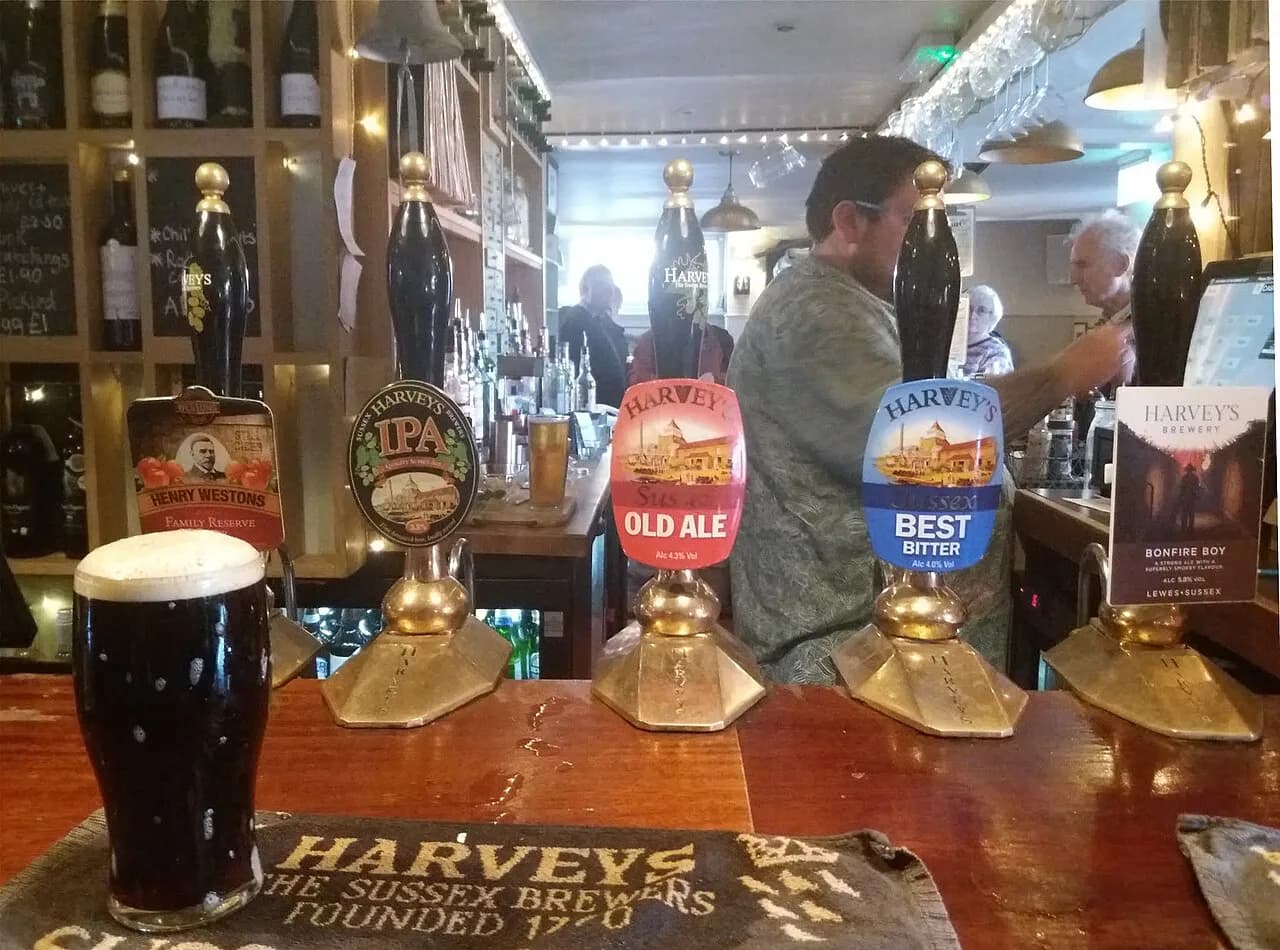
Some names have faded as licensing and ownership consolidated, while heraldic names have proved remarkably durable because they are safe, familiar and easy to repaint. Pub Gallery keeps a browsable photographic record of classic British pubs with notes on their history, design and character, which is a good way to train your eye on sign and frontage styles before you travel. Browse it as a reference, then check a specific pub's own site or social media for current opening details.
Characterful pub interiors worth seeking out, with named examples
The best way to test a name is to walk into a room that still matches it. Pub Gallery's photographic collection includes the Arden Arms in Stockport, the Angel on the Bridge in Henley and the Arch & Abbey in Whitby, each a useful example of a traditional house with a distinctive frontage or interior. Its heritage category gathers pubs whose interiors have changed little since they were built and which it says are listed in CAMRA's National Inventory of Historic Pub Interiors — a useful starting point if you care about original fittings.
Further north, the Pub People Company runs a spread of community pubs, town-centre venues and country food houses across the East Midlands, Yorkshire, Lincolnshire and the Peak District, with menus and booking links on each pub's page. The range is a fair picture of how varied English pubs are: a cask-led village local, a town-centre craft beer house and a destination dining pub can all sit under one operator. Pick by what you want from the visit rather than by the name alone.
For the practical rules of ordering, paying and behaving at the bar, our pub etiquette UK guide is the short version. If you want to dig into what is in the glass, start with real ale and then follow the style you like; cask is still the best test of a traditional house.
Which sign should you follow?
Use the name as a first clue and the building as a second: a whitewashed inn on the moor, a red-brick corner local and a coaching house with a yard are three different afternoons out. Then check the pub's own website or social media for the details that change, because menus, kitchen hours and booking policies move with the seasons. The sign is history; the website is today.
Explore more United Kingdom guides
Frequently Asked Questions
What is the most common pub name in England?
The Red Lion is the name most often cited as the commonest English pub name, followed by other heraldic and Royal names such as the Crown, the White Hart and the Royal Oak. Exact counts shift as pubs close and reopen under new names, so treat any figure you see as a snapshot rather than a fixed fact.
Why is the Royal Oak such a popular pub name?
It refers to the oak tree in which Charles II is said to have hidden after the Battle of Worcester in 1651. Landlords adopted the name as a badge of royalist loyalty, and it stayed popular because it was safe, patriotic and easy to paint on a board.
What does the Cross Keys on a pub sign mean?
The crossed keys are the symbol of Saint Peter, so the name originally marked a religious association, a site near a church or abbey, or a pilgrimage route. Many Cross Keys pubs are old buildings whose location tells you more than the name does.
Do I need to book an English pub?
Most drink-led pubs do not take bookings for a casual pint, but food-led pubs, Sunday lunch and larger groups often do, especially at weekends. Check the individual pub's own page for its booking policy and kitchen times.
Sources
Notes on eating out in the UK
Optional updates when our city guides change.
You might also like
Continue reading
More guides you'll find useful