British Desserts: Classic Puds, Tarts and Bakes Explained
A candid guide to British desserts, from sticky toffee pudding and crumble to trifle, Eton mess and tarts, with what each pud is like and when to order it.
On this page
The classic English dessert most visitors end up ordering is sticky toffee pudding, but the wider British repertoire runs from crumble and trifle to Bakewell tart, Eton mess and steamed suet puddings. This guide explains what each one is made of, how heavy it is, and which ones work best after a big Sunday lunch.
It also untangles the naming, because on a British menu pudding can mean the sweet course itself, a steamed sponge, or almost anything served in a bowl with custard. Read on for the puds worth your appetite, the tarts that travel well, and the seasonal Christmas sweets that only appear at the end of the year.
What counts as a British pudding or dessert, and why the names trip people up
In Britain, pudding does double duty. It is the sweet course at the end of any meal, and it is also a specific family of dishes, usually steamed or baked, such as sticky toffee pudding or bread and butter pudding. When a menu separates puddings from desserts, expect the denser, warmer, custard-friendly dishes under pudding and the colder, fruitier or pastry-based ones under dessert.
The other trap is assuming everything is stodgy. British sweets divide fairly cleanly into warm and heavy, cold and creamy, and baked and portable. Knowing which of those you want makes ordering far easier than reading the description alone, especially when you have already eaten a full plate of English food.
Great British Chefs groups its dessert recipes by type, so its collection runs across crumbles, trifles, tarts and chocolate puds alongside more involved dinner-party desserts.

Sticky toffee pudding: date sponge, toffee sauce and the pub Sunday lunch staple
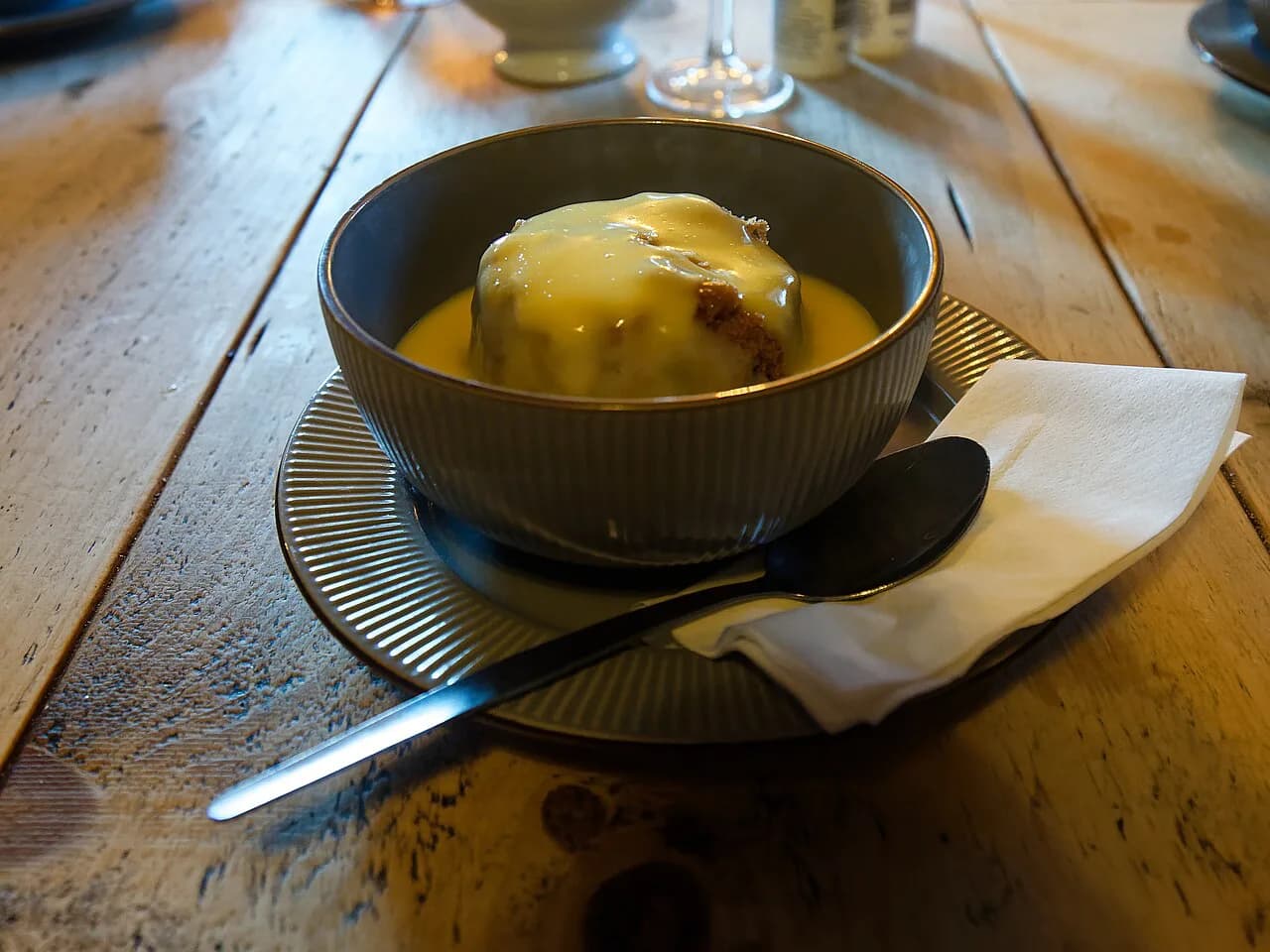
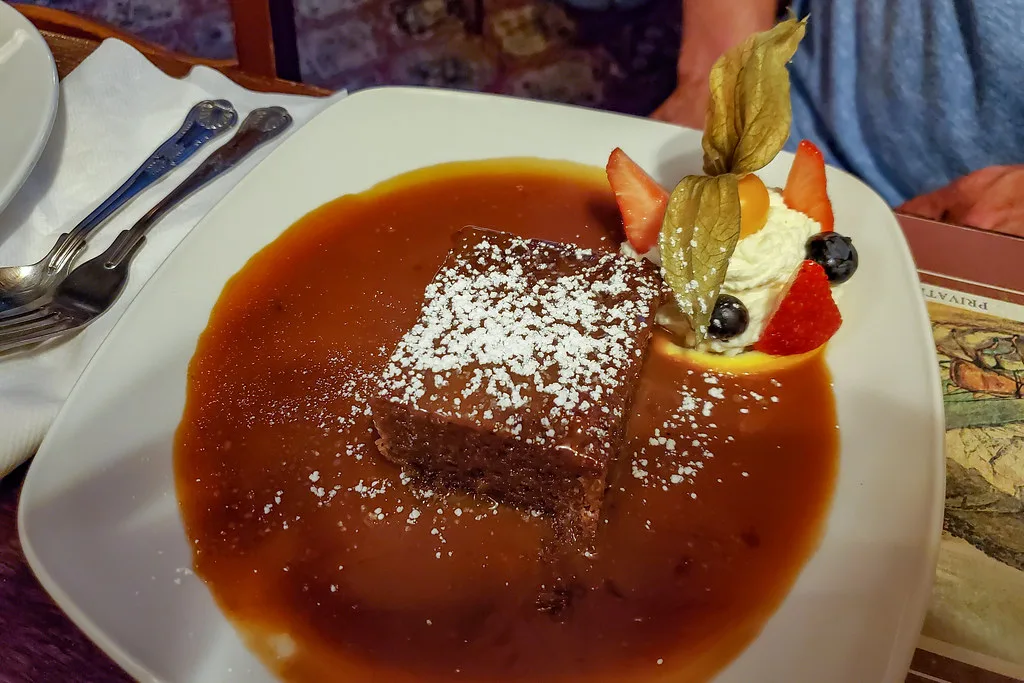
Sticky toffee pudding is a moist sponge made with dates and finished with a warm toffee sauce, and it is the safest bet on any pub pudding menu. The dates do most of the work on texture, keeping the sponge soft rather than crumbly, while the sauce supplies the sweetness. Ask for it warm rather than merely room temperature, and order custard, cream or ice cream depending on how much richness you want.
It is the natural follow-on from a Sunday roast, but it is also a genuinely filling pud, so sharing one between two after a main is often the sensible move. If you have had roast beef and all the trimmings, a single spoonful each is often enough.
Crumble: apple, rhubarb and blackberry versions, and why the topping matters
Crumble is fruit baked under a rubbly layer of flour, butter and sugar, and it lives or dies on the topping. Good versions are crisp on top and slightly chewy at the edges, with fruit that has softened but kept some sharpness. Rubbery topping or fruit cooked to jam is the giveaway that the pud has been sitting under a heat lamp.
Apple is the standard, rhubarb brings a welcome tartness, and blackberry and apple gives you both sweetness and a bit of bite. Rhubarb crumble is the one to pick if you find most British puds too sweet, and it pairs better with custard than with ice cream.
Fruit crumbles of this kind sit comfortably alongside the wider repertoire of baked puddings and pies that British cooking is known for.
Trifle: sponge, fruit, custard and cream, and the arguments about sherry
Trifle is a layered pud of sponge, fruit, custard and whipped cream, usually assembled in a glass bowl so you can see the layers. The classic argument is about sherry: some versions are soaked, others are strictly sober, and a pub trifle is often the teetotal kind. If the alcohol matters to you either way, ask before ordering.
A proper trifle needs time in the fridge so the sponge takes up the fruit juices and the custard sets, which makes it one of the colder, creamier options at the end of a meal. Portion sizes can be generous, and it is one of the easiest puds to share.
Eton mess, fruit fool and syllabub: the cold, creamy end of the menu
Eton mess is a rough mix of strawberries or other soft fruit, broken meringue and cream, and it is the lightest-tasting pud on most menus even though it is not remotely low in calories. Fruit fool is puréed fruit folded through custard or cream, so it is smoother and denser. Syllabub is lighter and frothier still, traditionally made with cream and wine or cider.
These three are the ones to choose when you want something cold and fruit-led after a heavy main, or when it is warm enough that a steamed pud feels like hard work. They are rarely the cheapest option on the menu, but they are the least likely to defeat you.
Spotted dick, jam roly-poly and steamed suet puddings
Spotted dick is a steamed suet pudding dotted with dried fruit, and jam roly-poly is a rolled suet pudding with jam through the middle. Both come out dense, soft and hot, and both are traditionally served with custard. If you have never had a suet pudding, expect something closer to a soft dumpling than to a sponge cake.
These are nursery puds in the best sense: cheap to make, comforting, and unforgiving if they are served dry or lukewarm. Order them where the kitchen clearly cooks to order, and do not attempt one after a large starter, a main and a pint. Steamed puddings are also the most skippable course on the list if you are short of time.
Rice pudding and bread and butter pudding: nursery comfort, done well or badly
Rice pudding is rice slowly cooked in milk until creamy, and bread and butter pudding is layers of buttered bread, custard and often dried fruit baked until the top caramelises. Both are inexpensive, both are heavy, and both are frequently disappointing when pre-made and reheated. Done well, rice pudding has a loose, silky texture and a nutty baked top; done badly, it is glue.
Queen of Puddings is the fancier cousin: a breadcrumb base with jam and a meringue topping, which gives you sweetness and a bit of crunch in one dish. If you want to try one nursery pudding and only one, pick whichever the kitchen makes in-house rather than the one that sounds more interesting.
Baked tarts: Bakewell, treacle, custard and Manchester tart
Baked tarts are the portable end of British desserts, which makes them useful if you want something sweet without committing to a sit-down pudding. Bakewell tart has a pastry base with jam and an almond sponge topping. Treacle tart is set with golden syrup and breadcrumbs, custard tart is a pastry case filled with creamy egg custard, and Manchester tart layers raspberry jam, custard and coconut.
The differences matter when ordering: treacle tart is the sweetest of the four because it is set with golden syrup, while custard tart is the mildest, its filling being set egg custard rather than a syrup or a jam. Bakewell is the one most likely to be sold by the slice to take away.
Yorkshire curd tart and northern specialities worth knowing
The Yorkshire curd tart is a northern bake worth seeking out: a pastry case filled with a curd and egg mixture, often with dried fruit and a hint of spice. It is less sweet than treacle tart and more textured than custard tart, and it is the sort of thing that shows up in bakeries and cafés rather than on chain menus.
Northern England also gives you parkin, a damp ginger cake especially associated with the north, and Chorley cakes and Eccles cakes, which are flat fruit-filled pastries rather than tarts. These are cheap, sturdy and good with a cup of tea at the end of a walk.
Scottish desserts to look out for: clootie dumpling and Dundee cake
Scotland has its own sweet repertoire. Clootie dumpling is a fruit pudding boiled in a Cloth, and Dundee cake is a traditional Scottish fruit cake topped with almonds. Both are denser and less sweet than the average English sponge, and both keep well.
Ecclefechan tart is another Scottish bake, a rich fruit tart that sits somewhere between a mince pie and a treacle tart in character. If you are travelling north, these are the puds that reward ordering something you cannot easily buy at home.
Cakes eaten as pudding: Victoria sponge, Battenberg and parkin
A slice of cake is a perfectly normal British dessert, and Victoria sponge, a light sponge sandwiched with jam and cream, is the benchmark. Battenberg is the checkerboard almond sponge wrapped in marzipan, so you get a firm marzipan edge and a soft, sweet sponge inside. Both are usually lighter than a steamed pudding, which makes them a sensible choice if you still have cheese to come.
Welsh cakes, flat rounds cooked on a griddle and often eaten warm with butter, are the Welsh equivalent of a quick sweet fix, and they sit neatly alongside the country's other food traditions.
Christmas desserts: Christmas pudding, mince pies and when they appear
Christmas pudding is a dark, steamed fruit pudding, traditionally served with brandy and often flamed at the table, while mince pies are small fruit pies associated with the same season. Mince pies tend to appear in shops earlier than Christmas pudding, and both are seasonal rather than year-round. Do not expect to find them in July.
Other seasonal sweets worth knowing include figgy pudding, a traditional steamed pudding often mentioned in carols, and black bun, the Scottish fruit cake wrapped in pastry and eaten at New Year. If you are visiting around the holidays, these are the puds to order once and share.
How to order: sharing a pud, portion sizes and the cost of piling on cream
British puddings are filling, and portions in pubs and cafés are often built for one hungry person rather than two. The practical approach after a Sunday roast is one pud between two, with extra custard or cream on the side rather than piled on top. If you are ordering à la carte, a single tart or a fruit fool is a lighter alternative to a steamed sponge.
Custard is not optional in the way some visitors assume: for crumble, spotted dick, jam roly-poly and Christmas pudding it is the default partner, and ice cream is the alternative rather than the norm. If you want to try a pud properly, take it as the kitchen serves it before deciding you would prefer it with cream.
Menus change with the seasons and kitchens, so the pudding list you read online may not be the one you get on the night, and prices and portion sizes are best confirmed at the table.
Common mistakes: ordering three heavy puds, skipping the custard, misreading 'pudding'
The most common error is ordering a steamed suet pudding, a sticky toffee pudding and a crumble in one sitting. Pick one warm, heavy pud or one cold, fruit-led one, not both. The second error is treating custard as an optional extra when it is the thing that balances the sweetness.
The third is misreading the menu: if pudding appears as a heading, it may just mean the sweet course, so check whether the dishes beneath it are steamed, baked or cold. And do not overlook the humble baked tart if you want something sweet without a sit-down pudding.
Where British desserts fit in a day out
The natural slot for a British pudding is after a Sunday lunch, when the kitchen is turning out crumbles, sponges and custard anyway. A late-afternoon slice of tart or cake with a cup of tea is the other reliable option, and it leaves room for a proper dinner.
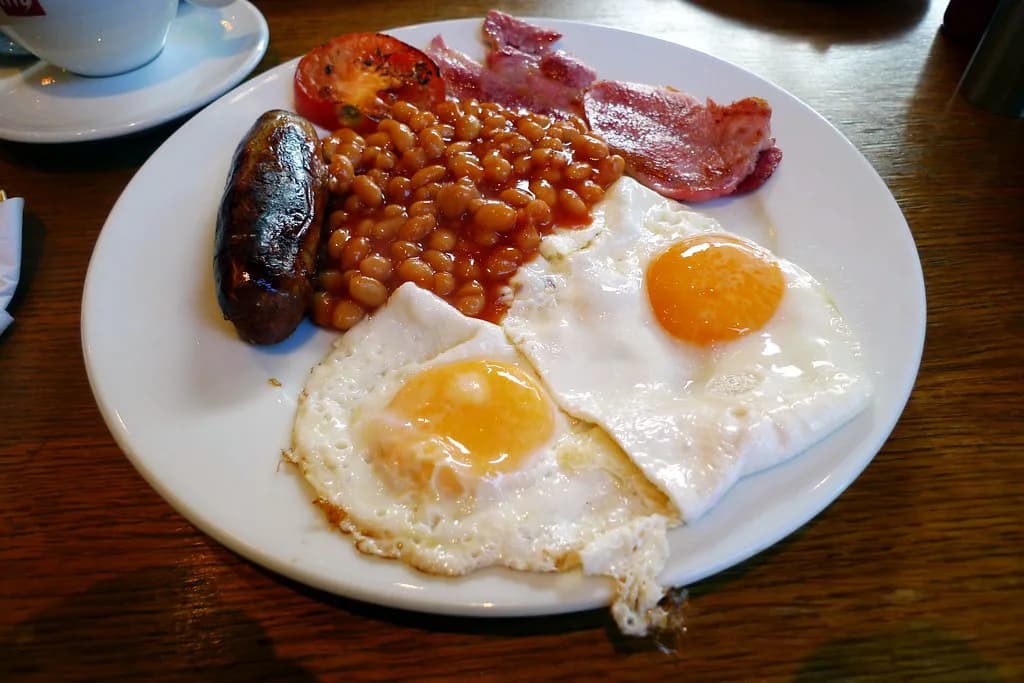
If you are building a food-focused day, keep the sweet course separate from the main event rather than stacking a full English breakfast, a pub lunch and a steamed pudding back to back. A full English breakfast in the morning and a shared pudding in the afternoon is a far more manageable rhythm.
Easy British desserts to make at home
If you want to try one at home, start with Eton mess, a fruit fool or a crumble, because all three tolerate rough assembly and need no steaming equipment. A lemon posset, cream set with lemon and sugar, is another low-effort option. Sticky toffee pudding and suet puddings are the ones to leave to a kitchen that knows what it is doing.
Scottish bakes are a good next project if you fancy something that keeps: a Dundee cake or a black bun will outlast any crumble.
Which British pudding should you order first?
Start with sticky toffee pudding if you want the dish most people mean by a British dessert, or with a fruit fool or Eton mess if you have already eaten a heavy main. Save the steamed suet puddings and Christmas pudding for a day when you have appetite to spare, and share wherever the portion looks generous.
If you are planning the rest of the meal around it, pair the pudding with a Traditional British Food day out, or read up on English Food more broadly, rather than treating the sweet course as an afterthought.
Explore more United Kingdom guides
Frequently Asked Questions
What is a classic English dessert?
Sticky toffee pudding is the one most often named, but crumble, trifle, Eton mess and Bakewell tart are just as classic. Which one you order depends on whether you want something warm and heavy or cold and fruit-led.
What are some popular British Christmas sweets?
Christmas pudding and mince pies are the main ones, with figgy pudding and Scottish black bun appearing around the same time of year. They are seasonal, so expect them in the run-up to Christmas rather than all year.
Do British puddings contain alcohol?
Some do, particularly trifle and Christmas pudding, but many pub versions are made without. If it matters to you, ask before ordering.
Sources
Notes on eating out in the UK
Optional updates when our city guides change.
You might also like


Continue reading
More guides you'll find useful