English Food: The Classic Dishes and What to Order
A practical guide to English food, from Sunday roast and fish and chips to pies, puddings and regional specialities, with what each dish is and how to order it.
On this page
If you have only one meal in England, order a Sunday roast or fish and chips; those two tell you more about the cooking than anything else on a menu. This guide covers the classic dishes, the regional specialities worth a detour and the vocabulary you need to read a pub menu with confidence. Venues are named in our city guides rather than here, so the focus stays on what to order and what to expect.
English food is a pub-and-kitchen tradition rather than a restaurant cuisine: roasts, pies, battered fish, suet puddings and cheese. It overlaps heavily with British cooking, but haggis, cranachan and Welsh rarebit belong to Scotland and Wales, not England, and are flagged as such below. Knowing that distinction stops you ordering something that never appears on an English menu.
What English food actually means
English cooking is regional and seasonal at heart: beef and root vegetables in the north, fish along the coast, orchard fruit and cheese inland. It is also a Magpie tradition, which is why kedgeree, flaked smoked fish with rice, egg and a hint of curry spice, sits alongside steak and kidney pudding without either feeling out of place. The thread running through it is plain cooking done properly, with gravy, pastry and frying doing most of the work.
Treat British as the wider category and English as one part of it. A full English breakfast is exactly that, while an Ulster fry or potato farls belong to Northern Irish cooking, and haggis and cranachan are Scottish. For the wider picture, our guide to Traditional British Food covers the shared dishes and where the national traditions divide.
The dishes to try first if you have one meal
With a single meal to spend, choose between a Sunday roast and fish and chips and let the day decide. A roast is a sit-down, booked-ahead affair that runs into the afternoon; a chippy is quicker, cheaper and easier to fit around a train. Both are best at lunchtime rather than late evening, when kitchens wind down.
If you have two meals, add a full English breakfast and you have covered the three dishes English cooking is judged by. After that, work through pies, sausage and mash, and a savoury pudding. Fish and chips is the one dish to eat near the coast if you can, where the fish has travelled less far.
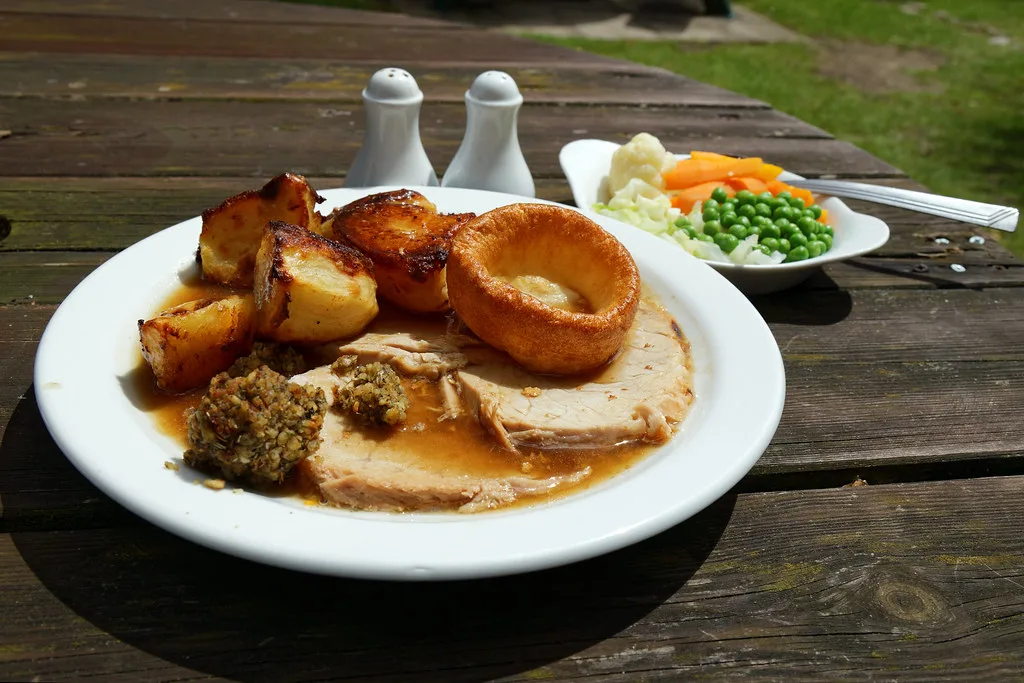
Sunday lunch: what comes on the plate
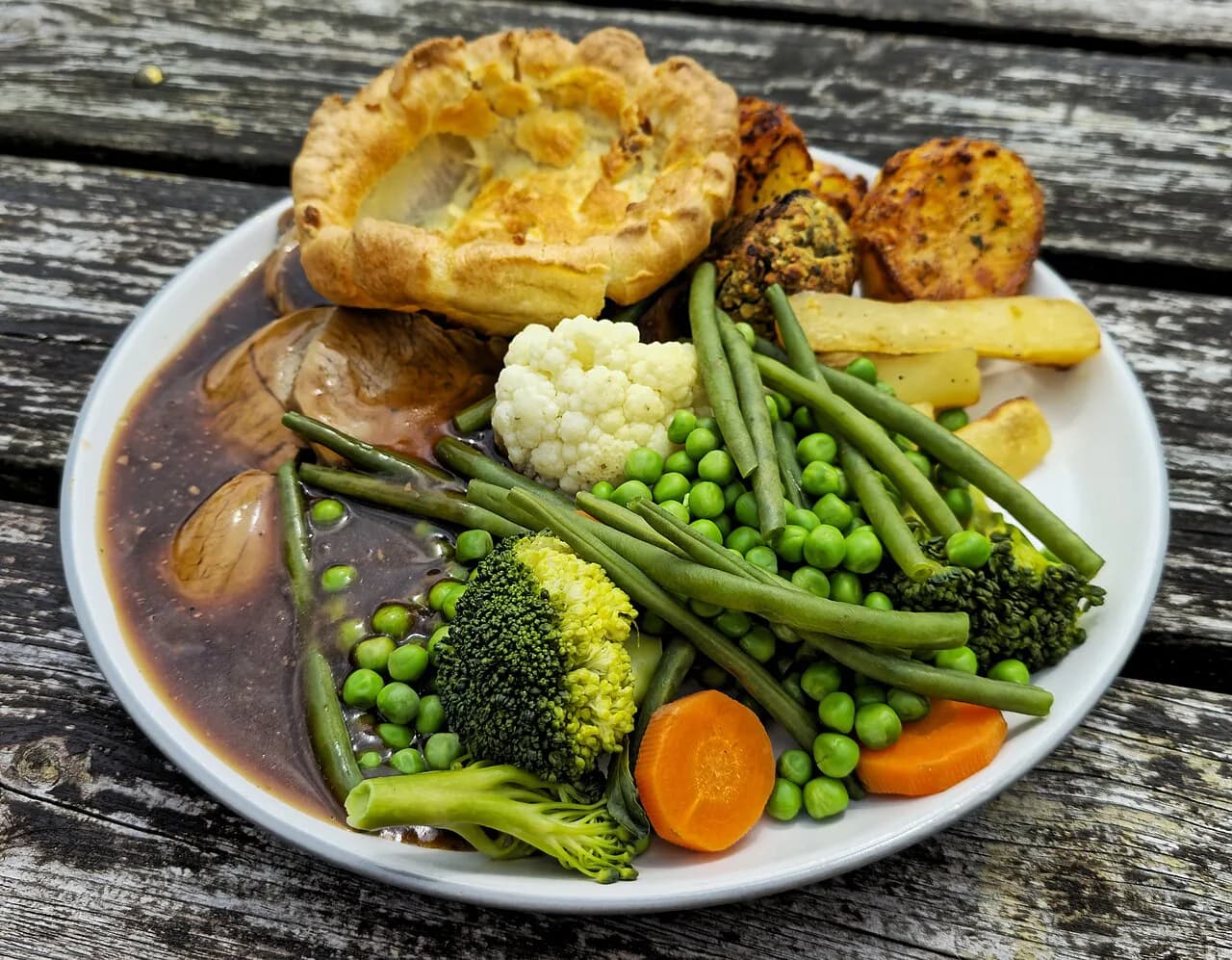
Sunday lunch is a plated roast: meat, potatoes done two ways, vegetables, a Yorkshire pudding if beef is involved, and gravy poured over everything. Yorkshire pudding is a batter of eggs, flour and milk baked in hot fat until it puffs and crisps, and it belongs on the plate rather than as a starter. Roast beef with gravy is the classic pairing.
Timing matters more than most visitors expect. Roasts are cooked to a service window around midday and early afternoon, and popular pubs fill up, so book if you can and arrive early rather than late. Ask whether the kitchen serves roast all afternoon or only until it runs out, because the answer decides your plan. Our Sunday roast guide explains cuts, trimmings and how to judge a good one.
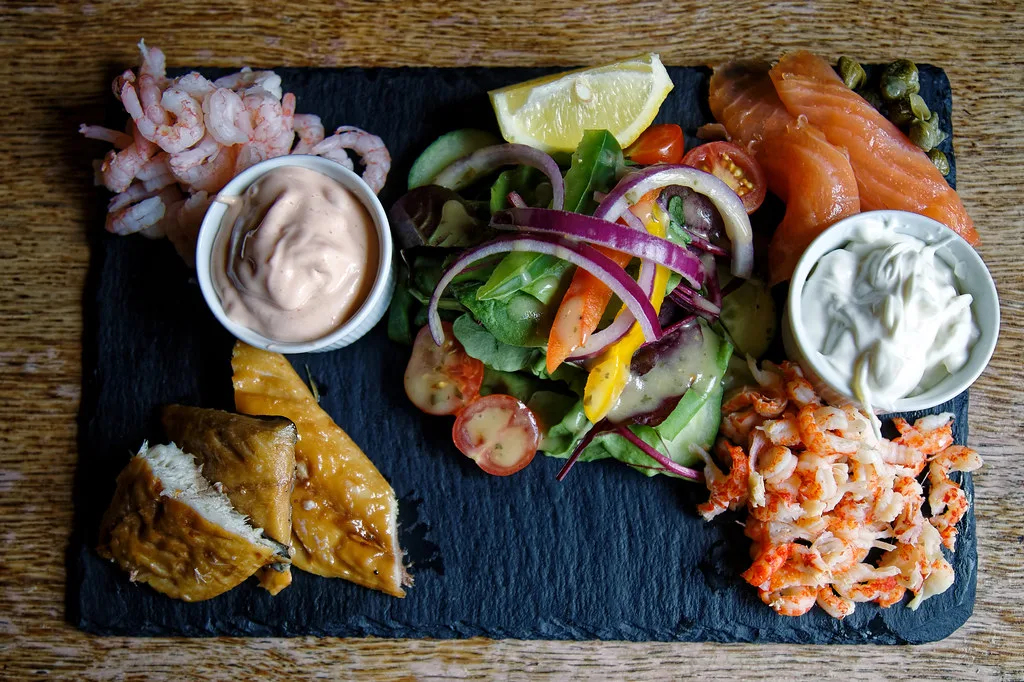
Fish and chips: cod or haddock, batter, chips, mushy peas
Fish and chips means battered white fish, thick-cut chips fried rather than oven-baked, and a pot of mushy peas if you want the full plate. Cod is the default in most of England, haddock is common in the north and east, and both should come in a crisp batter that shatters rather than bends. Mushy peas are dried marrowfat peas cooked soft, and curry sauce is the other classic accompaniment.
Order at the counter if it is a chippy, and expect to wait at peak teatime, when queues build and frying slows. Eat in if the shop has tables and you want the fish at its crispest; takeaway steams in the paper. Prices vary by town and by fish, so check the board for current prices and dates, and our fish and chips guide covers portions and what to look for.
Pies and pastry: pork pie, steak pie and pasty-style bakes
English pies come in two families: hot pies with a filling and gravy, and cold pies such as the pork pie, which is served sliced or whole and eaten by hand. The best-known cold pie is the Melton Mowbray pork pie, a seasoned pork filling in a raised pastry crust. A good hot steak pie has a proper suet or shortcrust lid and gravy that holds together rather than running out.
The Cornish pasty is a related bake, crimped on one side, traditionally filled with diced beef, potato, swede and onion, and it was designed as a portable meal for tin miners. Buy one in Cornwall or Devon if you are passing, and treat a pasty elsewhere as a snack rather than a benchmark.
The breakfast plate: full English components and black pudding
A full English breakfast is a plate, not a sandwich: bacon, sausage, egg, beans, tomato, mushrooms, toast and often black pudding or fried bread. Black pudding is a sausage of pork blood, fat, oats, barley and spices with a soft, crumbly texture, and it is the component visitors either love or leave. Baked beans are the other divider.
Eat it before a long day out, not after, and choose a café or pub that cooks to order rather than a buffet tray that has been sitting under heat. Portions are large, so one between two with extra toast is a fair strategy if you have lunch planned. Our full English breakfast guide breaks down each component and the regional variations.
Pub classics beyond the roast
Bangers and mash is thick pork sausages on mashed potato under onion gravy, and it is the dish to order when you want comfort rather than ceremony. Toad in the hole is the same sausage batter idea baked into a large Yorkshire pudding, and fish pie is a creamy mix of fish under mashed potato. A ploughman's is the cold option: cheese, pickle, bread and something sharp alongside.
These are weekday and evening dishes, and they are where pub cooking is most honest. Ask what is made in-house, because pies and fish pie bought in taste different from those made on site. If the menu is long and laminated, order the simplest thing on it and you will usually do better. The traditional British food guide carries more pub staples.
Savoury puddings and suet dishes
Savoury puddings are the older English kitchen: steak and kidney pudding steamed in a suet crust, and suet pastry used for roly-poly and dumplings. They are heavy, slow-cooked and best in winter or after a walk, and they are worth ordering precisely because few home cooks make them now. Expect a pale, soft crust rather than a crisp one.
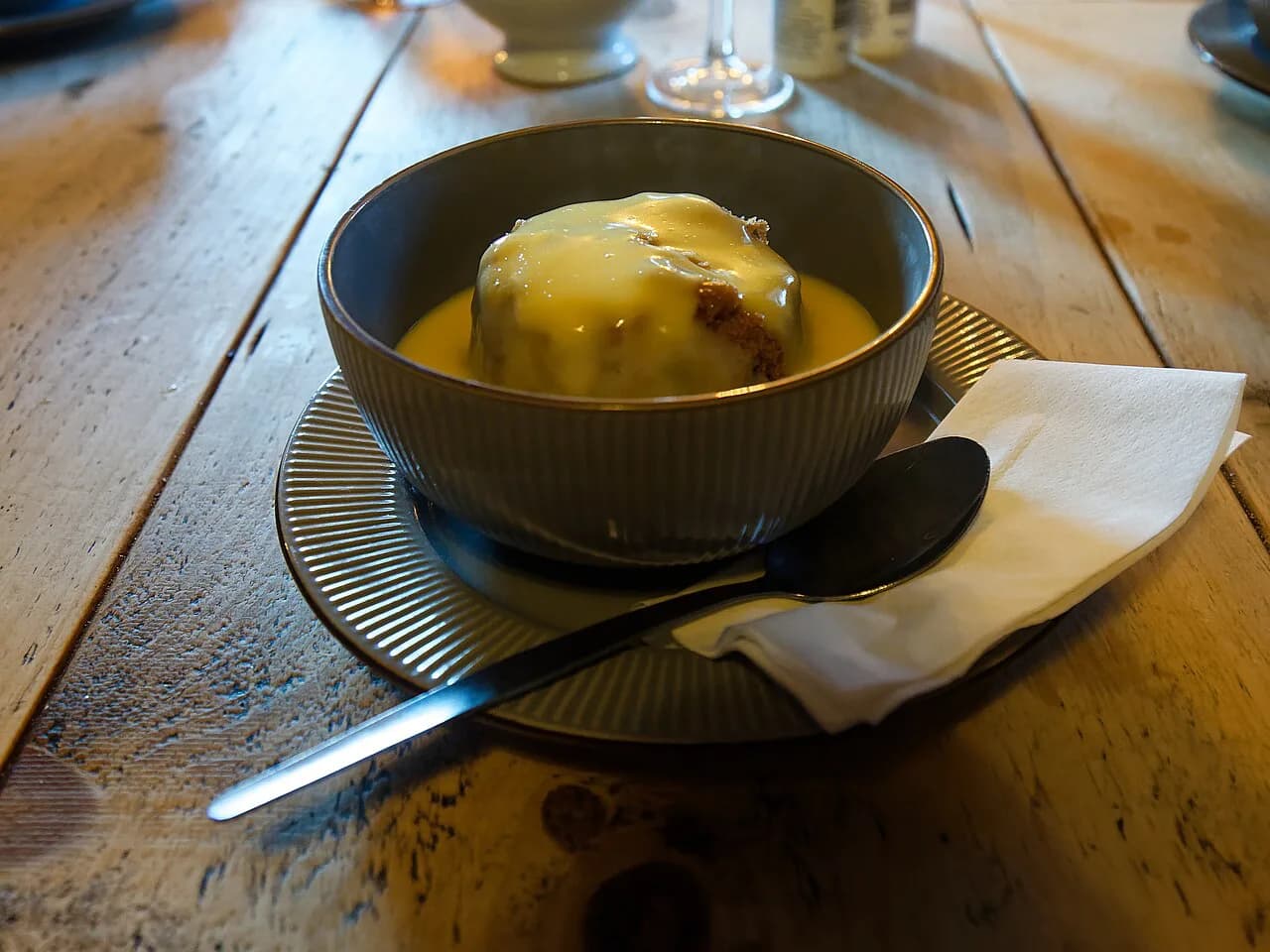
On the sweet side, spotted dick is a steamed suet pudding studded with dried fruit and served with custard or jam. It is not a joke dish, though the name invites one; it is plain, warming and filling. Share it if you have already had a roast.
Regional specialities worth travelling for
The north brings Yorkshire pudding, black pudding and singin' hinnies, griddle scones from Northumberland that sizzle as they cook. Scotland contributes haggis, Cullen skink, a thick soup of smoked haddock, potato and onion from the town of Cullen in Moray, and cranachan, layered cream, oats, raspberries and whisky. The Scottish Borders has rumbledethumps, mashed potato, cabbage and onion baked until crisp on top. These are not English dishes, but they appear on British menus and are worth knowing.
The West Country gives you the Cornish pasty and a strong cheese tradition, while the coast gives potted shrimp, brown shrimp set in spiced butter and eaten on toast. Wales has its own answers: rarebit, laverbread and Welsh cakes, also called pice ar y maen. Our Welsh Food guide covers those, so you can keep the two traditions straight.
Cheese, rarebit and the savoury end of a meal
England makes hard cheeses that hold their own on a board: cheddar from the West Country, Red Leicester and Double Gloucester from the Midlands and west, and blue cheeses such as Stilton. On a pub menu the savoury end of the meal might be Welsh rarebit, cheese melted with ale and mustard on toast, which originated in Wales but is served widely. It is a good light supper when you have eaten well at lunch.
Order cheese at the end instead of pudding if you want to compare regional styles, and ask which are unpasteurised or aged if the list is vague. Our British cheese guide explains the families and what to pair them with.
Puddings and sweet dishes: crumble, custard tart, Eton mess and sticky toffee
English puddings are warm and generous: apple crumble with custard, baked custard tart with nutmeg on top, and sticky toffee pudding with a date sponge and toffee sauce. Eton mess is the cold exception, cream, meringue and strawberries stirred together. Sticky toffee pudding is the one most visitors remember, and it is heavy enough that one between two is often enough.
Ask whether the custard is made with eggs or powder if you care, and expect the crumble to be sweeter than you might be used to. Our British desserts guide covers the wider pudding repertoire, including Scottish cranachan and steamed puddings.
How to order and eat well: portions, timings and children in pubs
Portions are generous, so a starter and a main is usually enough and a pudding is best shared. Pubs often serve food in two sittings, lunch and evening, with a quiet gap in between, so check the kitchen's hours rather than arriving at three o'clock expecting a roast. Sunday lunch is the sitting most likely to need booking.
Children are usually welcome in pubs at lunchtime, but some restrict them in the evening, so check when you book rather than on arrival. Payment is normally by card, though small chippies and cafés can be cash-only, and service charges vary. Ask about allergens at the bar, because menus change with the seasons.
Where these dishes fit in the city guides
Use the city guides to turn this list into a plan: each one names the pubs, chippies and cafés worth your time and says what each is good for. Liverpool, York, Newcastle and Leeds are strong for pub classics, while coastal towns suit fish and chips. Pick the venue by the dish you want, not the other way round, and book the roast first because it is the hardest table to get.
If you want a single reference for the wider cuisine before you choose a city, start with the British food to try guide, which sets out the dishes most worth seeking out. Then match the dish to the town you are visiting, and keep one meal free for whatever the local speciality turns out to be.
Roast or chippy: which to book first
Book the Sunday roast first if your trip includes a Sunday, because it is the one meal that needs a table and a time. If your days are full, plan a chippy tea instead, eaten in rather than taken away, and add a full English breakfast on the morning you leave. That combination gives you the three dishes English cooking is judged by without any wasted meals.
Beyond those, follow the region: pastry and cheese in the West Country, black pudding and batter in the north, fish on the coast. Check the kitchen's serving hours and whether children are allowed before you set out, and let the city guide pick the venue once the dish is decided.
Frequently Asked Questions
What is a typical English dinner?
In pubs, the typical evening meal is bangers and mash, fish and chips, a pie or fish pie, often followed by a pudding such as crumble or sticky toffee pudding. At home, it might be a simple meat and two veg. If you want one dinner that shows the tradition, order a pie with chips or mash and a pudding to share.
Is black pudding actually made with blood?
Yes. Black pudding is a sausage made with pork blood, fat, oats, barley and spices, which gives it a dark colour and a soft, crumbly texture. It is usually served sliced and fried as part of a full English breakfast, and it is the component visitors most often leave on the plate. Try a slice before deciding.
What is the difference between a pasty and a pie?
A pasty is a hand-held bake with the filling sealed inside and a crimped edge, traditionally beef, potato, swede and onion. A pie is baked in a dish or a raised crust and often served hot with gravy. Both are pastry, but the pasty is designed to be carried and eaten without cutlery.
Do English pubs serve food all day?
Usually not. Many pubs serve lunch and then reopen for evening service, with a quiet gap in the afternoon, and Sunday lunch runs to a fixed window rather than all day. Check the kitchen hours before you travel across town, and book if you want a roast. Small cafés and chippies keep their own hours.
Sources
Notes on eating out in the UK
Optional updates when our city guides change.
You might also like
Continue reading
More guides you'll find useful