Welsh Food: Traditional Dishes and What to Try First
A plain guide to traditional Welsh food, from cawl and Welsh rarebit to bara brith, laverbread and Welsh cakes, with what each dish is and how it is served.
On this page
Start with cawl if you want the dish most often called Wales's national one, then Welsh rarebit, bara brith and Welsh cakes. Those four cover the broth, the savoury, the loaf and the sweet, and they are the ones that turn up again and again on Welsh menus. This guide takes each in turn, explains what it is made from and how it is served, and groups the rest by what you are choosing: a starter, a main, something sweet or something to drink.
It is a short canon rather than a long one, and that helps when you are deciding what to order. Several dishes have strong regional roots, from Glamorgan sausages to the bakestone cakes of south Wales, so the menu in front of you says something about where the kitchen is looking. Where a dish has a contested history, this guide says so rather than settling it.
What counts as Welsh food: the dishes that come up again and again
The core list is cawl, Welsh rarebit, bara brith, laverbread, Welsh cakes and Glamorgan sausages, with Welsh lamb and Welsh beef carrying the main-course side of things. Welsh cheese turns up on cheeseboards and in cooked dishes. If you only remember five names, remember cawl, rarebit, bara brith, laverbread and Welsh cakes.
Naming a single national dish is a mug's game. Cawl is the most commonly cited contender, but rarebit has its champions and Welsh cakes are the thing most visitors actually eat first, so treat any claim that one dish is officially the national food of Wales with suspicion. These are home dishes that migrated onto pub and café menus, which is why quality varies so much from one kitchen to the next.
For context, the wider picture of traditional British food runs from the roast dinner to the chippy tea, and Wales sits inside that story rather than apart from it. A good menu is short, seasonal and built on bread, cheese, lamb and root vegetables, which is much the same test you would apply in England.
Cawl: the broth that anchors a Welsh table
Cawl is a lamb and vegetable broth, and it is a meal rather than a starter in most homes: lamb, root vegetables and leeks cooked slowly, then eaten with bread and often cheese. The dish is built around what was available in winter, which is why swede, carrot and potato do most of the work alongside the meat. Order it in a pub and you will usually get a deep bowl with bread on the side, sometimes with a wedge of cheese to finish.
Recipes vary from coast to coast, and the arguments are about method as much as ingredients. Some versions brown the meat first, others drop it in raw; some add leeks at the end for a fresher flavour, others cook everything down to a single note. The one decision that matters is how long you give it: an hour produces a decent soup, two hours produces cawl.
Welsh rarebit: cheese on toast done properly
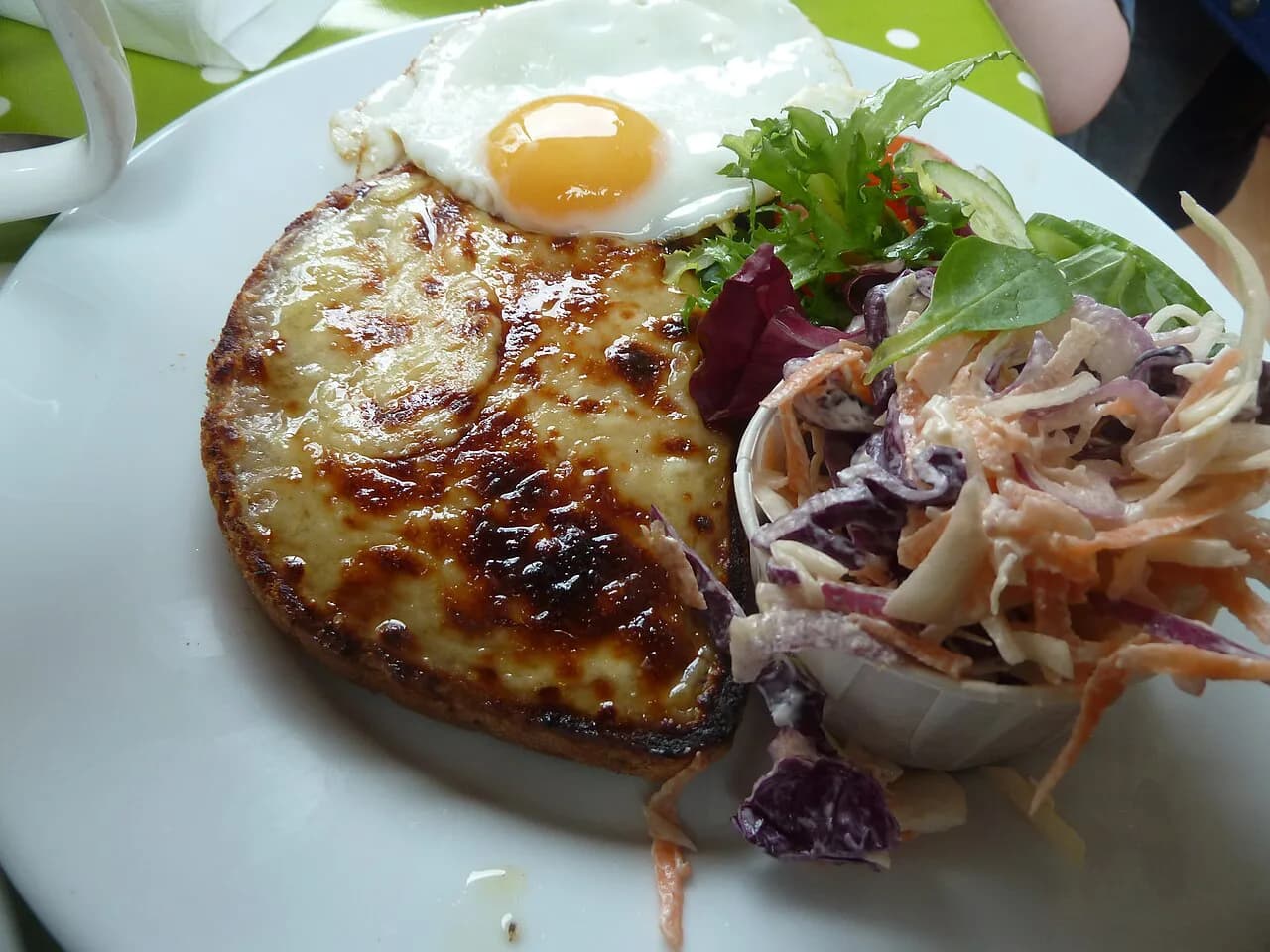
Rarebit is a savoury for the end of a meal as often as a lunch dish: cheese melted with butter, mustard and ale or milk, spooned onto thick toast and grilled until it blisters. A toastie is cheese between bread; rarebit is a savoury sauce on top of it, and the ale or mustard gives the dish its edge. Done badly it is a greasy mess; done well it is one of the best cheap suppers in Britain.
Watch how it is served. A pub that offers rarebit as a starter or a light main is telling you the kitchen can handle a sauce, which is usually a good sign. Some versions arrive with a poached egg on top, some with a slice of ham underneath, and it is the natural first Welsh dish for a sceptic.
If cheese is your interest, the wider British cheese map is a sensible next step, and Welsh cheese fits into it comfortably alongside the better-known English names. Look for a menu that names the farm or the county rather than just the style.
Bara brith: the fruit loaf, when it is eaten and how it is served
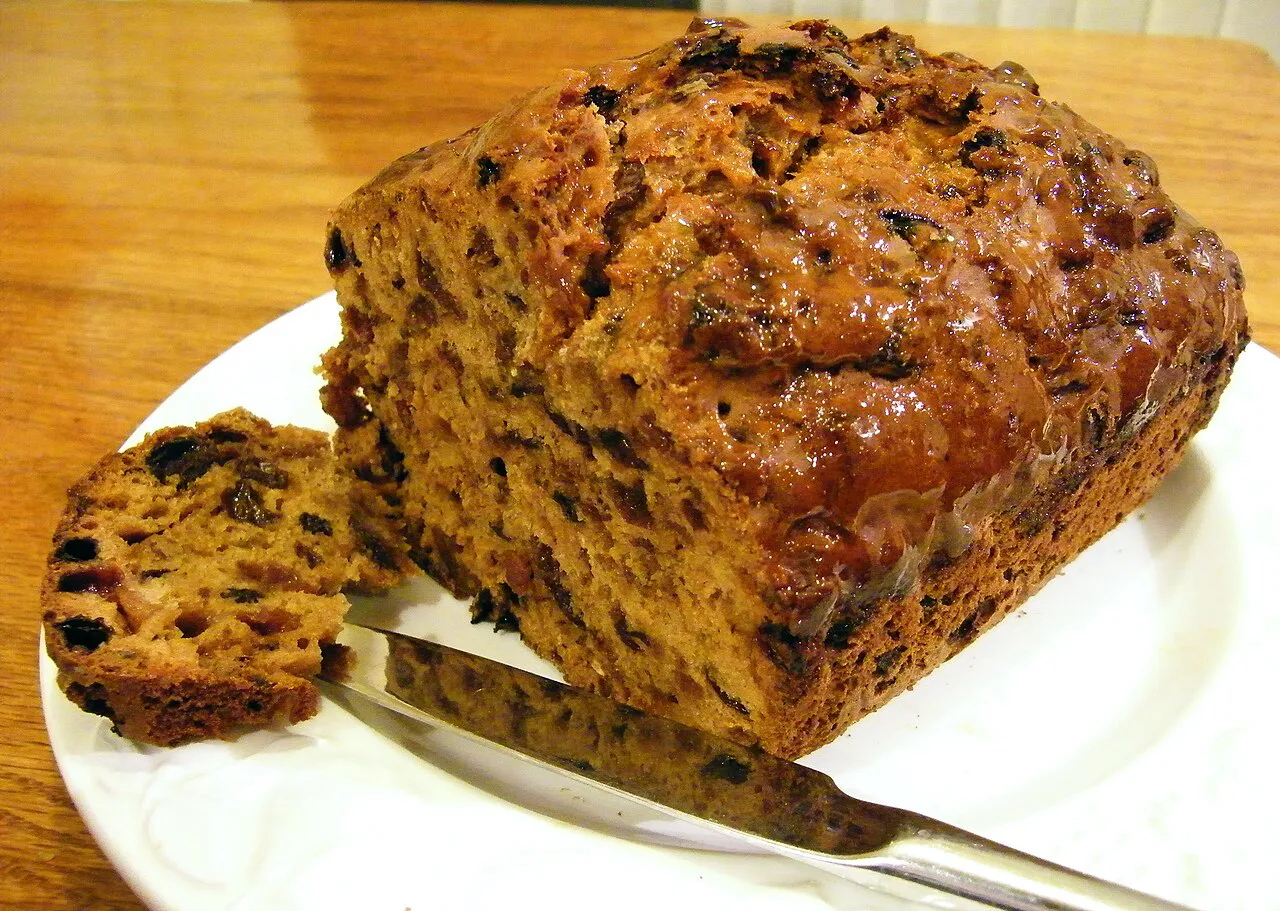
Bara brith is a dense fruit loaf made with tea-soaked dried fruit, and it is the Welsh answer to a malt loaf or a tea bread. It is sliced thickly, spread with butter if you like, and eaten at any time of day rather than saved for one particular occasion. You will see it on café counters and at breakfast tables, and it keeps well.
The tea-soaking is the part worth knowing about: it plumps the fruit and gives the crumb its colour without needing much extra sugar. Some versions add mixed spice, some are plainer, and both are legitimate. It is a good thing to order if you are unsure about laverbread, because there is no risk in it at all.
Laverbread: what it is, and the classic ways it is cooked
Laverbread is not bread. It is a seaweed, boiled down to a dark green paste and traditionally sold in that form, then fried in bacon fat or rolled in oatmeal and fried, and served at breakfast alongside bacon and eggs. The texture is soft and the flavour is savoury and marine, which is why it divides people sharply. It is a Welsh coastal staple rather than an all-Wales one, and the dish most likely to be the highlight or the thing you leave on the plate.
Be honest about your own tolerance before ordering it as a main. The classic serving is a small portion as part of a cooked breakfast, which is the low-risk way to try it, and it works best with something salty and fatty alongside. If you like oysters and seaweed salads, order it with confidence; if you do not, take it as a side.
Welsh cakes: bakestone bakes, warm from the griddle
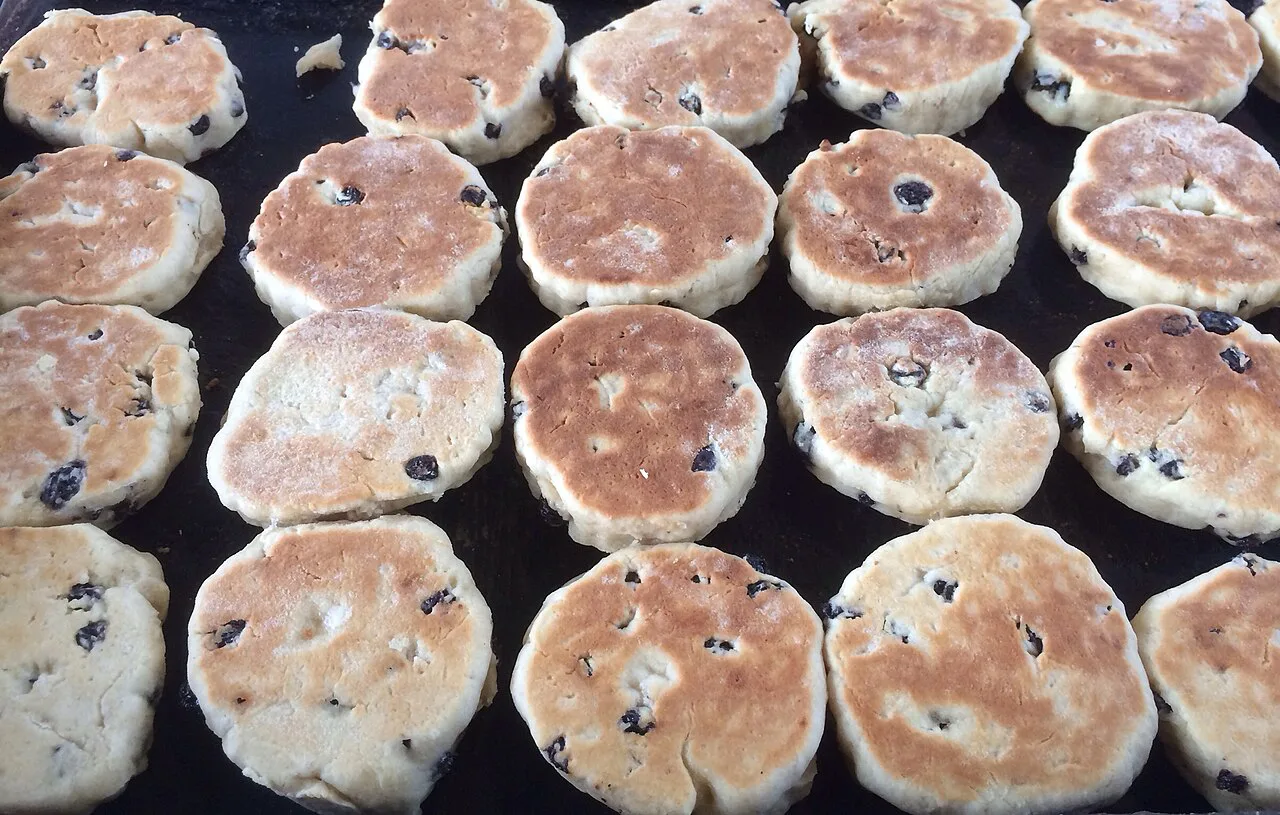
Welsh cakes, or pice ar y maen, are small round cakes cooked on a bakestone rather than baked in an oven. According to Amgueddfa Cymru, as cited in the British Food History recipe notes, they originated in the second half of the 19th century in Glamorgan, South Wales, which places them well after the oat-based baking that came before white wheat flour was widely available. They sit somewhere between a rich pastry and a scone, a description borrowed from the same source, and Jane Grigson's line that they are the most delicious of all the girdle cakes is quoted there too. They are made with flour, fat, sugar and dried fruit, and they are at their best warm.
The method in that source is not a universal rule but it is a good guide: a soft dough rolled to about 6mm, cut into rounds, and cooked for 4 to 5 minutes a side on a bakestone or griddle heated slowly to a moderate temperature. The same notes recommend half butter and half lard for a shorter, more tender crumb, and warn against rushing the heat. They keep for several days in a tin, but they are a different thing entirely eaten warm from the griddle.
They are close relatives of singin' hinnies, the Northumbrian griddle cakes, and the resemblance has led to speculation about shared mining-country habits rather than any documented link. The Welsh version is sweeter and fruitier, the Northumbrian one plainer and often richer with fat. The same tradition of stodgy, thrifty puddings carries through British desserts.
Welsh lamb and Welsh beef: what to look for on a menu
Welsh lamb is the dish most likely to be the centrepiece of a good Welsh menu, typically roasted or served as a slow-cooked shoulder. Welsh beef appears in much the same places, and both are hill-country produce rather than feedlot meat. The practical test is whether the menu names the breed, the farm or the county; if it does, the kitchen is treating the meat as the point of the dish rather than as a vehicle for sauce.
Salt marsh lamb from the coast is a related and worthwhile thing to seek out, with a sweeter, more savoury flavour that comes from grazing on tidal grass. It is a seasonal pleasure rather than an all-year menu fixture, so treat it as a bonus rather than an expectation. Roast is the classic treatment, and if you are in a pub on a Sunday, the lamb is usually the safer bet than the beef.
The Sunday roast is the shared British frame for this kind of cooking, and Welsh pubs do it much like English ones, with lamb often the best local choice on the board. Look for pink meat, proper gravy and a Yorkshire pudding made from batter rather than bought in. For the wider picture, the traditional British food guide and the English Food guide cover the roast and the rest of the canon.
Cheese and other Welsh produce worth knowing about
Welsh cheese has grown well beyond the single cheddar-style block, with farmhouse producers making hard, soft and blue cheeses across the country. On a menu or a deli counter, look for named cheeses rather than generic ones, and ask for a taste before buying; most counters will oblige. Caerphilly is the best-known Welsh cheese name and its crumbly, salty style suits a ploughman's plate or a rarebit better than a creamy cheese would.
Beyond cheese, look for cockles from the Gower and laverbread from the same coastline, both of which turn up in cooked breakfasts and small plates. Welsh cooking leans on what the coast and the hills provide, and the best menus are the ones that say so plainly.
Savoury bakes and snacks: Glamorgan sausages and what they are made from
Glamorgan sausages, or selsig Sir Forgannwg, are not sausages in the meat sense: they are a vegetarian mixture of cheese, breadcrumbs and leeks, shaped and fried, and served with salad or chutney. They are a Welsh classic of the meat-free kind and they predate modern vegetarian menus by a long way. The best versions are crisp outside and soft within, with a strong leek flavour; the worst are dry, bready and bland.
They are a good option when you want something savoury with a drink rather than a full meal, and the flavour is essentially cheese and onion with a sharp leek note, so there are no surprises in it. They belong in the same category as the pie and the pasty: a portable, thrifty savoury, as the British food to try guide sets out.
Puddings and sweet dishes beyond bara brith and Welsh cakes
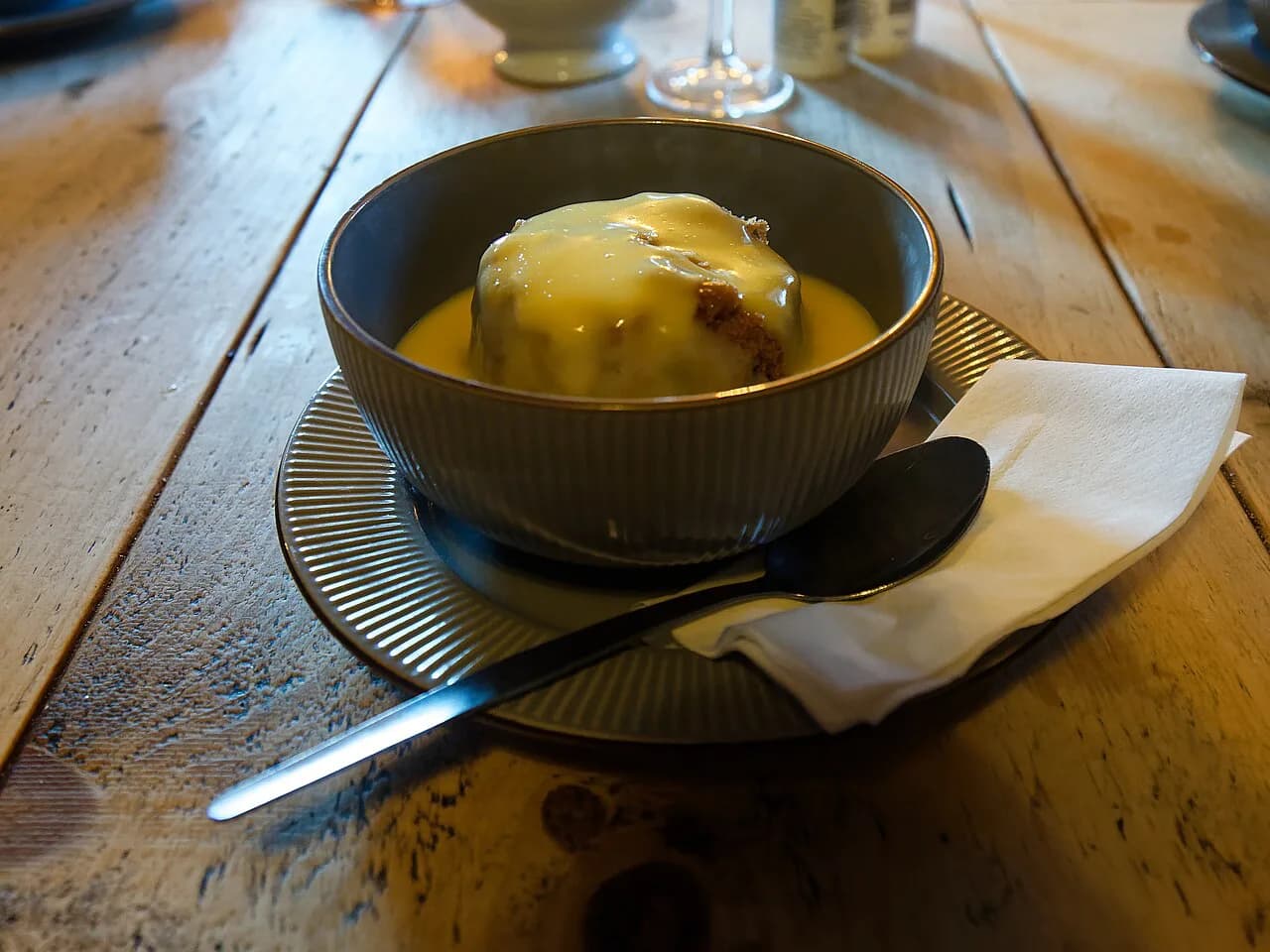
Welsh puddings follow the British pattern of thrifty, stodgy and warming, built on flour, suet, dried fruit and treacle where those are to hand. You will find variations on fruit crumble and steamed puddings, often served with custard or cream rather than ice cream. Welsh cakes and bara brith are the most distinctive names, but a good steamed pud with custard is worth leaving room for.
Dessert is where a lot of British cooking still shows its roots, and a menu that lists its puddings plainly, with no foam and no coulis, is usually the one to trust on the sweet course. Order one instead of a third course rather than as well as.
What Wales is known for drinking alongside the food
Beer is the everyday drink with these dishes, and Wales has a healthy spread of small breweries alongside the farmhouse cider tradition, which suits lamb and cheese well. A bitter or a dark mild is the pub-standard partner for cawl and rarebit, and a proper cider works surprisingly well with the cheese-based dishes. Wine has its fans and Welsh vineyards exist, but it is not the drink most people reach for with this food.
There is no single national drink, though the brewing scene is worth asking about. Ask what is made locally where you happen to be, since the answer changes by county and even by pub.
Where to start if you have one meal in Wales
With one meal, order cawl to start if it is on, Welsh rarebit or Glamorgan sausages as a lighter main, and finish with Welsh cakes or bara brith. That combination covers the broth, the cheese, the vegetable savoury and the bakestone tradition in a single sitting without asking you to stomach laverbread before you know you like it. If lamb is the centrepiece, order it instead of the rarebit and keep the cake for afterwards.
Menus change with the season, so ask the kitchen what is local while you are standing there. These dishes are home cooking first and restaurant food second, which means a plain-looking pub often does them better than a self-consciously modern one.
Cawl, rarebit or the lamb: what to order first
Order cawl first if you have never eaten Welsh food, because it is the most complete expression of the tradition and the least likely to disappoint. Move to rarebit, Glamorgan sausages and Welsh cakes next, and treat laverbread as an optional experiment for a second visit rather than a test you must pass. Lamb and beef are the choice when you want a proper Sunday lunch, and cheese is the thread that runs through most of it.
The food here rewards plain cooking and named produce over invention, so choose the pub or café that tells you where its lamb came from and serves its cakes warm rather than the one with the longest menu. That is the whole method. If you want the same approach applied elsewhere in Britain, the traditional British food guide is the sensible next read.
Explore more United Kingdom guides
Sources
Notes on eating out in the UK
Optional updates when our city guides change.
You might also like
Continue reading
More guides you'll find useful