Full English Breakfast: United Kingdom Guide to Ordering
What makes a proper full English breakfast, how it differs from a full Scottish or full Irish, whether it's healthy, and how to spot a lazy fry-up when you order.
On this page
A full English breakfast is a hot fried plate eaten as a main meal, not a starter, and the version worth paying for is cooked to order rather than held warm. This guide covers what belongs on the plate, the arguments that actually change your breakfast, how the Scottish and Irish versions differ, and how to order one without getting a lazy fry-up.
It is a working breakfast, built for a day on your feet, so the useful questions are practical: what the sausage is made from, whether the black pudding comes as standard, and what counts as an extra. Get those right and you can judge a café from the menu before you sit down.
What goes on a full English breakfast
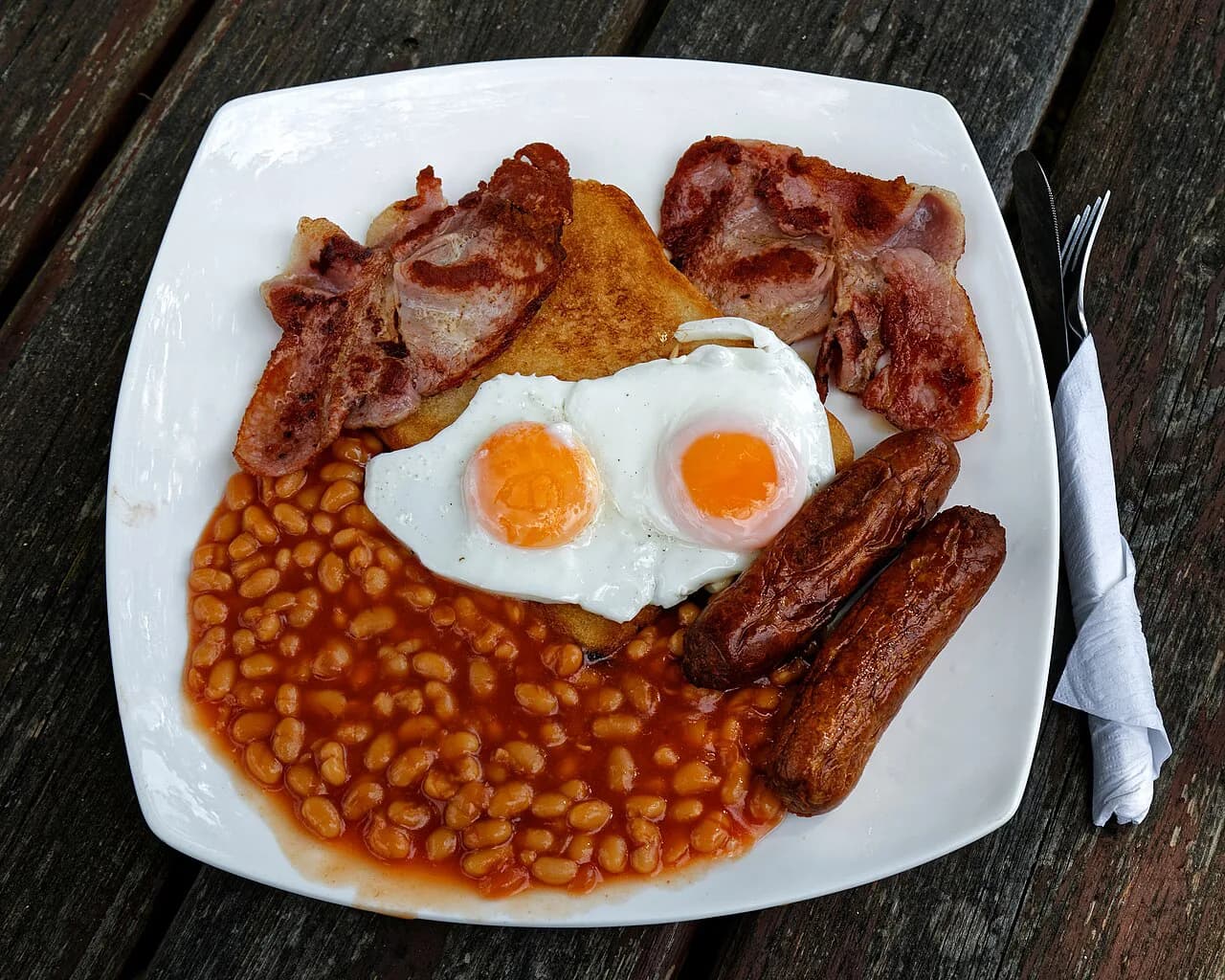
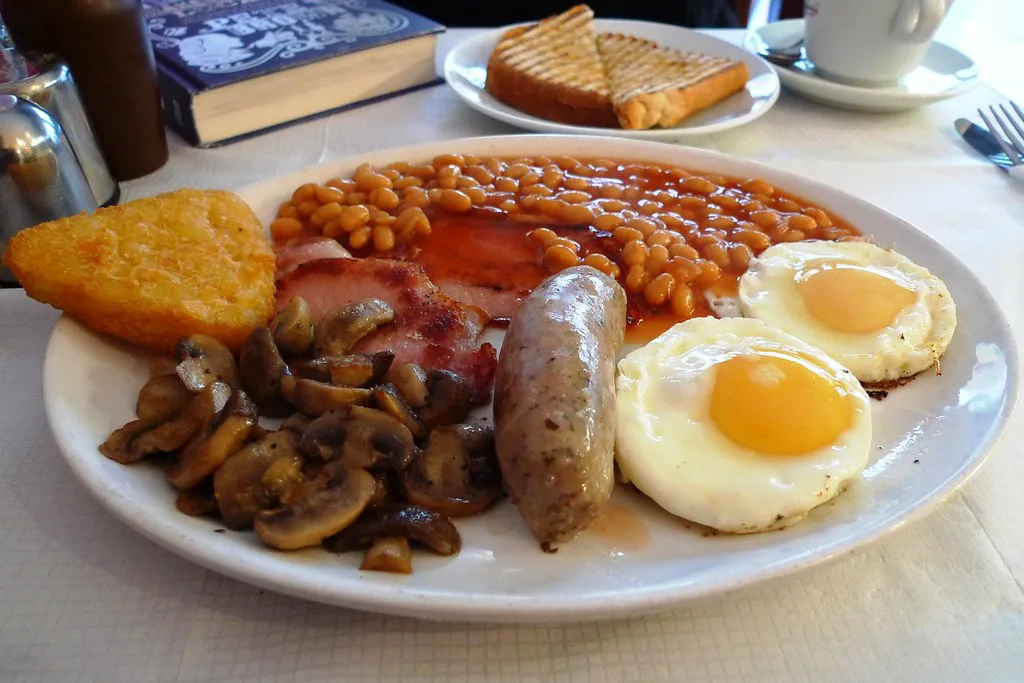
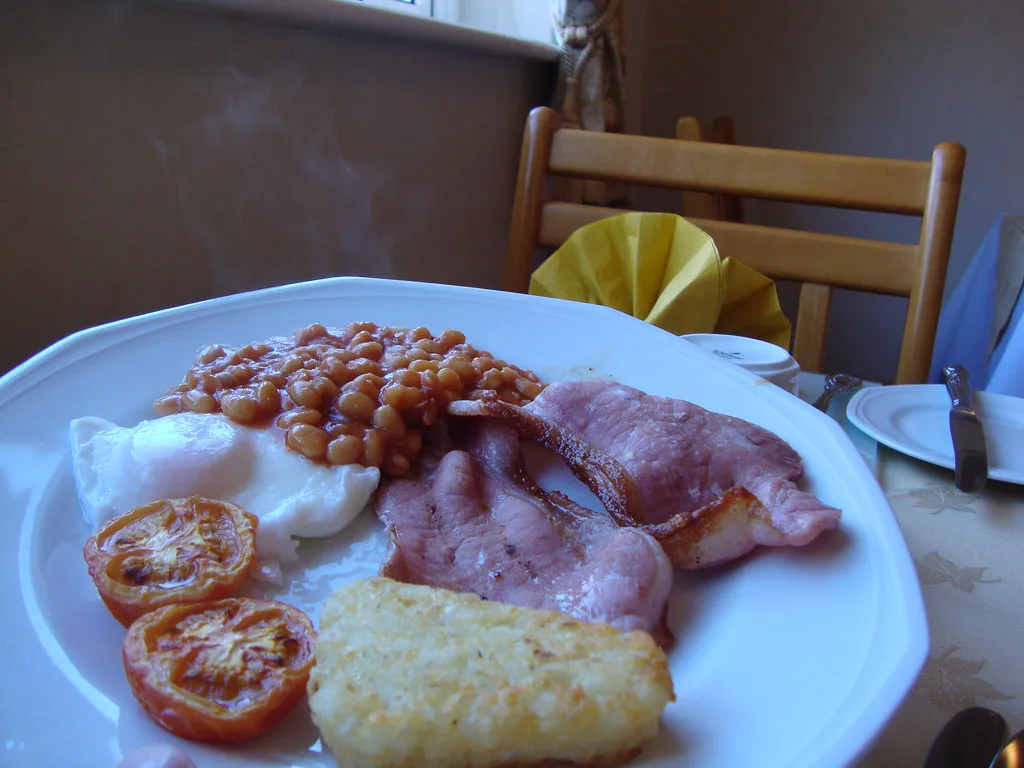
The core plate is bacon, sausage, eggs, baked beans, grilled tomato, mushrooms and toast or fried bread. Everything is cooked in a pan or under a grill, plated hot, and eaten with a knife and fork; there is no course structure and no ceremony. The quality of the cure on the bacon and the coarseness of the sausage tell you more about a kitchen than the number of items listed.
Beyond the core, black pudding is the most common addition in the north, and a hash brown or potato cake has become standard in cafés that lean towards volume. Fried bread is the traditional alternative to toast and soaks up yolk better, though many places now offer sourdough instead. None of these are compulsory; the plate is a set of choices, and a good menu makes clear which ones cost extra.
Hash brown or potato cake, fried bread or toast
The hash brown is a relatively recent arrival from the freezer aisle, while a potato cake or rösti points to a kitchen doing more work in-house. Pot Kettle Black in Barton Arcade and at Angel Gardens in Manchester city centre serves a crisp potato rösti with its PKB Brekkie, alongside an Old English sausage, smoked streaky bacon, poached eggs, homemade beans and sourdough from its own bakery, which is a different proposition from a catering hash brown.
Fried bread versus toast is a texture decision: fried bread is richer and heavier, toast is lighter and lets you mop up without the oil. If you are ordering a large plate, toast is usually the better call; if the breakfast is your main meal of the day, fried bread earns its place. Beans touching eggs is a matter of taste, not quality, so do not let a menu's presentation decide where you eat.
A full Scottish breakfast: haggis and tattie scones
The full Scottish keeps the bacon, sausage, eggs and beans, then adds haggis and a tattie scone, and often black pudding too. The haggis brings a peppery, oaty depth that plain sausage does not, and the tattie scone is a flat potato bread that crisps at the edges and takes up butter well. What you lose is the lighter, more tomato-forward balance of the English plate; what you gain is a denser, more savoury breakfast.
The Koffee Pot on Oldham Street in Manchester's Northern Quarter puts a Scottish breakfast on the menu as the Big Yin, with haggis and tattie scone, and also offers an Irish fry, so you can compare the three versions in one sitting. If you are weighing up a Scottish trip, the same logic applies: order the haggis version where it is made properly rather than as a novelty add-on.
A full Irish breakfast: white pudding and soda bread
The full Irish differs from the English plate mainly in the puddings: black pudding and white pudding usually both appear, and soda bread or potato farls often replace toast. White pudding is a coarse pork and oatmeal sausage, milder than black pudding, and it is the item most worth trying if you have not had one. The rest of the plate, bacon, sausage, eggs, beans and tomato, stays much the same.
An Ulster fry takes the idea further, with soda farls and potato bread fried until crisp on the outside, and it is a heavier breakfast than the English version. If you are in Manchester and want the comparison, the Koffee Pot's Irish fry is a straightforward way to see what the puddings add. Beyond that, the regional plates are best judged by the bread and the pudding, not by the number of items.
Is a full English breakfast healthy?
A full English is a high-fat, high-salt plate. That is not a reason to avoid it, but it is a reason to treat it as a main meal rather than a daily habit. The honest answer is that it is a treat food, and the healthier versions are the ones that cut the fried bread and hash brown rather than the ones that add more items.
If you want a lighter version, look for poached or scrambled eggs instead of fried, grilled rather than fried bacon, and beans and tomato doing more of the work. A menu that offers a smaller plate, or lets you order a couple of items rather than the full set, is usually the better bet. The quality of the ingredients matters more than the cooking method, but both affect how you feel an hour later.
How to order one well
Ask how the eggs are cooked before you order, because fried, poached and scrambled change the plate more than any other item. Ask whether black pudding comes as standard and whether the toast is included, since both are commonly charged as extras. If the kitchen does not offer substitutions, as at Atlas Bar on Deansgate, where everything is made to order and the menu is fixed, decide before you sit down rather than negotiating at the table.
A useful test is whether the menu names its suppliers or its bread: a kitchen that cites its butcher or bakes its own sourdough is usually cooking to order. The Koffee Pot's KP Full English uses dry-cured bacon from Littlewoods Butchers and adds Bury black pudding at no extra charge, which tells you where the money goes. If the menu is vague about the sausage and the bacon, assume the cheapest catering versions.
Telling a good fry-up from a lazy one
The clearest sign of a lazy fry-up is a plate that arrives suspiciously fast with eggs that have a skin on them and bacon that has been sitting under a heat lamp. Freshly cooked eggs have a runny yolk and a soft white, and bacon cooked to order is crisp at the edge rather than uniformly leathery. If the sausage is pale and finely ground, it is a catering sausage; a coarse, well-seasoned one is worth the extra money.
Homemade beans and a proper hash brown or rösti are the other markers, because both take time and are the first things a kitchen cuts; Atlas Bar makes its hash brown in-house. The trade-off is real: a cheap café fry-up can be perfectly good, but you are paying for speed and volume rather than ingredients.
What a full English costs
Prices vary widely by venue type, from a café plate to a restaurant version with named suppliers. At the Koffee Pot in the Northern Quarter, the KP Full English is £14.50, and at Atlas Bar on Deansgate the full English is £15.75, both in Manchester city centre. A café away from the centre will usually be cheaper, so use these as a guide to what an independent city-centre breakfast costs rather than a national average.
The price is driven by the cure on the bacon, whether the bread is baked in-house, and whether the black pudding is included. Extras such as black pudding, extra eggs or a second sausage usually cost more, so check before you add them.
Vegetarian and vegan full English
A good vegetarian full English replaces the meat rather than just removing it: a well-seasoned vegetarian sausage, halloumi or a mushroom and potato cake, and often extra beans or tomato to keep the plate substantial. The Koffee Pot offers veggie and vegan breakfasts alongside its meat versions, which is the practical test of whether a kitchen has thought about it. If the vegetarian option is the meat plate minus the bacon and sausage, order something else.
Vegan versions hinge on the sausage and the eggs: a tofu scramble or a chickpea flour scramble can work, but a plate of beans and tomato with no protein is a poor breakfast. Ask what the vegan sausage is made from and whether the bread is vegan, since sourdough usually is and brioche is not. The best vegan breakfasts are the ones where the kitchen has its own version rather than a checklist of substitutions.
Where to eat a full English in Manchester
The Koffee Pot on Oldham Street in the Northern Quarter has been serving breakfast since 1978, and its KP Full English includes dry-cured bacon, sausage, egg, grilled tomato, mushrooms, beans, hash brown and toast, with Bury black pudding added at no extra charge. It also does an Irish fry, a Scottish breakfast and veggie and vegan versions, so it is the most useful single stop for comparing the regional plates. It is a café rather than a restaurant, and the portions are large.
Atlas Bar, under the railway arches on Deansgate, serves a full English with smoked back bacon, sausage, black pudding, fried eggs, roast tomato, roasted mushrooms, baked beans, a homemade hash brown and sourdough toast, all cooked to order. The kitchen does not offer substitutions, so check the plate before you order. It is a bar rather than a café, and it has a terrace at the back that catches the sun when Manchester provides any.
Pot Kettle Black has two city-centre sites, one inside Barton Arcade and another at Angel Gardens, and its PKB Brekkie uses an Old English sausage, smoked streaky bacon, poached eggs, roasted tomato, field mushroom, homemade beans and a crisp potato rösti with sourdough. It is a slightly lighter, more modern plate than the traditional fry-up, and a good choice if you want poached eggs rather than fried. Both sites are in the city centre, so it is easy to fit into a morning.
When to eat one
A full English is a morning or early-afternoon meal, and most cafés serve their breakfast menu until around midday or early afternoon; a few keep it on all day. The plate is heavy enough that eating it later leaves you sluggish, so aim for a late breakfast or an early lunch. If you are travelling, eat before a long walk or a train rather than after, and check the kitchen times on the day, since they change by venue.
Sunday is the busiest day, and a city-centre café can have a queue by mid-morning. If you want a seat without waiting, go early or pick a weekday. A pub that serves a Sunday roast is usually not the place for a fry-up at midday, so keep the two meals separate and plan your day around one or the other.
Which breakfast to order
Order the English plate if you want the lighter, tomato-forward version, the Scottish if you want haggis and a denser breakfast, and the Irish if the puddings and soda bread are the point. In Manchester, the Koffee Pot carries an Irish fry and a Scottish Big Yin alongside its full English, while Atlas Bar and Pot Kettle Black are the choices for a cooked-to-order plate in the city centre. Wherever you go, ask how the eggs are cooked and whether the black pudding is included before you order.
For the wider picture, our guide to traditional British food covers the other plates worth planning a day around, and the English food guide covers the roasts and puddings that follow later in the day. Keep the fry-up as a morning treat and the rest of the day will look after itself.
Explore more United Kingdom guides
Frequently Asked Questions
What is the difference between a full Irish and full English breakfast?
The full Irish usually adds white pudding alongside black pudding, and often serves soda bread or potato farls instead of toast. The bacon, sausage, eggs, beans and tomato stay much the same. The result is a heavier plate with more pork and oatmeal, so it is worth ordering if you want the puddings rather than the bread.
What is a full Scottish breakfast?
A full Scottish breakfast keeps the familiar bacon, sausage, eggs and beans, then adds haggis and a tattie scone, and often black pudding. The haggis gives a peppery, oaty flavour and the tattie scone is a flat potato bread fried until crisp. It is a denser breakfast than the English version, so it suits a day with a long walk in it.
What is a complete English breakfast?
A complete full English is bacon, sausage, eggs, baked beans, grilled tomato, mushrooms and toast or fried bread, all cooked and served hot as a main meal. Black pudding, hash browns or potato cakes and fried bread are common additions rather than essentials. A good version is cooked to order, with a coarse sausage and dry-cured bacon.
Sources
Notes on eating out in the UK
Optional updates when our city guides change.
You might also like
Continue reading
More guides you'll find useful