Northern Irish Food: The Dishes Worth Knowing
A candid guide to Northern Irish food, from the Ulster fry and soda farls to champ, dulse and yellowman, with what each dish is and what to order first.
On this page
Northern Irish food is best understood as a short list of dishes built on very good raw ingredients: beef, lamb, dairy and bread. If you order only three things, make them the Ulster fry, a plate of champ and a soda farl eaten warm. This guide covers what each traditional dish actually is, how it is served and which ones are worth clearing time for.
It is not the same as Irish food south of the border, though the two share soda bread and a love of potatoes. The northern versions have their own names and habits, and the local larder leans heavily on grass-fed beef and lamb, artisan cheese and small bakeries. For the wider picture, our guide to traditional British food shows where these dishes sit alongside the rest of the islands' cooking.
What Northern Irish food is: small place, short list
Northern Ireland is small enough that its food culture feels interconnected rather than regionalised: the same breads, the same potatoes, the same reliance on dairy and grass-fed meat turn up from Ballycastle to the border. Food NI describes pasture-fed herds, cheese, pork and poultry as the backbone of the local larder, with producers working at a scale that keeps seasonality visible on menus. That is the practical reason a simple dish here often tastes better than the same dish elsewhere.
The local larder is unusually well signposted. Beef and lamb carry the Northern Ireland Farm Quality Assured mark, which assures standards from farm to fork, while pork sold under the Assured Origin mark is guaranteed to be 100% Northern Irish. When you are shopping or reading a menu, those logos are the quickest way to know you are eating local meat rather than imported.
Chefs lean on what is closest at hand, so menus shift with the catch and the season rather than following a fixed national script. That is why a traditional dish here is often reworked: a familiar sausage roll might arrive made with local monkfish instead of pork. Treat that as a feature, not a gimmick.
The Ulster fry: what is on the plate
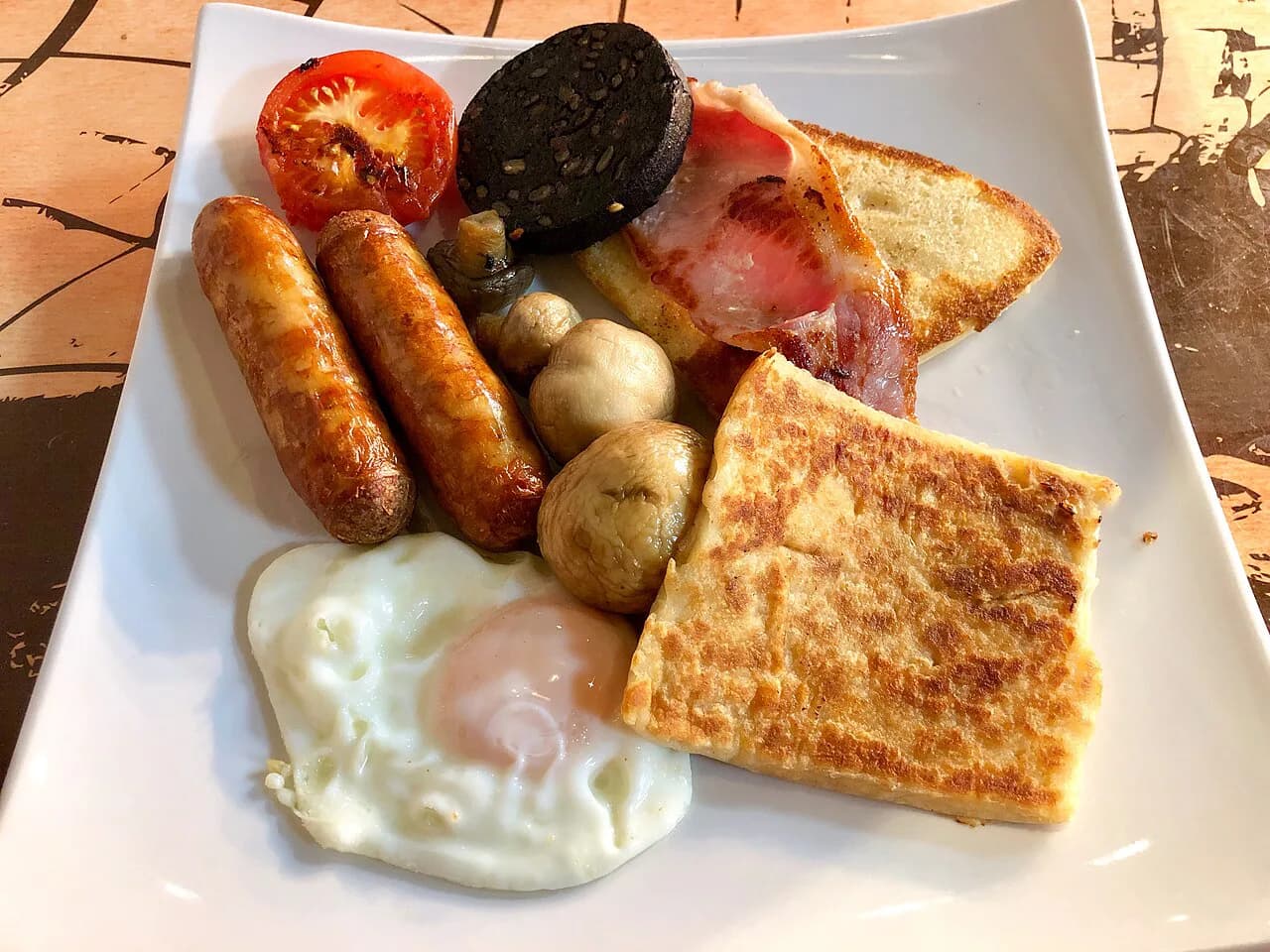
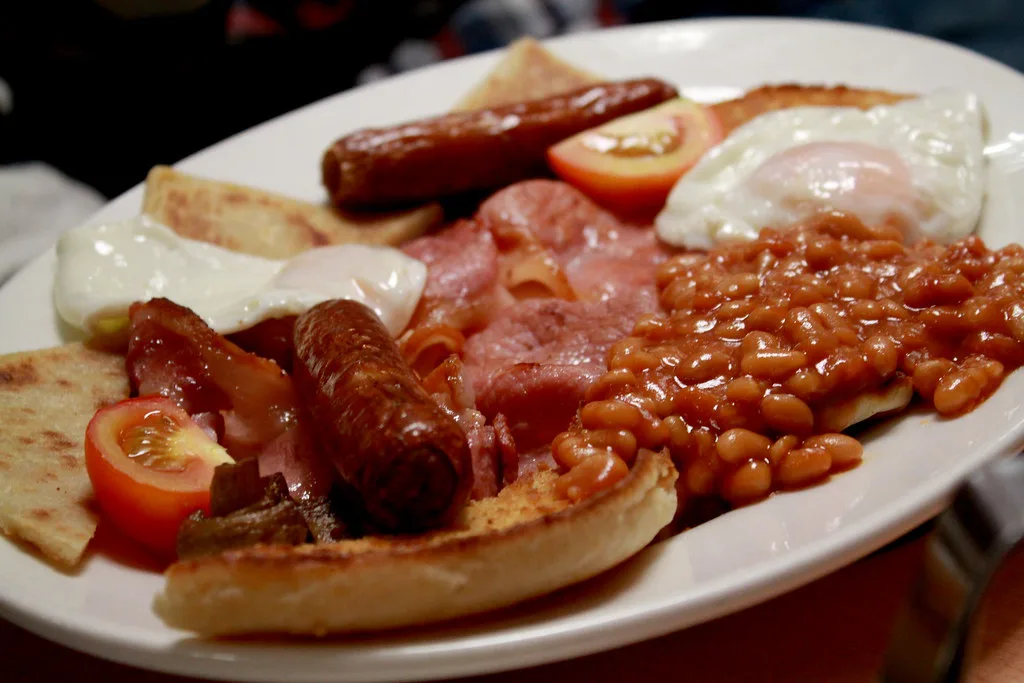
An Ulster fry is the northern answer to the full English breakfast, and the difference is the bread. Expect bacon, sausage, egg and tomato, but the plate is built around griddled soda farls and potato farls rather than toast, so the bread is a working part of the meal. It is a substantial breakfast and a fair-sized lunch, so plan the rest of the day around it.
Order it when you have time to sit down, not when you are running for a train. Fried bread and black pudding are common additions, and the whole thing is best with tea and no rush. If you want the wider context of British fry-ups, including regional variations, our full English breakfast guide covers the family tree.
Soda farls and potato farls: the two breads to know
Soda farls are a quick bread of flour, salt, bicarbonate of soda and buttermilk, cooked on a griddle or in an iron pan and cut into quarters. They come out dense and slightly tangy, and they are good with soup, with butter and jam, or split and toasted the next morning. Potato farls are a different thing entirely: mashed potato and flour pressed flat, cut into farls and fried until golden.
Locals eat farls well beyond breakfast: with butter and jam at teatime, alongside smoked fish for supper, or as the base for something new. That versatility is the point, and it makes them a sensible thing to buy if you are self-catering. Warm them in a dry pan rather than a toaster, which tends to dry them out.
If you only know one bread from this island, make it these. They belong to the same baking tradition as the rest of our English Food coverage, where bread, potatoes and a hot oven do most of the work.
Champ: mashed potato with scallions
Champ is seasoned mashed potato with chopped scallions, milk and a generous amount of butter, beaten until silky. It is served as a side with meat or fish, but it is good enough to eat on its own, and it is the dish to order if you want to understand what Northern Irish home cooking tastes like. Ask for extra butter; nobody will be surprised.
It sits naturally alongside roast meats, which is where the Sunday roast tradition overlaps most usefully. If you are choosing a pub for a long lunch, champ and a plate of beef is a solid order, and our Sunday roast guide explains what to look for on the menu elsewhere.
Dulse and the coast: the seaweed snack
Dulse is a red seaweed foraged from the shoreline, dried and eaten by the handful as a snack. It tastes salty and savoury with a mineral edge, chewier than a crisp and considerably stronger in flavour. Buy a small bag first rather than a large one, and try it before you commit to a picnic.
Look for it near the coast, where it is part of the local foraging tradition rather than a novelty. It also turns up as a seasoning in some dishes, which is a gentler introduction than eating it neat. If you dislike strong marine flavours, skip it and spend your money on a cheese or a cured meat instead.
Yellowman and the sweet side
Yellowman is Northern Ireland's honeycomb: bright yellow, dense and chewy, with a texture closer to toffee than to the airy honeycomb you might expect. It is traditionally sold at the Ould Lammas Fair in Ballycastle, where it is a staple at local stalls. If you want a sweet thing to try once, this is the one with a proper local identity.
Treat it as a fairground sweet rather than a restaurant pudding, and buy it from a stall where you can see it being turned out. For the wider British repertoire of puddings, from sticky toffee to crumble, our British desserts guide has the rest.
Bushmills whiskey and the drinks side of the table
Bushmills whiskey has been distilled since 1608, which gives it one of the longest documented distilling histories on the island. Locals tend to argue it needs nothing done to it: served neat, no ice, so the flavour carries. It is the obvious place to start if you want a drink that connects to the place you are standing in.
County Antrim is also seeing a revival of micro-distilleries, with makers returning to the older poitín tradition alongside new spirits. That means a growing choice of small-batch bottles if you want something beyond the famous name. Ask in a good off-licence what is made locally rather than guessing from a shelf label.
Where to eat and drink: the places worth knowing
Lir is a restaurant at Coleraine marina on the north coast, and its kitchen is one of the places where local sourcing is most visible on the plate. The head chef there has spoken about building dishes around the local catch and season, which is the sort of kitchen where a monkfish sausage roll makes sense.
For bread and provisions, Ursa Minor in Ballycastle is a bakery worth a stop on the north coast, and Rhee River Organics supplies fresh vegetables to local kitchens. If you are staying somewhere with a kitchen, that combination covers most of a good breakfast. Check opening days before you build a morning around them.
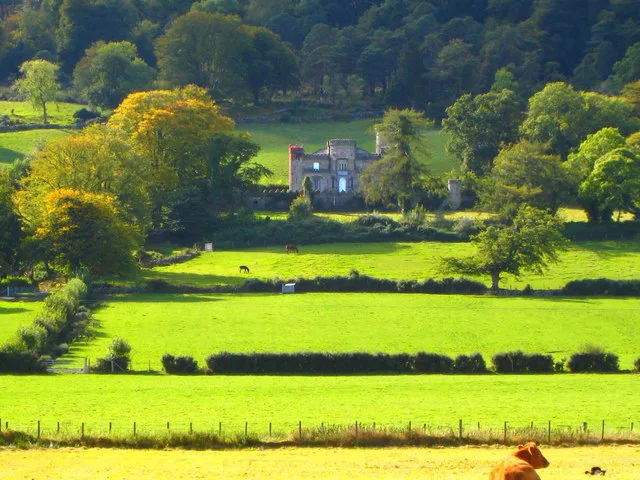
Killeavy Castle in County Armagh is a place to stay rather than a restaurant tip, useful if you want a base for the southern part of the province. Elsewhere on this island, the food scene is broad: the Ireland.com guide to Northern Ireland's food and drink is a sensible place to check what is on around your dates.
How to order well: portions, timing and trade-offs
Portions here are generous, and the fry is heavier than most visitors expect. If you want to eat well all day, share a fry or order it as a late breakfast and skip lunch. For a lighter plate, champ with fish or a bowl of soup and a soda farl is the better call.
There is a real trade-off between a sit-down breakfast and a quick bakery stop. A café fry gives you the full plate, a table and unlimited tea, but eats an hour of your morning; a bakery gives you farls and a bun in five minutes but not the whole experience. Choose the sit-down version at least once, then use bakeries for the rest of the trip.
For a fish supper, the same logic as anywhere in Britain applies: order at the counter, eat it hot, and know that mushy peas and curry sauce divide opinion. Our fish and chips guide covers the practical side across the UK.
Wider British food coverage is useful for context but not a substitute for local knowledge. If you want a checklist for the rest of the trip, British food to try covers the classics beyond these shores.
What to order first
Start with a sit-down Ulster fry and pay attention to the farls, because they are the part you cannot get properly anywhere else. Follow it with champ alongside a roast or fish, and try dulse and yellowman once each from a stall or shop rather than committing to a large amount.
If you only have one meal in Northern Ireland, make it a pub lunch with champ and local beef, then finish with a Bushmills. That combination tells you more about the place than any single dish. Check kitchen times and opening days with the venue before you travel, as they change with the season. For one Northern Irish city's own food, from Foyle fish to beer brewed inside the walls, see what to eat in Derry.
Explore more United Kingdom guides
Frequently Asked Questions
Is Northern Irish food the same as Irish food?
They share soda bread and a strong potato tradition, but the names and habits differ. Northern Ireland has its own farls eaten at breakfast, champ as a everyday side, and sweets such as yellowman tied to Ballycastle rather than the south. Expect overlap, not duplication.
What is Northern Ireland's national dish?
There is no single official dish, but the Ulster fry is the most recognisable plate, with champ close behind as the everyday staple. If you want one thing that locals would point a visitor towards, it is the fry, eaten properly at breakfast with soda and potato farls.
What should a first-time visitor order in a pub?
Order champ with a roast or fish, a bowl of soup with a soda farl on the side, and a Bushmills to finish. That gives you the local staples without over-ordering, and it works in most pubs that serve food.
Can I buy dulse and yellowman to take home?
Yellowman is a fairground sweet, so it is easiest to find at stalls around the Ould Lammas Fair in Ballycastle. Dulse is sold dried near the coast and keeps well for travel. Both are best bought in small quantities first so you can decide if you like them.
Sources
Notes on eating out in the UK
Optional updates when our city guides change.
You might also like
Continue reading
More guides you'll find useful