British Cheese: What to Try and Where to Buy It
British cheese explained by style, from Cheddar and Stilton to Wensleydale and Lancashire, with how each tastes, how to buy it and what to serve alongside.
On this page
British cheese is best understood by style rather than by name, because the same word can cover a supermarket block and a farmhouse truckle with nothing much in common. This guide sorts the main types by what they taste like and how they behave on a board, then covers buying, storing and what to eat with them.
The names themselves cause most of the confusion. Cheddar and Stilton are used loosely by plenty of producers, so the useful question is not what a cheese is called but who made it, where, and how long it was aged. Read the label for the maker and the maturation before you read the price.
What British cheese actually means
In practice it means cheese made with British milk, usually by small dairies working within a county or region, plus the big creameries turning out cheddar by the tonne. Regional names carry weight because they signal a style and a place, not because every wedge sold under that name comes from the same farm.
Cheese sits at the end of a meal rather than the start in most British homes, often as a board after a Sunday roast or alongside chutney and oatcakes in the evening. That context explains why the British default is a hard, salty, aged cheese rather than a soft, runny one, and it is the same instinct that shaped traditional British food more widely.
Cheddar: the benchmark
Mild cheddar is springy, slightly rubbery and salty enough to be moreish; it is the cheese most people picture when they picture cheese. Aged cheddar tightens up, turns crumbly and develops a savoury, almost brothy depth, with crystals in the oldest examples.
On the label, look for a named maker, a county or farm, and an age statement in months. Blocks sold simply as cheddar with no maturation detail are usually young and made to a price, which is fine for a sandwich but not what you want on a board you have assembled for guests.
If you only buy one British cheese to learn from, buy two cheddars at different ages and taste them side by side. The difference between a young block and an aged farmhouse wedge teaches more about British cheese than any description can.
Blue cheeses: Stilton and the rest
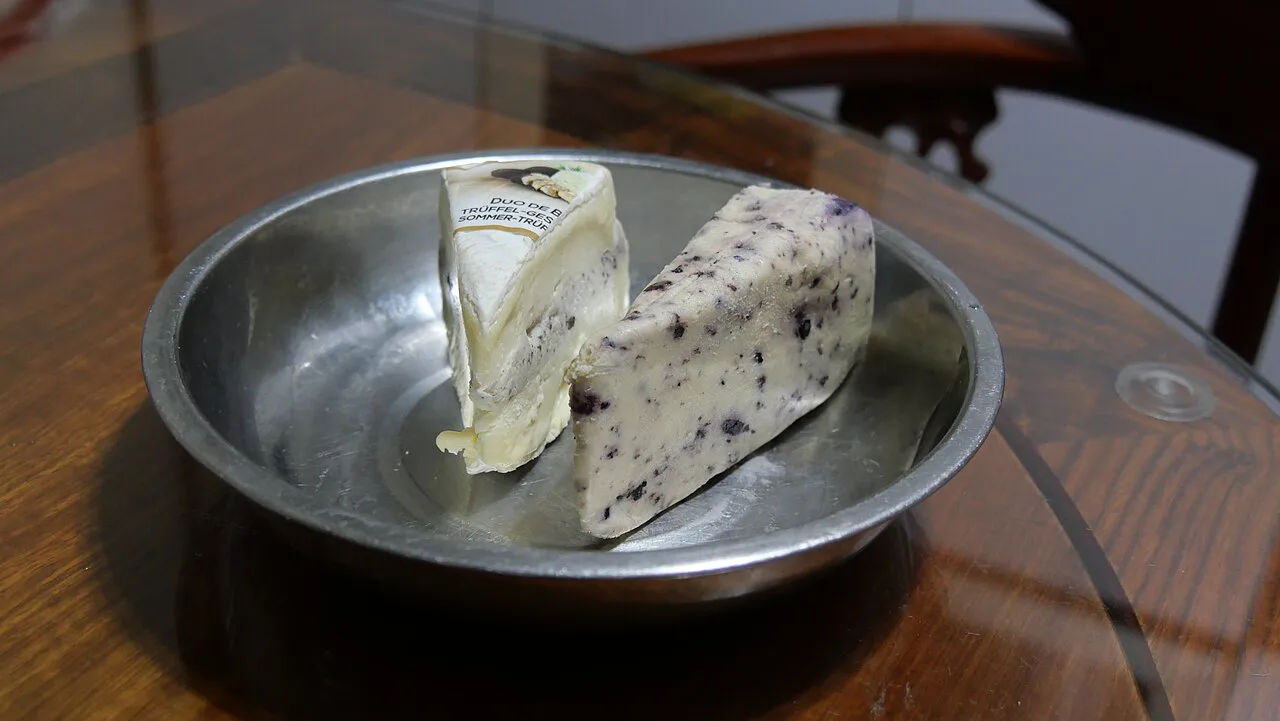
Stilton is the best-known British blue: creamy, salty and pierced with green-blue veins, with a firm enough body to cut cleanly. A well-made blue tastes savoury first and sharp second, and the paste stays creamy rather than dry. A harsh blue is usually young, over-salted or poorly stored, and it leaves a metallic sting.
Buy blue cheese last if you are shopping in person, and keep it wrapped and separate in the fridge so the veins do not spread their flavour into everything else. Serve it at room temperature, in thin wedges, with something sweet to cut the salt.
Wensleydale, Lancashire and other northern cheeses
Wensleydale is crumbly, pale and mildly tangy, and it is the cheese most likely to convert someone who says they do not like cheese. Lancashire is softer and creamier, with a slight acidity that makes it a natural match for chutney and a good melter for a toastie.
Red Leicester brings a nutty, close texture and a deep orange colour, while Double Gloucester is buttery and firm and Cheshire is crumbly and salty. None of them is expensive, and together they make a northern board that looks generous without a single showpiece cheese.
Caerphilly, the Welsh crumbly, is worth knowing if you like a tangy, dry cheese with a rind that cuts away neatly, and it sits naturally among the cheeses covered in our guide to Welsh food. It also shows how closely the cheese traditions of the British Isles overlap, since a Welsh cheese fits comfortably on the same board as the northern ones.
Soft and bloomy British cheeses
British soft cheeses generally take their lead from French styles but taste milder, creamier and less farmyardy, which makes them an easy start for anyone unsure about rinded cheese. Expect a white bloomy rind, a soft paste and a flavour that moves from buttery to mushroomy as it ripens.
These are the cheeses to buy close to when you plan to eat them, because they keep badly and over-ripen quickly. On a board, put them out first and let them come to room temperature; a cold soft cheese tastes of nothing but fridge.
Flavoured and blended truckles: when they are worth it
Smoked cheddar, chilli cheddar, truffle cheddar and ale-washed styles are everywhere now, and the quality varies enormously. The rule of thumb is that a flavoured cheese is only as good as the base cheese under the flavour, so a heavily smoked block made from young cheddar tastes of smoke and salt and little else.
Where flavourings earn their place is as a change on a big board, or as a gift for someone who already loves the style. They are less successful as the centrepiece of a meal, where a well-aged plain cheese will beat a truffled one almost every time.
The Great British Cheese Company sells individual flavoured truckles such as a smoked redwood and a truffled cheddar at a set price each, alongside mixed selection boxes and chutneys. Its shop page lists the full range of flavours and current prices, which are worth checking before you commit to a larger bundle.
How to buy: supermarkets, cheese shops and online
Supermarket own-label cheese is consistent, cheap and often perfectly agreeable, especially in the young cheddar and Red Leicester ranges. Its limit is depth: you rarely get an age statement or a named farm, so the flavours stay broad and salty.
Cheese shops and deli counters let you taste before you commit, which matters most when you are buying a blue or a soft cheese where freshness is everything. Ask for a sliver of anything you are unsure about, and buy a smaller piece of something better rather than a large piece of something cheap.
Online, specialist cheesemongers sell British farmhouse cheeses cut and wrapped to order, which is a sensible route if you live far from a good counter. Rennet & Rind stocks a British range with tasting detail on each cheese, and Fine Cheese Co offers a similarly curated British selection, both useful for checking what a named cheese should taste like.
How to store and serve it
Keep cheese in the fridge, but out of its coldest parts, and wrap it in waxed paper rather than tight cling film so it can breathe. Take it out at least half an hour before eating; the difference in flavour between fridge-cold and room-temperature cheddar is startling.
For a board, allow roughly 80 to 100 grams per person if cheese is the main event, less if it follows a proper dinner. That figure is a working estimate rather than a rule, so scale it to how much other food is on the table.
For longer storage, freezing works for hard cheeses meant for cooking but ruins the texture of anything you plan to eat cold. A blue or soft cheese should be bought for the week ahead rather than stockpiled.
What to put with British cheese
Chutney, oatcakes, crackers, apples and celery are the traditional British companions, and they exist for a reason: they cut salt and fat without competing with the cheese. A sharp fruit chutney works with aged cheddar and blue, while a sweeter one suits a crumbly northern cheese.
On the drink, British ale is the natural partner and a strong tea is the sober alternative; both work better than anything too cold or too sweet. If you are laying a table for a proper occasion, cheese is also the sensible final course before a British pud, and it follows a Sunday roast or a steak-and-ale main without much effort.
A ploughman's is the pub version of the same idea: cheese, chutney, a hunk of bread and something pickled. It is worth knowing about because it shows how British cooking treats cheese as a meal in its own right rather than an ornament, in the same way English food more broadly builds plates around a few strong ingredients.
If you are putting together a wider spread and want to know which dishes visitors should not leave without eating, our list of British food to try is the place to start. Cheese earns its spot on that list as a course, a sandwich filler and a pub lunch all at once.
Six British cheeses to try first
Start with an aged cheddar, a Stilton, a Wensleydale, a Lancashire, a Red Leicester and one soft British cheese. That set covers hard, blue, crumbly, creamy and soft in a single shop, and it is enough to tell you which direction to explore next.
Buy them from a counter that will cut to size, taste each one on its own before you put anything with it, and take notes on which you would buy again. A board of six small pieces teaches you more than one large wedge of anything.
Which British cheese should you buy first?
If you are new to this, buy an aged cheddar and a Stilton and eat them at room temperature with a spoonful of chutney. Those two cover most of what British cheese does well, and they are the easiest to find wherever you are.
From there, work through the crumbly northern cheeses before the soft ones, since they keep longer and forgive a slow week. Buy small, buy from a counter when you can, and let the label tell you who made it.
Explore more United Kingdom guides
Frequently Asked Questions
What cheeses are British?
The main British styles are cheddar, Stilton and other blues, Wensleydale and Lancashire, Red Leicester, Double Gloucester, Cheshire, Caerphilly and a growing range of soft British cheeses made in French styles. Flavoured and smoked truckles are widespread too, and the label's maker and age matter more than the name.
What is the most popular British cheese?
Cheddar is the cheese most British households buy and cook with, in mild block form for sandwiches and cooking, and in aged farmhouse form for boards. Its popularity makes the name loose, so look for a named maker and a maturation period rather than the word alone.
Can I buy British cheese online?
Yes. Specialist cheesemongers such as Rennet & Rind and Fine Cheese Co sell British cheeses cut and wrapped to order, and The Great British Cheese Company sells truckles, selection boxes and chutneys from its shop. Check each retailer's current range, prices and delivery terms on its own site before ordering.
How much cheese should I buy per person for a board?
Allow about 80 to 100 grams per person when cheese is the main event, and less when it follows a full meal. Buy a few smaller pieces rather than one large one, so there is variety, and add chutney, oatcakes and fruit to stretch the board.
Sources
Notes on eating out in the UK
Optional updates when our city guides change.
You might also like


Continue reading
More guides you'll find useful