Sunday Roast: What It Is and How to Order One Well
What a proper Sunday roast includes, the meats and trimmings to expect, how Yorkshire pudding should turn out, and how to book a pub table without disappointment.
On this page
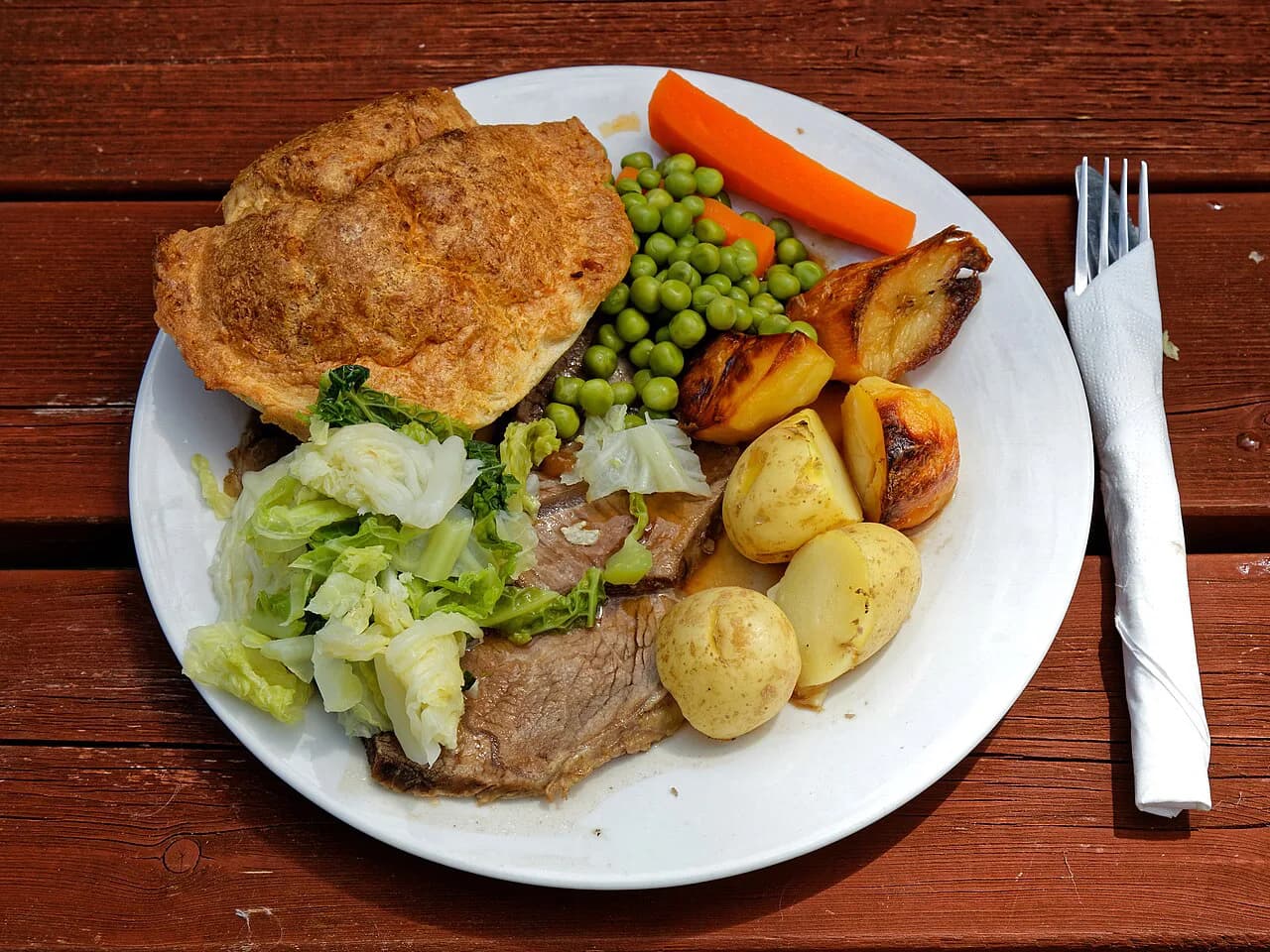
A Sunday roast is a plated meal of roasted meat, roast potatoes, vegetables, gravy and often Yorkshire pudding, served on Sundays in pubs, gastropubs and restaurants across Britain. Order it as a main and expect a tight service: one sitting, a short menu and meat that occasionally runs out. This guide walks through the plates, the meats and trimmings, the Yorkshire pudding question and how to book a table that suits you.
It sits at the centre of traditional British food, alongside fish and chips and the full English breakfast: plain-sounding dishes that stand or fall on how carefully the kitchen cooks them. A good one needs meat cooked properly, potatoes roasted crisp, gravy with body and vegetables that still have bite. Get those right and it is one of the best-value meals in the country; get them wrong and it is stodge on a plate.
Why the Roast Belongs to Sunday
The roast is a Sunday meal by convention rather than law, tied to a day when families have time to sit down together and kitchens have time to cook a joint slowly. Most pubs that serve it do so only on Sunday, often between midday and late afternoon, which is why the rest of the week's menu can look quite different. That single-day format is also why booking matters more here than for a Tuesday supper.
For overseas visitors, the roast is worth treating as one of the British food to try at least once, and it is a fair test of a kitchen because there is nowhere to hide behind spice or sauce. Order it in a pub with a reputation for its Sunday lunch, not in a chain that reheats sliced meat. If you only have one Sunday in the country, book ahead and eat early rather than gamble on a late walk-in.
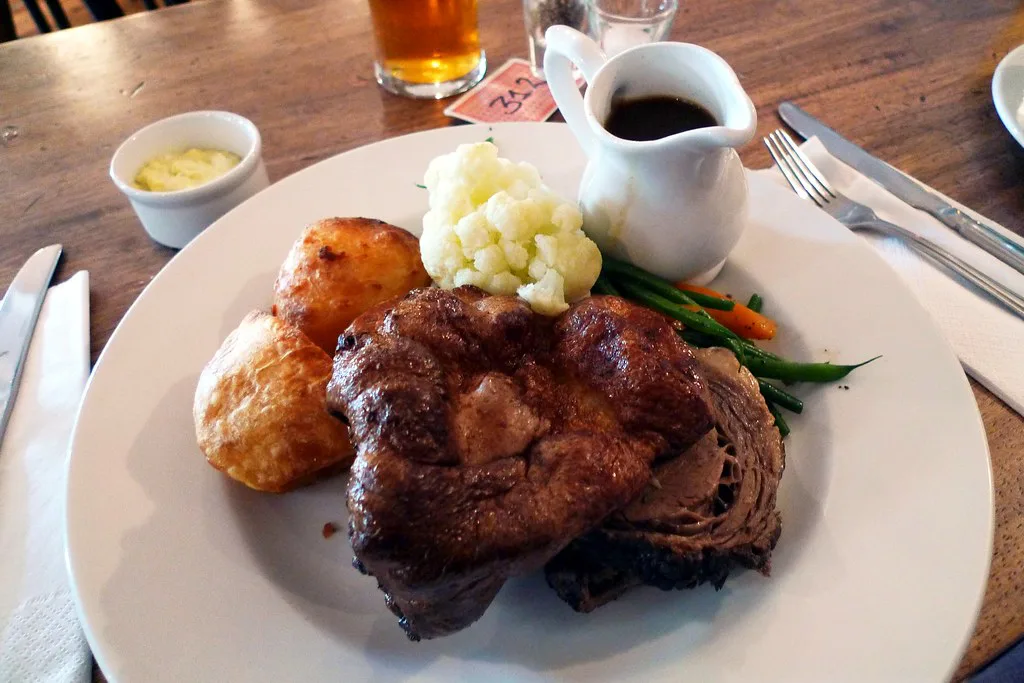
The Order of Play: Starter, Main, Pud
Many Sunday menus sell in courses: a starter, the roast as a main and a pudding, with a two- or three-course price. In Cardiff, Heaney's offered £25 for two courses and £30 for three at the time of the write-up, while the Heathcock sat around the £32 to £35 mark for three courses. Check what is included before you compare prices, because sides and puds are sometimes extra.
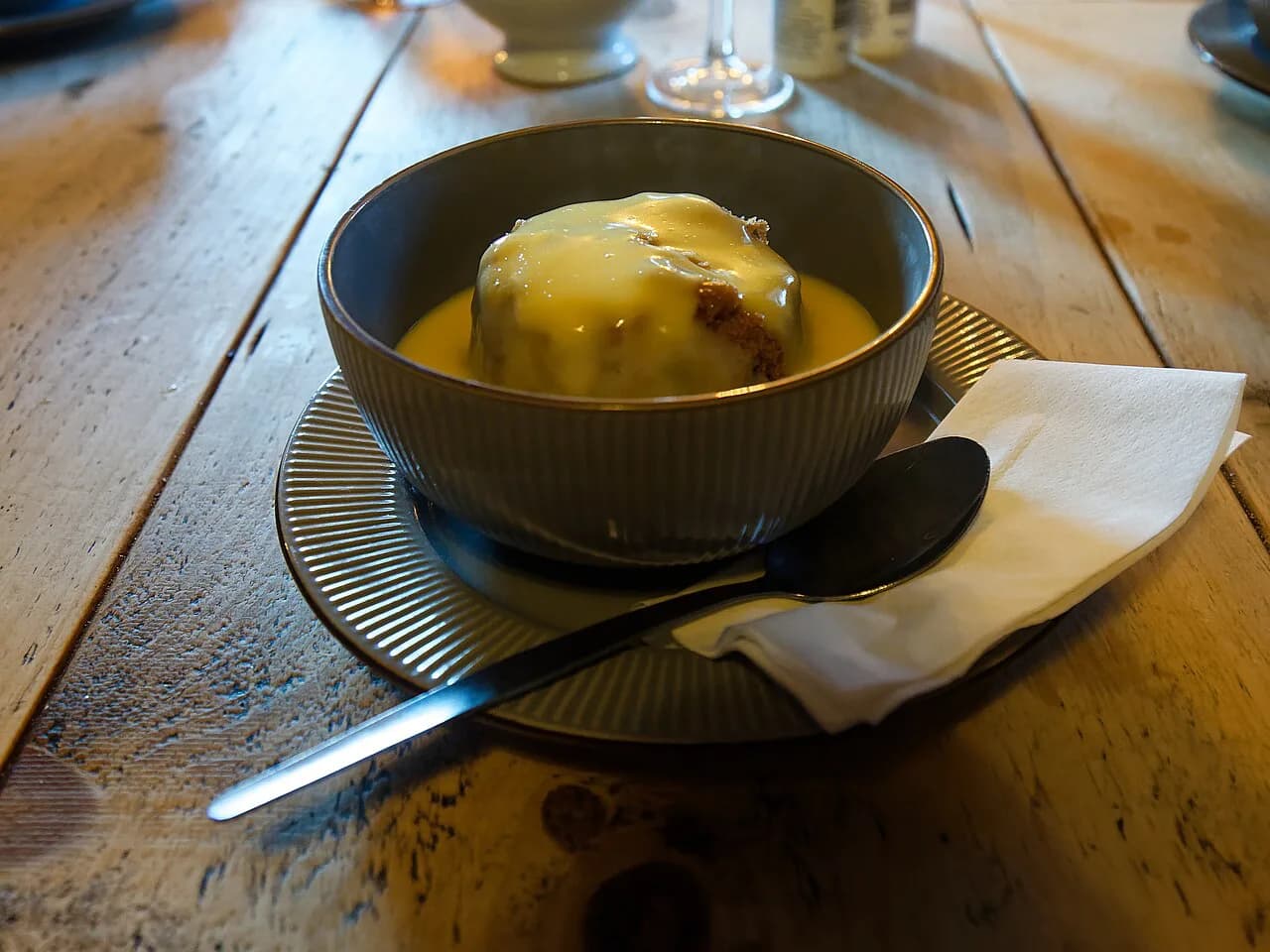
If the portions are generous, two courses is often enough, especially if the roast comes with a full set of trimmings. A starter earns its place when it is light and sharp, such as a soup or something pickled, rather than another slab of meat. Puddings are where British desserts shine, so leave room for sticky toffee pudding or apple crumble if the main was sensible.
The Meats: Beef, Lamb, Pork and Chicken
Roast beef is the benchmark, served pink in the middle with a dark crust and horseradish alongside. A Yorkshire pudding is most closely associated with beef, though plenty of pubs now serve it with everything, and one Cardiff writer notes that he finds a Yorkie on anything other than beef a bit odd while accepting he is in the minority. Roast lamb suits spring menus, roast pork needs proper crackling, and chicken is the safest choice for a mixed table.
At the Marksman in East London, the roast is built around beef, with a Hereford wing rib cited by one London guide as a centrepiece of its Sunday offering. Wherever you eat, ask how the meat is served if you care about pinkness, because kitchens often cook to one level for the whole service. Vegetarians usually get a nut roast, a mushroom wellington or a stuffed vegetable, and quality varies more than it should, so read the menu before you commit.
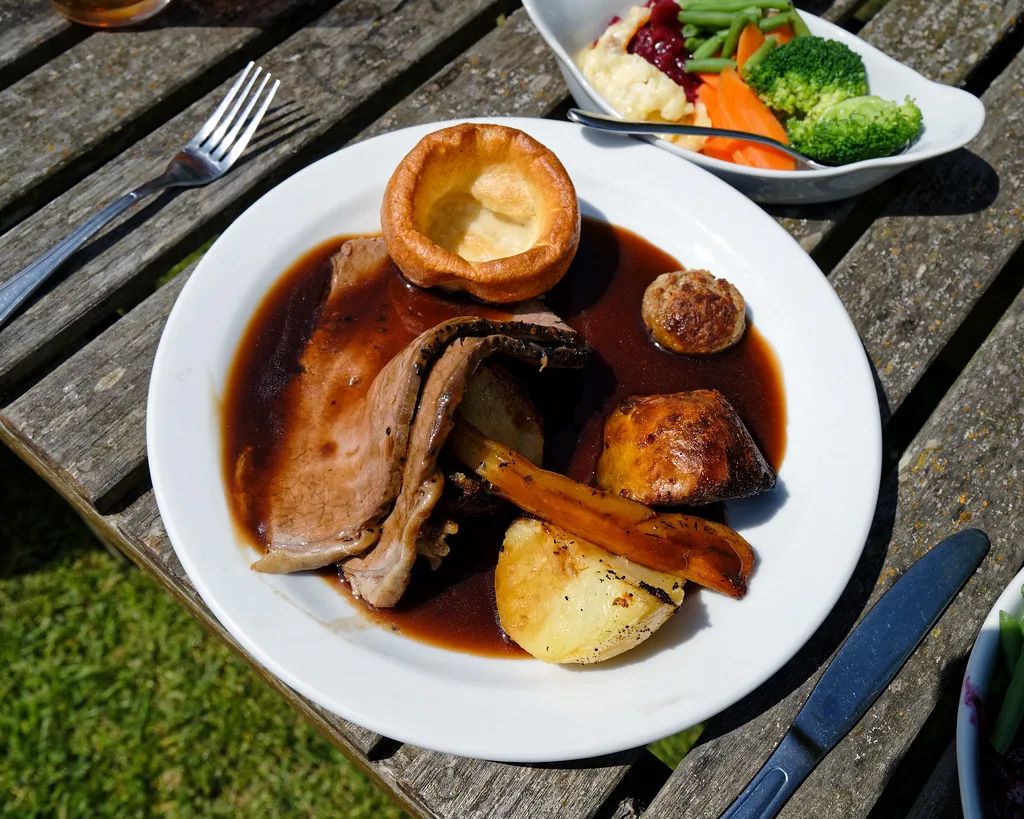
The Trimmings That Make or Break It
Roast potatoes should be crisp outside and fluffy within, which means parboiling and a hot fat rather than a quick blast. Gravy should taste of the meat and be poured generously, and a thin, pale jus is the classic warning sign. Cabbage, carrots and greens need to retain some bite, and cauliflower cheese is a welcome extra rather than a substitute for the main event.
Some kitchens go further. The Heathcock in Llandaff, Cardiff, serves its Sunday lunch as a mix of traditional roasts, sharing dishes, fish and game, with starters and puds that one Cardiff writer rates as hitting the spot. Sharing pies and a souffle feature there as alternatives to the roast, which matters if one person at the table does not want meat and potatoes.
Yorkshire Pudding and the Gravy Question
A Yorkshire pudding should be well risen, light and crisp at the edges rather than a pale, dense disc, and size varies wildly from small individual puddings to one large one cut at the table. Whether gravy goes in the pudding is a matter of preference rather than rule; the Cardiff writer quoted above insists on it and wants extra gravy in a jug for the purpose. If you have strong views, say so when ordering and the kitchen will usually oblige.
Do not judge a pub by the Yorkshire alone, but do notice it: a limp pudding often signals a kitchen that is plating too fast. If the roast comes without one and you expected it, ask, because some menus list it as an extra. It is also the item most likely to run out late in service.
Reading a Sunday Menu Before You Book
Sunday menus are shorter than weekday ones and often priced by course, so decide first whether you want two courses or three and compare like with like. Look at whether potatoes, Yorkshire pudding and cauliflower cheese are included or listed as sides, because a cheap headline price can climb once extras are added. Sharing roasts and platters for two, such as the tray priced for two at the Refuge in Manchester, suit groups but make per-head costs harder to judge.
Menus change with the season and with the kitchen's suppliers, so treat any published price as a guide and confirm when you book. A short menu with four or five mains usually means fresher cooking than a long one, and a kitchen that names its beef breed or farm is generally proud of it. If the Sunday menu is identical to the weekday menu, expect reheated meat rather than a proper roast.
Booking, Sittings and the Late-Slot Risk
Sunday service often runs to fixed sittings, so ask which times are available when you book rather than assuming you can turn up at three. Late slots carry the real risk that the beef has sold out and only chicken is left, and popular pubs fill up days or weeks ahead. In Manchester, the Refuge lists Sunday hours of 12:00 to 20:45, Louis serves from 14:00 to 18:00 and the Pearl in Prestwich runs 13:00 to 17:00, which shows how much variation there is between kitchens.
Book by phone or through the pub's own booking page and say if you need a highchair, a vegetarian main or wheelchair access, since Sunday rooms get tight. If you are a group of six or more, expect to be asked for a deposit or a pre-order. Confirm the table the day before and check the current serving times on the pub's website, because Sunday hours shift with the season.
Carvery Versus Plated Roast
A carvery lets you queue at the counter and take sliced meat, potatoes and vegetables yourself, which suits big appetites and fussy children but rarely reaches the same standard as a plated roast. You gain control over portion and gravy volume; you give up precise cooking and a quiet room, since carveries tend to be busy and canteen-like. Plated roasts cost more per head but arrive properly assembled and hot.
Choose a carvery when the priority is feeding a family cheaply and quickly, and a plated roast when the meal is the occasion. At a carvery, ask for meat from the middle of the joint rather than the end, and take vegetables on a second pass so they stay hot. At a plated roast, ask for gravy on the side if you like to control the texture of your potatoes.
Pubs, Gastropubs, Chophouses and Hotel Dining Rooms
A traditional pub gives you the roast with beer and no ceremony, and it is the best value of the four. A gastropub cooks to a higher standard, charges accordingly and usually wants a booking, as with the Harwood Arms in Fulham, which one London guide describes as the city's only Michelin-starred pub, with a Sunday menu priced at £64 for two courses or £79 for three at the time of that meal. A chophouse specialises in meat and gives you the best beef, while a hotel dining room trades character for comfort and reliability.
Match the room to the occasion: a pub for a walk and a pint, a gastropub for a birthday, a chophouse when the beef is the point, a hotel when you have guests staying over. If you are in Manchester, Mamucium sits by Victoria Station and serves a treacle-cured rump of beef among its Sunday mains, which suits anyone arriving by train. In Cardiff, Heaney's is singled out by a Cardiff food writer for roasts that come with alternatives covering vegetarians and pescatarians as well as meat eaters.
What It Costs and What Pushes the Bill Up
Expect to pay more for a Sunday roast than for a weekday main, because the meat is a better cut and the cooking takes longer. In Manchester, Sunday roasts at the time of writing start around £25 at Lock 84, Piccolino Caffe Grande and Mamucium, about £29 at the Refuge and Louis, and about £34 to £35 at Pip and the Pearl in Prestwich. In Cardiff, Heaney's was £25 for two courses and £30 for three, while the Heathcock ran around £32 to £35 for three.
The bill climbs fastest through drinks, extra sides and a pudding you did not plan for. Yorkshire pudding, cauliflower cheese and extra gravy are common add-ons, and a sharing platter for two can cost more than two separate mains. Set a budget per head before you order and decide whether you are there for the food or the occasion. Check the current price on the pub's own menu, since these figures move.
Roasts for Vegetarians and Children
Vegetarian roasts have improved, but they are still an afterthought in many pubs, so look for a kitchen that puts a named dish on the menu rather than offering 'vegetarian option on request'. Nut roasts, mushroom wellingtons and stuffed squash work well when the trimmings are good, and a vegetarian at the table should ask whether the gravy and the roast potatoes are cooked with meat fat. At Heaney's in Cardiff, the writer notes alternatives that cover vegetarians and pescatarians as well as meat eaters.
Children usually get smaller portions or half orders, and a carvery is often the easiest route with young ones because they can choose what lands on the plate. Ask about highchairs and whether the pub takes families in the dining room at Sunday lunch, since some rooms get lively after two. If you have a dog, ask before booking, as some pubs allow them in the bar but not at the tables.
Where to Find Our City-by-City Sunday Roast Guides
National advice only goes so far, because the best roast is the one near where you are standing on a Sunday. Our city guides name specific pubs, gastropubs and dining rooms with what each is good for and where it sits, so you can pick by area and occasion rather than by reputation alone. They cover Cardiff, Manchester and London in detail, and cross-check the wider English food picture, including Yorkshire pudding, alongside them.
Use these guides to shortlist two or three places, then check each one's own Sunday menu and booking page for current times and prices. If you are building a weekend around food, pair the roast with other classics: fish and chips on the Friday, a full English breakfast on the Saturday and a roast on the Sunday make a fair eating itinerary.
Which Sunday Roast Should You Book?
Book the roast that matches your reason for eating out: a pub for a relaxed family lunch, a gastropub or chophouse for an occasion, a hotel dining room for comfort and a carvery for volume and value. Take an early sitting, confirm whether the menu is two or three courses with sides included, and check the current price and hours on the pub's own site before you travel.
Wherever you end up, judge the meal on the meat, the potatoes and the gravy before anything else, and say what you want when you order, whether that is beef served pink, extra gravy or no Yorkshire pudding. A Sunday roast is a simple idea, and the best versions are the ones that get the basics right.
Explore more United Kingdom guides
Frequently Asked Questions
What makes a good Sunday roast?
Meat cooked to the right point, potatoes crisp outside and fluffy inside, vegetables with some bite and a gravy that tastes of the joint. A well-risen Yorkshire pudding and a generous hand with the gravy help, and so does a kitchen that cooks the same meal every week rather than occasionally.
What is a Sunday menu?
A short menu served only on Sundays, usually with the roast as the main event and starters and puddings around it. It is often priced by course, with a two- or three-course option, so check whether sides such as cauliflower cheese or extra gravy are included before you compare prices.
Does a Sunday roast always come with Yorkshire pudding?
Not always. It is most strongly associated with roast beef, but many pubs serve it with every roast and some list it as an extra or only include it with certain mains. If it matters to you, read the menu description or ask when you book.
Should I book a table for Sunday lunch?
Yes, particularly for a gastropub or a well-known pub, because Sunday service often runs to fixed sittings and the most popular meat can sell out. Book ahead, ask which times are available and confirm on the day, especially for groups of six or more.
Sources
Notes on eating out in the UK
Optional updates when our city guides change.
You might also like
Continue reading
More guides you'll find useful