British Food to Try: What Each Dish Is and How to Order
A practical checklist of British food to try, from fish and chips and Sunday roast to pies, puddings and breakfast, with what each dish is and how to order it.
On this page
If you have three or four eating slots in a short trip, spend them on fish and chips, a Sunday roast and one good pudding, then fill the gaps with bakery counter food and a proper breakfast. Everything else on this list is a bonus rather than a duty. This checklist covers what each dish is, where it belongs — chippy, pub, café, bakery or coast — and the trade-offs in heaviness and timing that decide whether you enjoy it.
Treat the list in two layers: national staples you can find almost anywhere, and regional specialities worth hunting down when you happen to be in the right part of the country. Do not try to tick off everything in one day, because suet, pastry and gravy stack up faster than most visitors expect. Order one rich dish per meal and build the rest of the day around it.
Fish and chips: chippy versus pub, and when to eat it
Fish and chips is fried cod or haddock in batter with thick-cut chips, and it is the one dish that rewards going to a dedicated chippy rather than a pub kitchen. A chippy portion is usually a full meal: a piece of fish and a generous bag of chips, often with mushy peas, tartare sauce and a pickled onion or gherkin on the side. Pub versions tend to be plated, smaller and dearer; chippy versions are wrapped and built for eating straight away.
Eat it early rather than late. Chips go soft and greasy as they cool, and a heavy fried meal sits badly before bed or before a long train. Lunchtime or early evening is the sweet spot, and sharing a single portion between two people leaves room for a pudding later. Battered sausage, chip-shop curry sauce and a buttered bap are the classic add-ons if you want the full experience without ordering a second fish.
Mushy peas are dried marrowfat peas cooked soft, not garden peas mashed up, and they cut through the batter better than ketchup. If the chippy offers both haddock and cod, haddock is the more flavoursome choice in most of the north and Scotland. Expect queues at peak teatime on Fridays, when the whole town seems to order at once.
Sunday roast: what to order and why timing matters
A Sunday roast is a joint of meat — usually beef, lamb, chicken or pork — with roast potatoes, vegetables, gravy and, with beef especially, Yorkshire puddings. The Yorkshire pudding is a risen batter bake, not a small pastry, and it is the single best test of a kitchen: crisp at the edges, soft and savoury inside. A good roast is generous, so go at lunchtime and treat it as your main meal of the day.
Book ahead for Sunday lunch, because the best pubs sell out of the popular joints and the queue at the door is not something you want to gamble a day trip on. Ask whether the beef comes pink or well done, whether there is a vegetarian roast, and whether Yorkshire puddings come with everything or only with beef. Portions vary wildly, so ask before ordering extra sides.
The trade-off is heaviness. A full roast with a starter and a pudding is a three-hour affair, and it will end your afternoon. Skip the starter, or share one pudding between two, if you want to walk afterwards. If you are only in town for a weekend, book the roast for Sunday lunch and keep Saturday lighter.
The full British breakfast: what to keep and what to skip
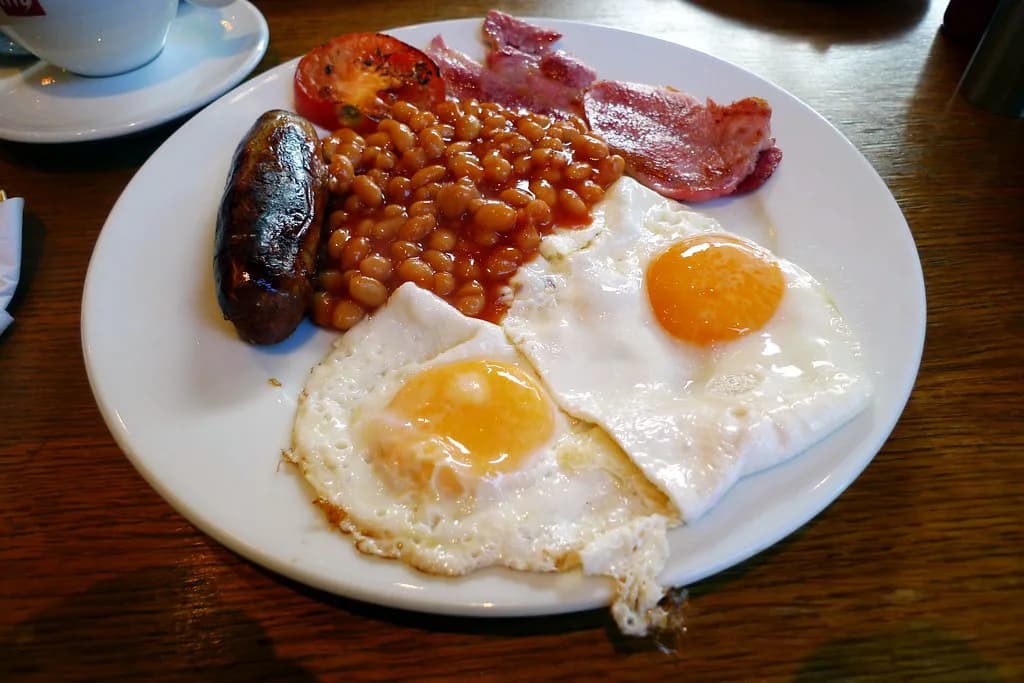
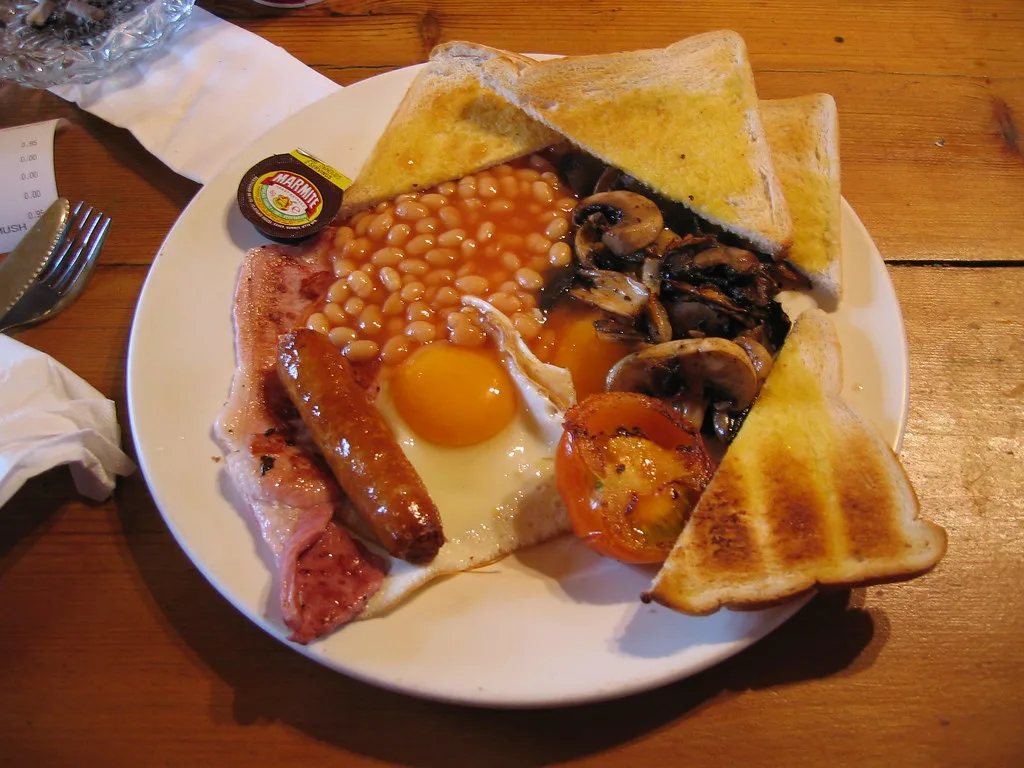
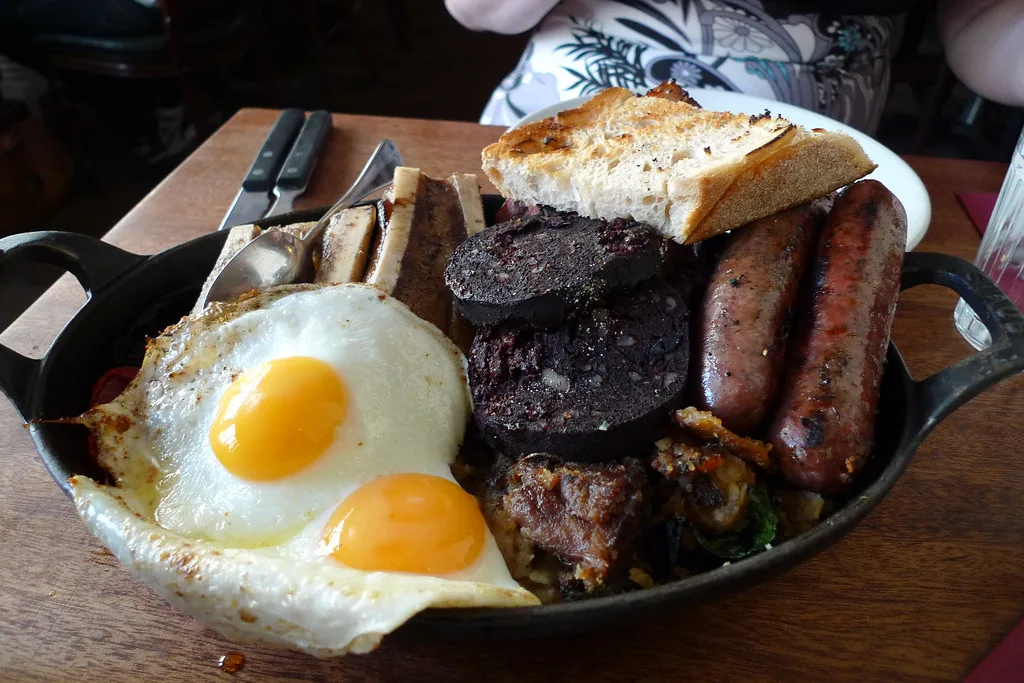
A full British breakfast is a plate of fried or scrambled eggs, bacon, sausages, beans, tomatoes, mushrooms, toast or fried bread, and often black pudding. It is a big meal, so have it as brunch and plan a light lunch rather than a second cooked meal. The components worth prioritising are the bacon, the sausage and the eggs; beans and fried bread are filler unless you grew up with them.
Cafés and greasy spoons do this better and cheaper than hotels, and the quality of the sausage tells you most of what you need to know about the kitchen. In Scotland the same plate becomes a Scottish breakfast with tattie scones and haggis, and in Northern Ireland an Ulster fry adds potato farls and soda bread. These are regional versions of the same idea, not separate dishes to plan a trip around.
Pies: pork pie, steak and kidney, and the Scotch pie
British pies split into two families: the cold pork pie, eaten with pickle or piccalilli, and the hot savoury pie such as steak and kidney or beef and ale. A pork pie should have a firm jelly between the meat and the crust and a crust that holds its shape when cut; a steak pie should be full of meat in thick gravy, not padded out with potato. Bakeries and pubs are the places to buy them, and the cold pork pie in particular travels well if you want something for a train.
The Scotch pie is a different animal: a small double-crust mutton pie with a high, straight wall, traditionally eaten hot with brown sauce or baked beans. It is a snack, not a main, and it is at its best from a bakery or a football-ground pie counter. If the pastry is pale and flabby, walk on.
Puddings: sticky toffee, treacle sponge, crumble and summer pudding
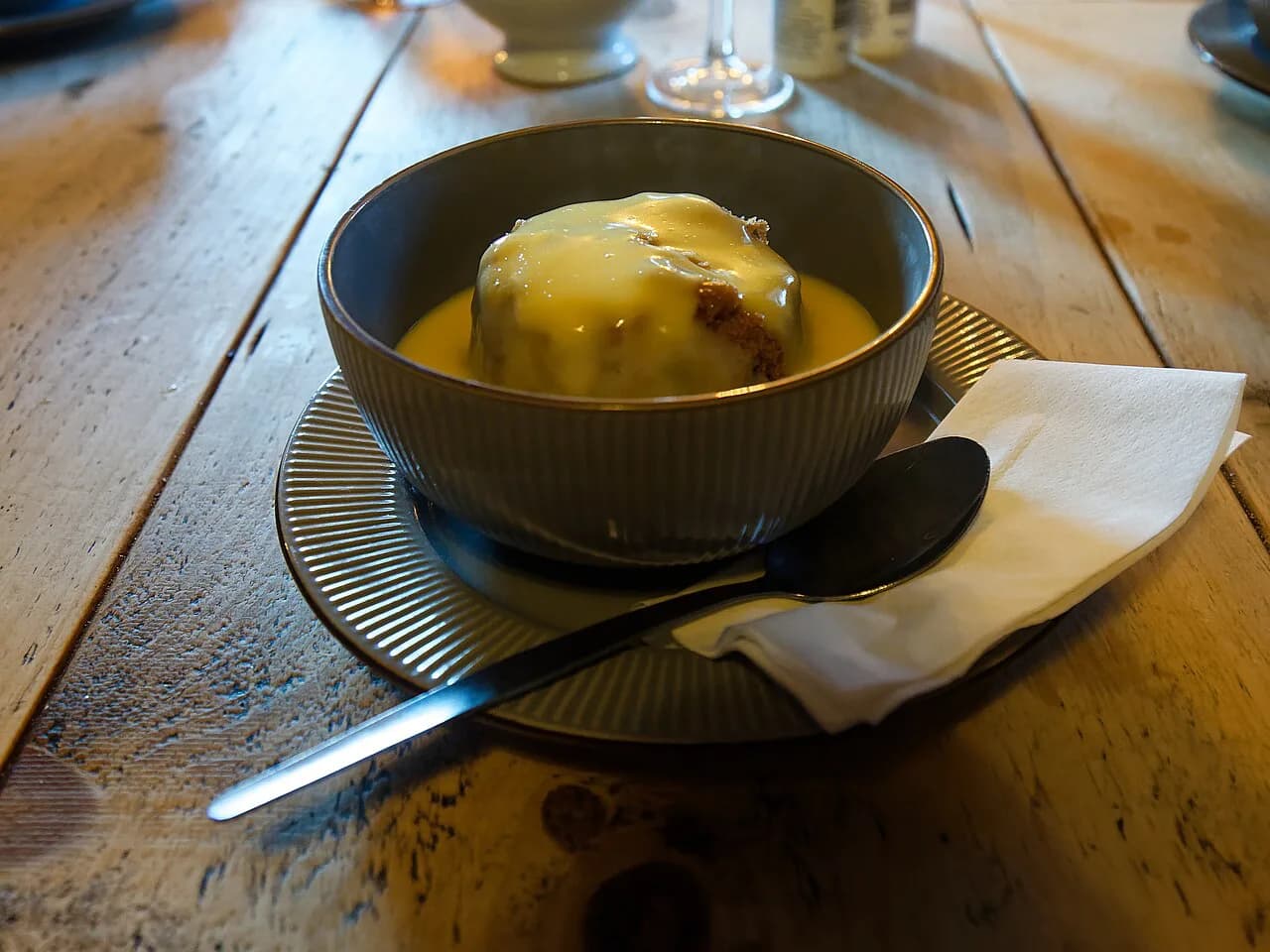
Sticky toffee pudding is a date sponge with a toffee sauce, and it is the safest bet if you only order one pud in Britain. Treacle sponge is lighter and more treacly, served with custard, while crumble pairs stewed fruit with a buttery, oaty topping. Summer pudding is cold bread soaked in berry juice with soft fruit inside — the lightest of the four, and the one to choose after a roast.
Order one pudding between two people if you have already had a main and a starter, because British puds are designed to finish you off. Custard, ice cream or cream is usually a choice rather than an extra, but ask if it costs more. A shared pud and two spoons is a perfectly respectable way to end a pub lunch.
Savoury puddings and suet dishes: toad in the hole and beef and ale pudding
Toad in the hole is sausages baked in Yorkshire pudding batter, and beef and ale pudding is a suet pastry pudding steamed or boiled with steak inside. Both are heavy, starchy and deeply savoury — proper winter food that is easy to underestimate on a warm day. Suet pastry has a dense, slightly spongy texture that some visitors love and others find stodgy, so try one before committing to a second.
Order these at a pub with a traditional menu rather than a café, and ask whether the dish is made in-house, because a reheated suet pudding is a sad thing. If you are eating two cooked meals in one day, make this the lighter of the two. One suet pudding is plenty for a single appetite.
The bakery counter: bacon bap, ploughman's, Scotch eggs and local specialities
Bakery counters are where British food is cheapest and most portable. A bacon bap is a soft roll with back bacon, sometimes with brown sauce or ketchup, and it is a better breakfast than most hotel buffets. A ploughman's is a plate of cheese, pickle, chutney, salad and bread, usually with ham or pork pie, and it is the best way to try several British cheeses at once.
A Scotch egg is a hard-boiled egg wrapped in sausage meat and breadcrumbs, and a good one has a slightly runny yolk and crisp, well-seasoned coating. Regional bakery specialities are worth seeking out: Eccles cakes in Greater Manchester, fat rascals in Yorkshire, and Welsh cakes — small griddled cakes with currants — in Wales. Buy from a bakery with a queue of locals rather than a display aimed at visitors.
Seafood beyond the chippy: scampi, crab and coastal dishes
Scampi is langoustine tail meat in breadcrumbs, served with tartare sauce and chips, and it is best close to the coast where the fish is fresher. Crab, when it is local, is served dressed or in sandwiches, and it is one of the few British dishes where being near the sea genuinely improves the plate. Order it in a coastal pub rather than an inland one.
The trade-off is price and seasonality: crab and lobster are the dearest things on most coastal menus, and they are not always local. Ask where the crab comes from, and if the answer is vague, order the scampi or the fish of the day instead. Shellfish is also the dish most likely to be off the menu on a Monday.
Regional specialities to look for
Beyond the national staples, each part of the country has its own dishes, and these are the ones worth planning a meal around. Cumberland pie and Eccles cakes belong to Cumbria and Greater Manchester, Scotch pies and morning rolls to Scotland, Welsh cakes to Wales, and soda bread and potato farls to Northern Ireland. Treat them as specialities to hunt for in the right place, not as a ranking of regions.
The clue to a local speciality is that it appears on ordinary menus, in bakeries and in homes, not only on a tourist board poster. If a dish is sold everywhere in town, it is probably local; if it is only sold on the high street with a picture of a chef on the sign, it is probably a visitor attraction. Ask in a bakery what people actually buy.
How to order: starters, mains and the pub-versus-restaurant trade-off
British portions are large, and the starter-main-pudding structure is more food than most visitors need. A starter is often enough for a light lunch, and a main plus a shared pudding is a full dinner. In pubs, ordering at the bar is normal, and table service is usually a sign of a more restaurant-style kitchen with higher prices.
The trade-off is atmosphere against refinement. Pubs give you bigger portions, ale and a relaxed room, while restaurants give you better cooking and smaller plates at a higher price. Match the venue to the dish: chippy for fish and chips, pub for roasts and pies, café for breakfast, bakery for portable food. A leaner pub menu is usually a better bet than a sprawling one.
Where to eat each dish: choose by dish, not by venue
Pick where to eat by the dish you want rather than by the best-reviewed venue in town, because most British kitchens are good at one or two things and average at the rest. For fish and chips, find the chippy with a queue at teatime; for a roast, book a pub that serves it only on Sunday; for breakfast, look for a café full of locals at nine in the morning.
Before you go, check the kitchen times, whether booking is needed for Sunday lunch, and whether the pub is family-friendly at the hour you plan to eat. Menus and hours change with the season, and bank holidays catch out even well-run kitchens.
Which three dishes should you actually order?
If you only have a weekend, order fish and chips at lunch from a chippy, book a Sunday roast for the following midday, and share one sticky toffee pudding. Add a café breakfast on the morning you leave, and use bakeries to fill the gaps between meals. That gives you the national staples without three heavy meals in a row.
If you have longer, add a Scotch pie in Scotland, a ploughman's for a light lunch, and one regional bakery speciality from wherever you happen to be. Build the rest of the day around the rich dishes rather than stacking them, and you will enjoy British food far more than a tick-list approach allows.
Explore more United Kingdom guides
Sources
Notes on eating out in the UK
Optional updates when our city guides change.
You might also like
Continue reading
More guides you'll find useful