Haggis: What It Is, What It Tastes Like and How It's Served
Haggis explained for the curious eater: what goes into it, how it tastes, why it comes with neeps and tatties, and how vegetarian haggis compares.
On this page
Haggis is a savoury meat pudding, not a sausage to slice and grill: Sheep offal, oats, suet, onion and warm spice are packed into a casing and simmered whole. It is Scotland's national dish, and it turns up far beyond January, from pub plates with neeps and tatties to a cooked breakfast. This guide covers what is actually in it, how it tastes and feels, how to order it without guesswork, and how the vegetarian version stacks up.
Expect an honest verdict rather than a sales pitch. Haggis is earthy, peppery and crumbly, and plenty of people need two or three mouthfuls before they decide. Knowing what is coming makes that first forkful much easier.
What haggis actually is
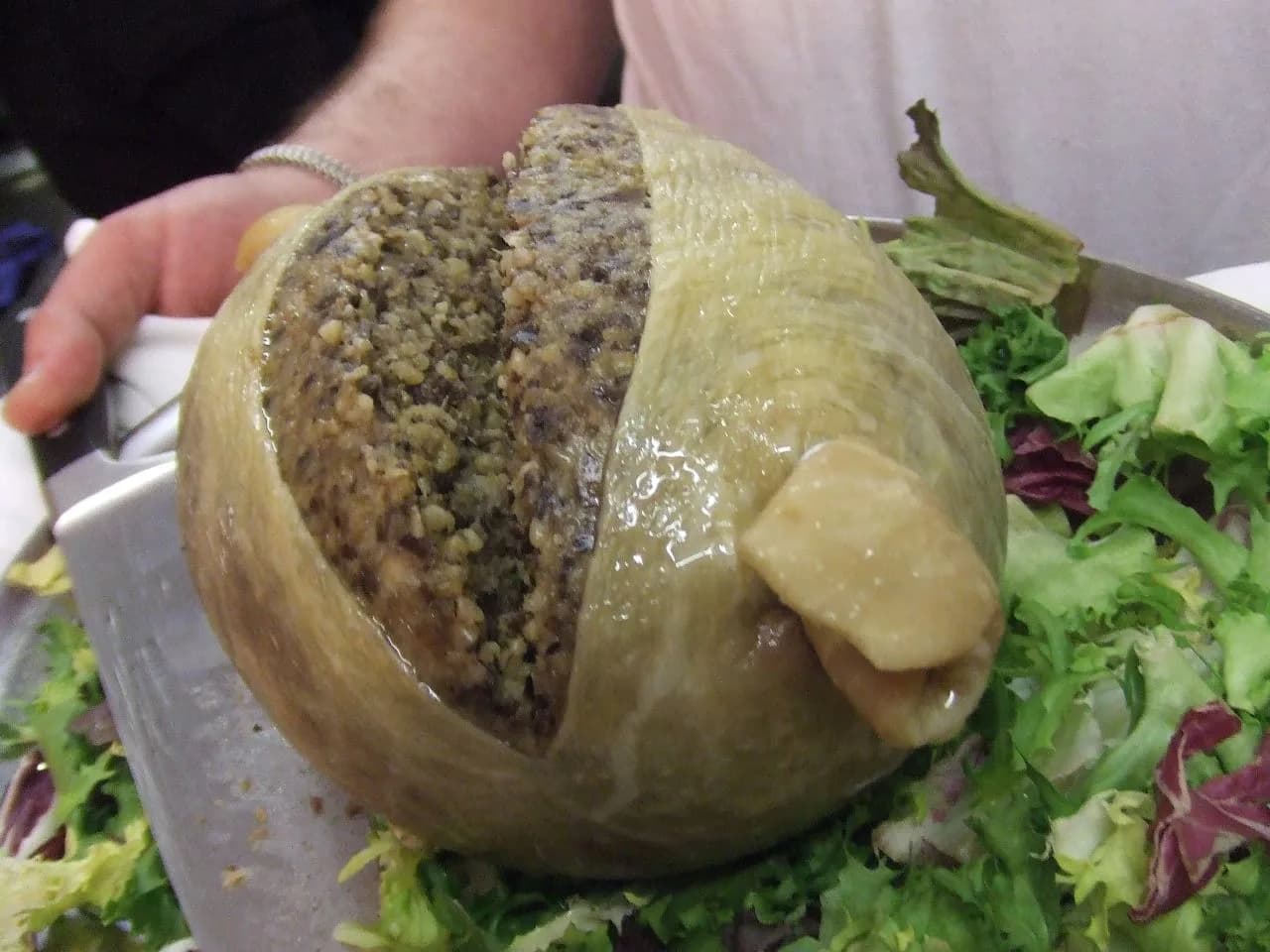
Treat haggis as a pudding in the old British sense: a mixture bound and cooked in a casing, like black pudding, rather than a sausage meant for the frying pan. The traditional filling is finely chopped Sheep's heart, liver and lungs with diced onion, steel-cut oats, suet and broth, seasoned with spices closer to a pumpkin-pie blend plus black pepper. The mix is packed into a washed Sheep's stomach and simmered until cooked through, which is why a whole haggis arrives as a bulging, tied parcel rather than neat links.
The dish has deep roots in Britain, with Sheep's offal puddings eaten here since at least the 13th century before it became fixed as a Scottish speciality. It is also the centrepiece of Burns Night, held on 25 January, the birthday of Robert Burns, whose 1786 poem addressed to a haggis sealed its place at the table. That association explains why a dish eaten all year round still gets bagpipes and a formal toast once a year.
What's in it, cut by cut
The offal is the flavour engine: heart gives a dense, meaty base, liver adds a faint pâté-like depth, and lungs bring the light, spongy texture that makes haggis crumble rather than slice. Oats do the structural work, soaking up broth and fat so the mixture holds together, while onion and pepper cut through the richness. Suet is the other key player, carrying the spice and keeping the whole thing moist through a long simmer.
Spicing is where haggis divides opinion. The warmth is gentle rather than hot, closer to mixed spice and black pepper than chilli, but it is distinctive enough that a well-made haggis tastes seasoned rather than bland. If you are buying from a butcher, ask how peppery their mix runs; that single question tells you more about whether you will enjoy it than any label.
How it tastes and feels
The first impression is earthy and gamey, with a nutty edge from the oats and a liver note some eaters find reminiscent of coarse pâté. The texture is the bigger surprise: crumbly, moist and spoonable once the casing is opened, not firm like a sausage. Even in Scotland it is an acquired taste, so order a small portion alongside something familiar the first time rather than committing to a plateful.
If you like black pudding, coarse country pâté or a well-peppered stuffing, you are likely to get on with haggis quickly. If offal in general puts you off, no amount of ceremony will fix that, and the vegetarian version is the sensible order rather than a plate you push around.
The neeps and tatties question
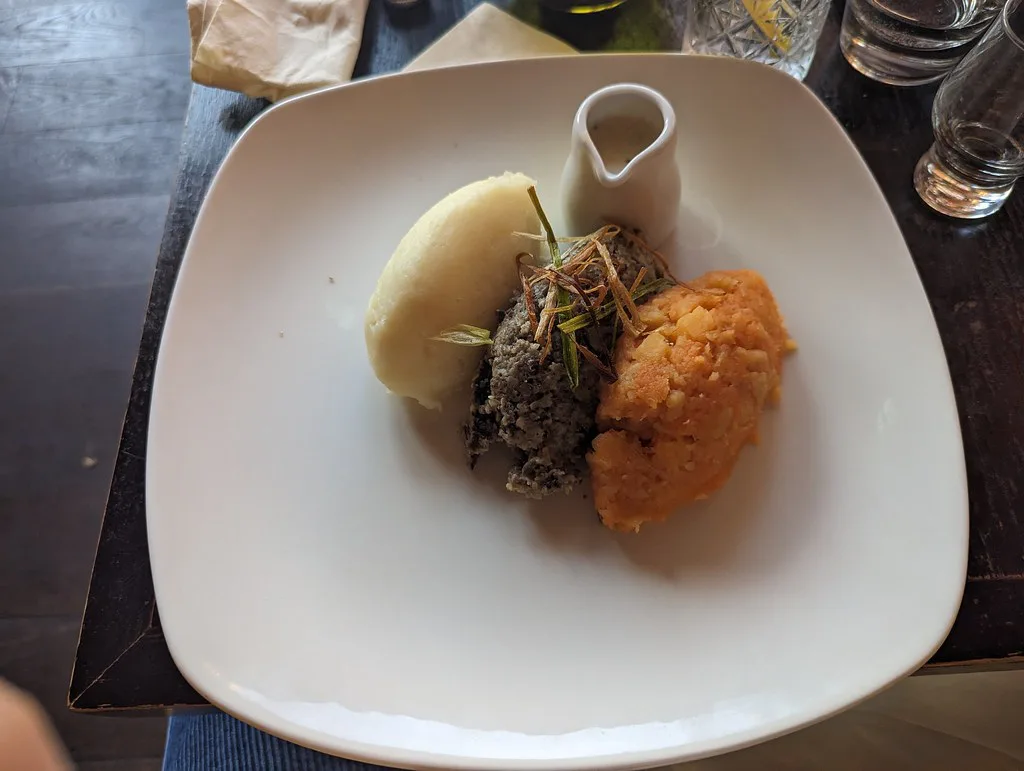
Haggis is traditionally plated with mashed potato and mashed turnip, and in Scotland that turnip is what most of England calls a swede: large, orange-fleshed and sweet once boiled and buttered. Menus write it as neeps and tatties, so if you are expecting small white turnips you will be surprised by the colour, not the flavour. The pairing works because the creamy mash and sweet neeps soften the peppery, fatty intensity of the haggis.
Beyond the classic plate, Scottish cooking folds haggis into a wider repertoire of hearty, offal-friendly dishes, which is worth knowing if you want to try it in more than one form. A peppery sauce or a mustard cream sits well with it, and a dram alongside is the conventional finish rather than a rule.
Vegetarian haggis: how it compares
Vegetarian haggis keeps the oats, onion and spice, then swaps the meat for lentils, white beans and chopped mushrooms, sometimes baked in a loaf tin or wrapped in blanched cabbage leaves instead of a stomach. The result is softer and more legume-forward, with less of the gamey depth but often a cleaner, nuttier flavour. It is a genuinely good dish in its own right rather than a consolation prize, and for a mixed table it is the easy common ground.
The trade-off is texture: vegetarian versions tend to be denser and less crumbly, so they slice more cleanly and can dry out if reheated hard. If your table includes both meat-eaters and vegetarians, ordering one of each to share is the honest way to compare rather than relying on descriptions.
Ways to eat it beyond the plate
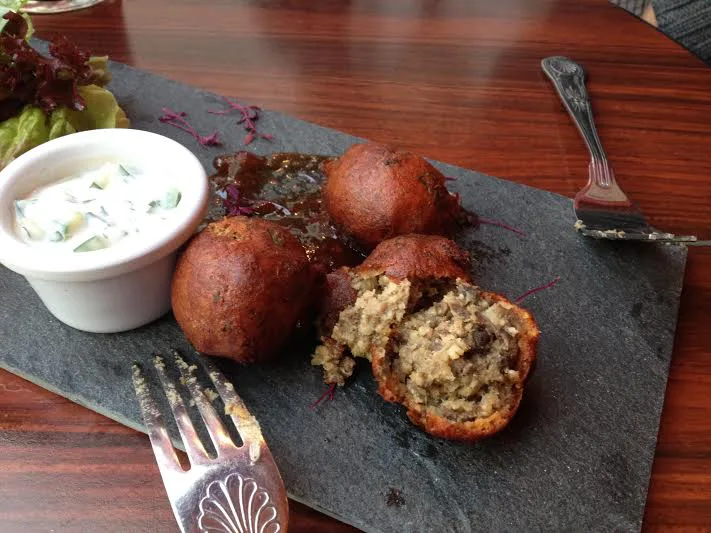
A full Scottish cooked breakfast often includes a slice or spoonful of haggis alongside bacon, sausage, a tattie scone, mushrooms and tomato, which is the least intimidating introduction for a sceptic. The frying-pan treatment also works on leftovers: haggis fried until crisp and spread on hot toast is a fast, savoury snack, and it makes a robust stuffing or seasoning for other dishes.
Burns Night remains the big set-piece, when a whole haggis is brought to the table with ceremony, but cooks increasingly treat it as an everyday ingredient rather than a once-a-year stunt. Croquettes, toast toppings and spiced noodle dishes all show up in Scottish home cooking. If you are hosting, a smaller haggis is easier to handle and leaves less to reheat.
Buying it: butcher, tin or veggie
At a butcher's counter, ask for a traditional haggis by weight and say how many you are feeding, since sizes vary and a whole one is a lot for two people. Butchers also sell vegetarian and gluten-free versions, and a good one will tell you whether theirs is mild or peppery. Tinned haggis is the convenient fallback, needs no casing handling and keeps well, but the texture is softer and it suits frying or a breakfast plate better than a ceremonial centrepiece.
Cooking a whole haggis means simmering it gently, never boiling it hard, because an aggressive boil can burst the casing and leave you with an oat soup. Piercing it is also best avoided for the same reason. If you are unsure, ask the shop for their cooking guidance when you buy, and follow the instructions on the pack rather than a generic recipe.
What to drink with it
A decent Scotch whisky is the traditional partner, and the match works on the same logic as the neeps: sweetness and warmth against pepper and fat. A single malt Scotch whisky with a little body stands up better than a light, delicate dram, though there is no rule that says you cannot drink beer instead.
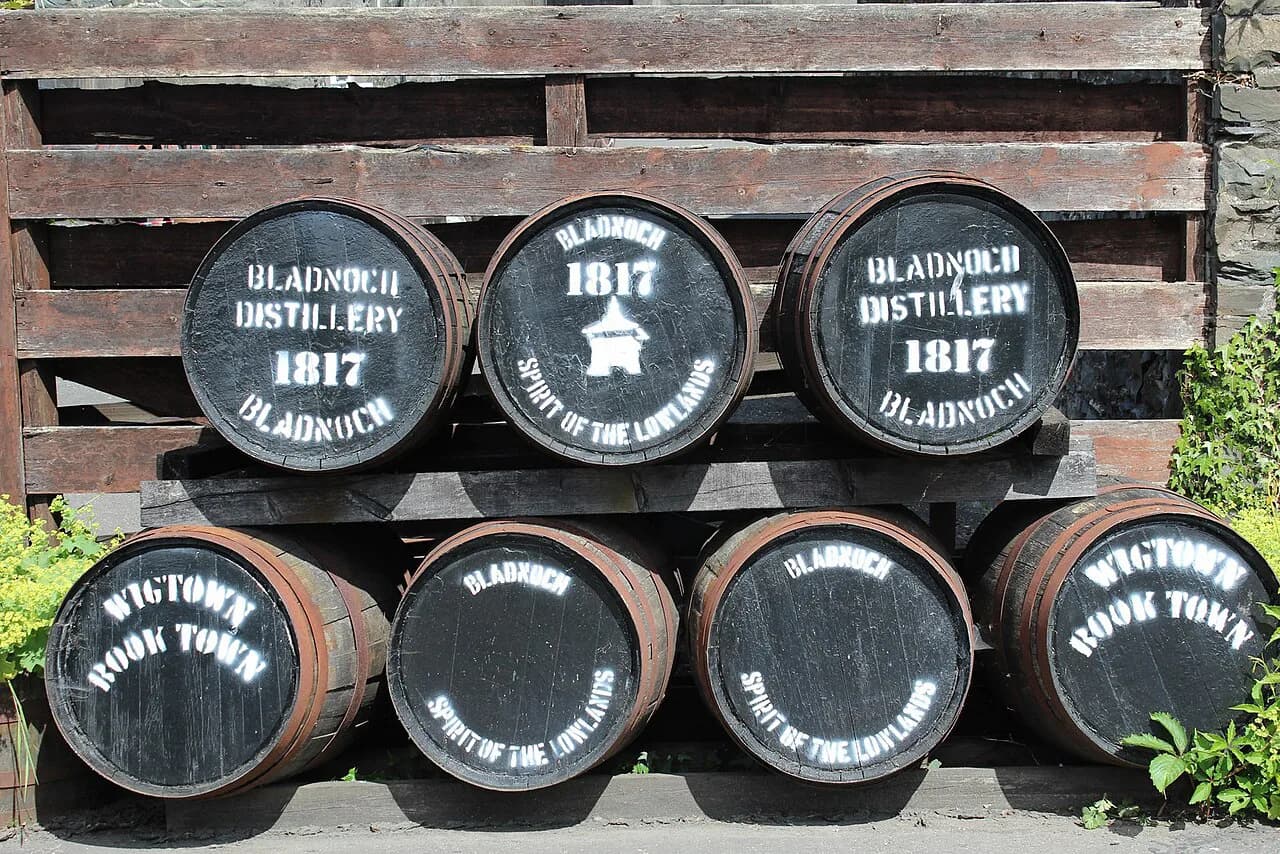
If you want to understand why certain whiskies suit the dish, the geography is a useful guide, with Speyside malts generally softer and sweeter than the smoky western styles. Planning a distillery visit around a haggis supper is an easy way to build a trip, and the whisky distilleries Scotland has to offer vary enough to keep a mixed group happy.
Should you order the haggis?
Order it if you enjoy offal, black pudding or a well-seasoned stuffing, and start with the breakfast plate or a smaller portion if you are unsure. Skip it if liver and Sheep's offal are genuinely off-putting, and take the vegetarian version instead rather than forcing a plate you will not finish.
Either way, order it with neeps and tatties rather than chips: the sweet swede and creamy mash are part of the point, and they show the dish at its best. A small dram alongside completes the picture without committing you to a whole bottle.
Explore more Scotland guides
Frequently Asked Questions
Is haggis a sausage?
It shares the idea of a filling packed into a casing, but it is a pudding rather than a sausage. A haggis is simmered whole and then opened up and spooned out, whereas a sausage is a smaller link usually grilled or fried and served in its skin. The texture is crumbly and coarse rather than smooth and springy.
Is haggis good to eat?
That depends on whether you like offal. Haggis is earthy, peppery and nutty from the oats, and the texture is moist and crumbly, which many eaters find satisfying and others find challenging. If you enjoy black pudding or coarse pâté, it is worth ordering; if offal puts you off, choose the vegetarian version.
Sources
Notes on eating out in the UK
Optional updates when our city guides change.
You might also like


Continue reading
More guides you'll find useful