
Ye Cracke, Liverpool: a Guide to the Rice Street Pub

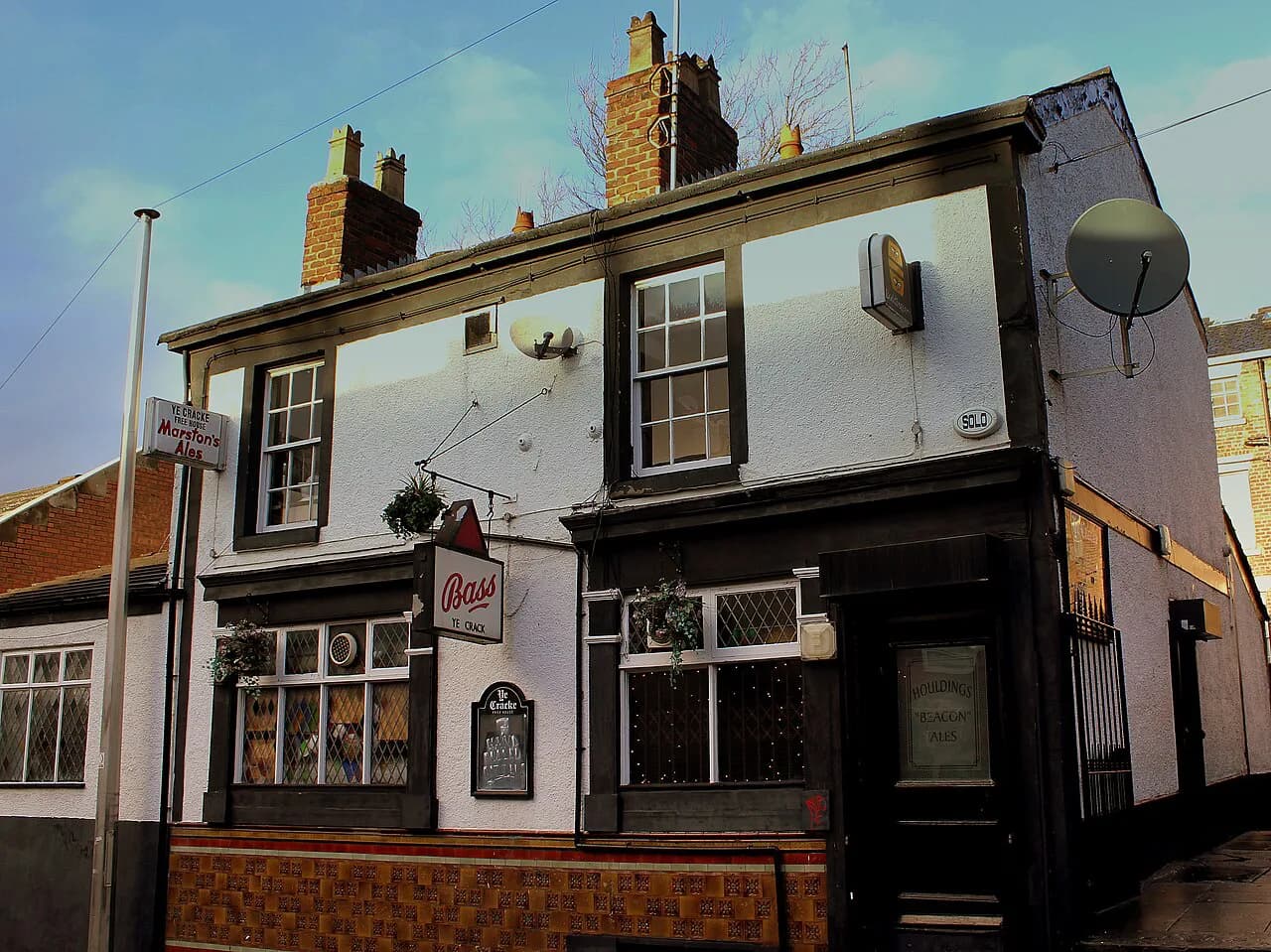
Ye Cracke is a multi-room 19th-century pub at 13 Rice Street, a narrow side street off Hope Street in Liverpool's Georgian Quarter, and it earns a visit of roughly 45 to 90 minutes for a pint and a proper look at the rooms. It is the pub where John Lennon and Stuart Sutcliffe drank as art students, and it reopened on 28 August 2025 after closing that April, according to Old Town Liverpool. This guide covers where it is, what you are actually looking at inside, the Lennon story and how it fits a Hope Street afternoon.
Where Ye Cracke is, and how to reach it
The address is 13 Rice Street, Liverpool, L1 9BB, tucked off the western side of Hope Street. The nearest station is Liverpool Central, and the walk is short and mostly flat, making it an easy add-on to a Philharmonic Hall concert or a cathedral visit rather than a trip in its own right. Our Liverpool pubs and food landmarks page has a short guide to each named place we cover.
If you are walking from the station, aim for Hope Street first and then look for the narrow side street; Rice Street is easy to miss at pavement level because the pub sits in a former cottage rather than a grand frontage. Arriving on foot is the sensible option, since the surrounding Georgian Quarter streets are tight and the pub has no parking of its own.

Why people come: the Lennon and Sutcliffe connection
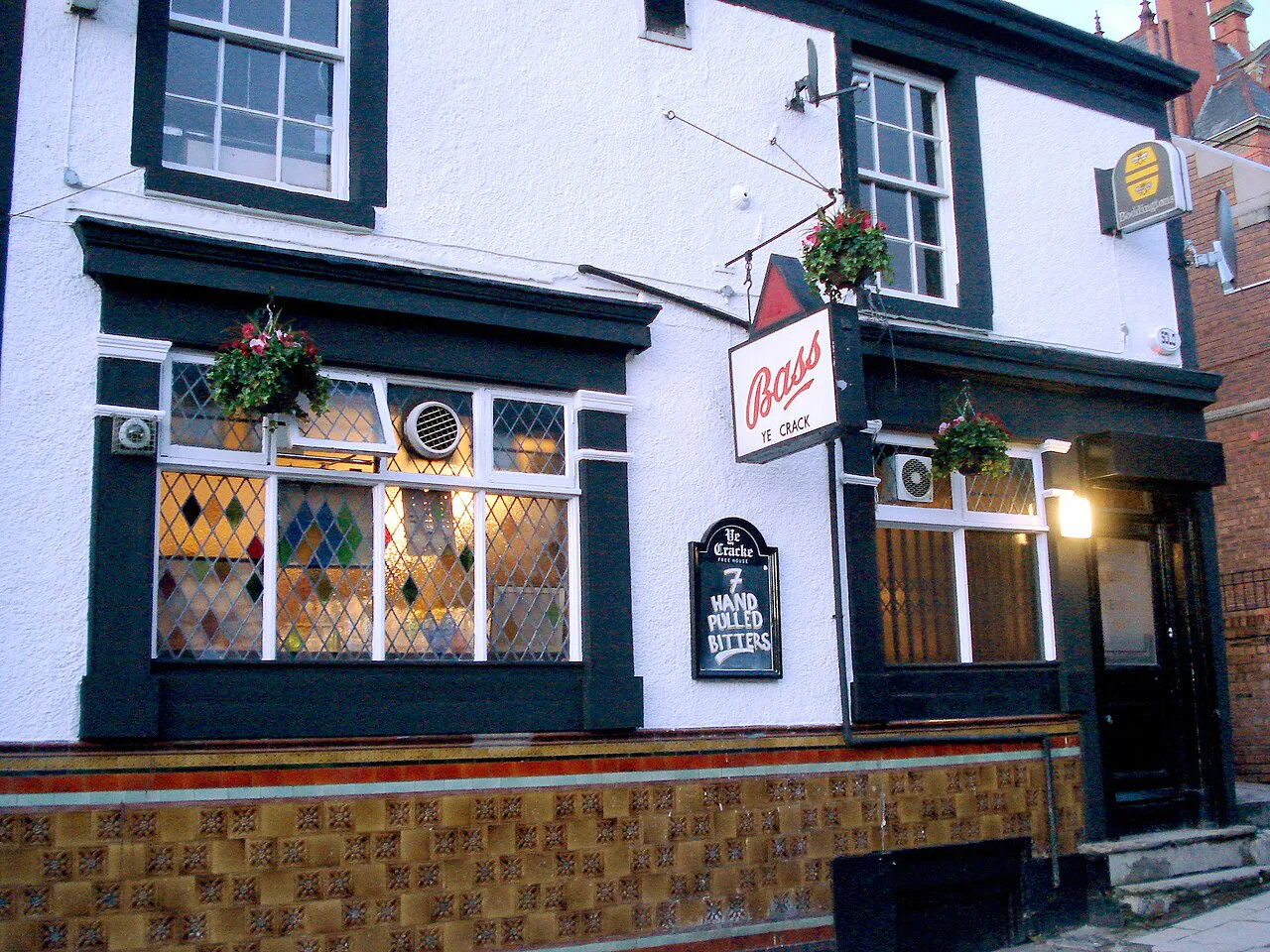
The draw is real but modest: Lennon and Sutcliffe drank here while studying at the nearby art college, and Lennon is said to have courted Cynthia Powell in the pub. Treat that as context for the building rather than a museum experience, because there is no exhibition, no themed bar and no tour attached to it.
What you get instead is the sense of a small, plain, lived-in pub where that crowd could sit without ceremony. If you are chasing Beatles mythology in a polished package, this is not it; if you like standing in a room where the story actually happened, it delivers.
The rooms inside, one by one
Ye Cracke grew piecemeal from its original cottage into the neighbouring house, so the layout is a collection of rooms rather than one open bar. At the front is a small bar with a plain boarded counter topped in copper; beyond it, a main bar still fitted with features dating from the late 1960s or early 1970s, as described by Old Town Liverpool.
The pub's best detail is the War Office, a snug partitioned off by timber-and-glass screens and keeping its original fixed seating. Small, half-screened rooms like this are increasingly rare in British pubs, and it is the reason a short visit here rewards a slow look rather than a quick pint at the door.

The War Office name and the etched door
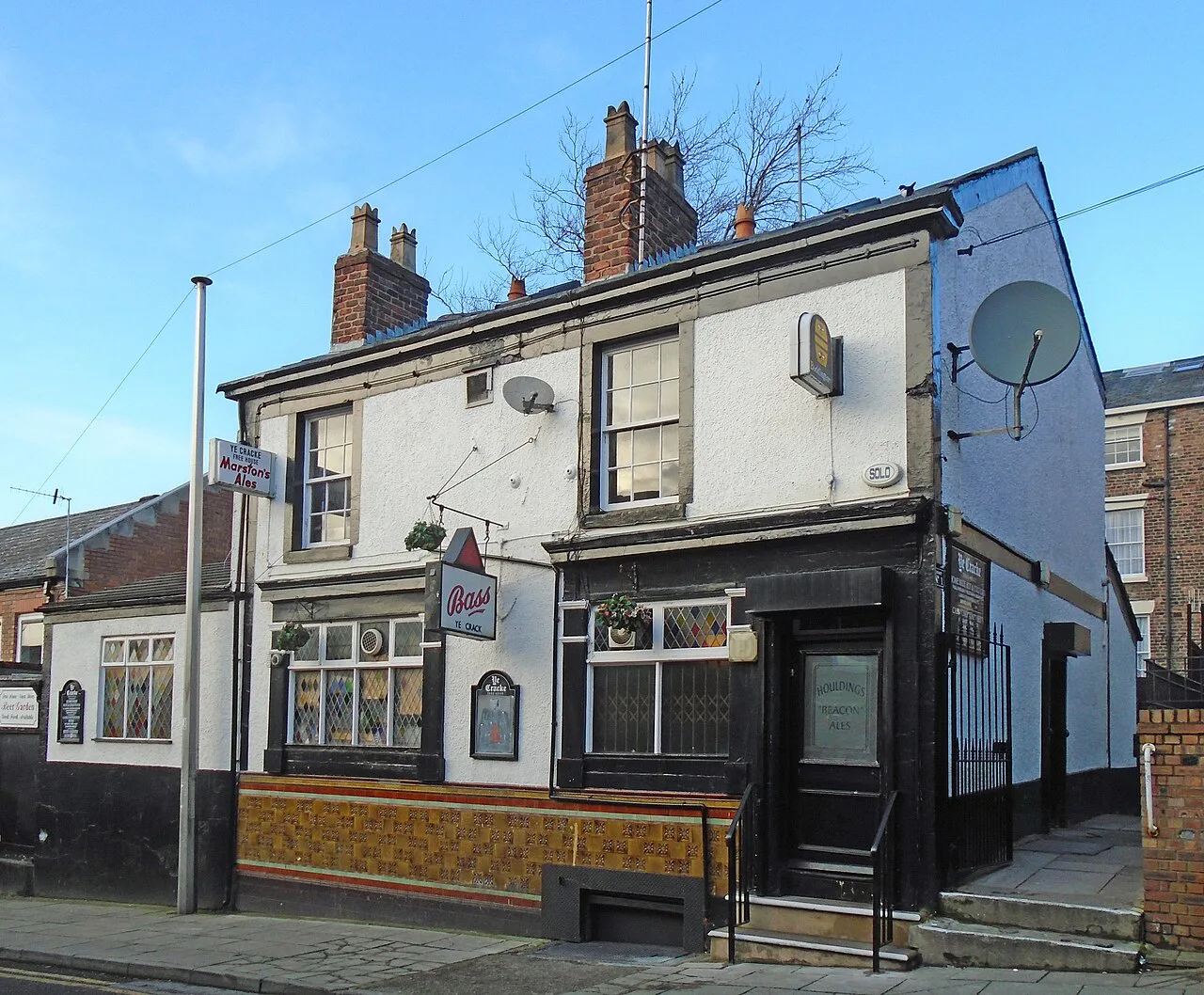
The War Office is said to take its name from locals who discussed the Boer War within its screens, a story that fits the snug's campaign-room feel. On the Rice Street door you can still read etched lettering for Houlding's Beacon Ales, from the brewery of John Houlding, the founder of Liverpool FC.
Both details are worth pointing out to anyone you bring along, and both are visible from the street side before you even order. They are the sort of fabric that survives refits, which is exactly why they matter here.
CAMRA's rating, and what is not listed
The Campaign for Real Ale rates the interior at two stars, meaning of very special national historic interest, while the building itself is not listed. That distinction catches people out: the protection attaches to what is inside, not the brickwork.
Practically, it means the snug, screens and fixed seating are the things to notice, and that a refurbishment can change the feel of a room without touching the historic core. Old Town Liverpool records that the pub reopened on 28 August 2025 with a refurbished main bar after shutting in April 2025, so if your memory of the place is older than that, expect a fresher main room.
What kind of pub it is now
This is a traditional multi-room pub with character and charm, popular with the student crowd, serving traditional pub food daily alongside a reasonably priced range of drinks. It suits a casual pint and a plate of something plain far better than a long, polished dinner.
The room is warm and inviting but not quiet or formal, and the mix of students and Hope Street passing trade keeps it lively. If you want a hushed, cushioned lounge, book elsewhere; if you want a proper old pub with a story, this is the right call.
Food, drink and what to check before you go
Traditional pub food is served daily, with beers, ales, wines and spirits behind the bar, but the kitchen's serving times and the current menu are best confirmed with the pub before you build a meal around it. Ring ahead if you are travelling specifically to eat rather than to drink.
Check the pub's current opening times before you travel, as hours can shift around holidays or after a change of management, and recent listings have shown roughly midday to late evening with a slightly later close at weekends. Booking is not the norm for a pub of this size, so treat it as a drop-in and have a second option in mind at peak times.
When it gets busy, and how long to allow
Allow 45 to 90 minutes: enough for a pint, a look at the War Office and the etched door, and a slow read of the room. Student term times and pre-concert evenings on Hope Street are when the small bars fill first, so aim for early afternoon if you want the snug to yourself.
The pub is compact, so a group of more than four will struggle to settle in one room at busy times. If your plan hinges on sitting together, go earlier or split the visit around a nearby concert.
Nearby: what puts you in the right place
Liverpool Philharmonic Hall and the Philharmonic Music Room are a couple of minutes away, and The Philharmonic Dining Rooms, Liverpool is a separate, grander pub worth knowing about if you want to compare Victorian interiors on the same walk. Liverpool Cathedral and the Hope Street Theatre are also within a few minutes on foot, so the pub slots neatly between them.
If you are making a pub crawl of the area, The Baltic Fleet, Liverpool offers a very different room to compare with Rice Street's cottage scale, so it is worth planning into the same trip. Plan the order by what you want to see rather than by distance, because the two pubs offer quite different experiences.
Who Ye Cracke suits, and who it does not
It suits pub-history visitors, Beatles-adjacent travellers and anyone who likes a small room with original fittings and a story attached. It does not suit anyone wanting a quiet, polished lounge, table service or a long, leisurely meal. If you want to weigh it against the rest of the city's boozers, our best pubs in Liverpool guide is a useful companion.
Should Ye Cracke be on your Hope Street route?
Yes, if you are already on Hope Street for the Philharmonic Hall, the cathedral or the theatre, and you want a proper old pub with a genuine snug and a Lennon connection you can see for yourself. Build in 45 to 90 minutes, ring ahead if food matters, and go early if you want the War Office to yourself.
Skip it if you want a polished room or a full evening's meal, and put your time into one of the grander pubs nearby instead. Ye Cracke is a small, specific pleasure, and it is best treated that way.