
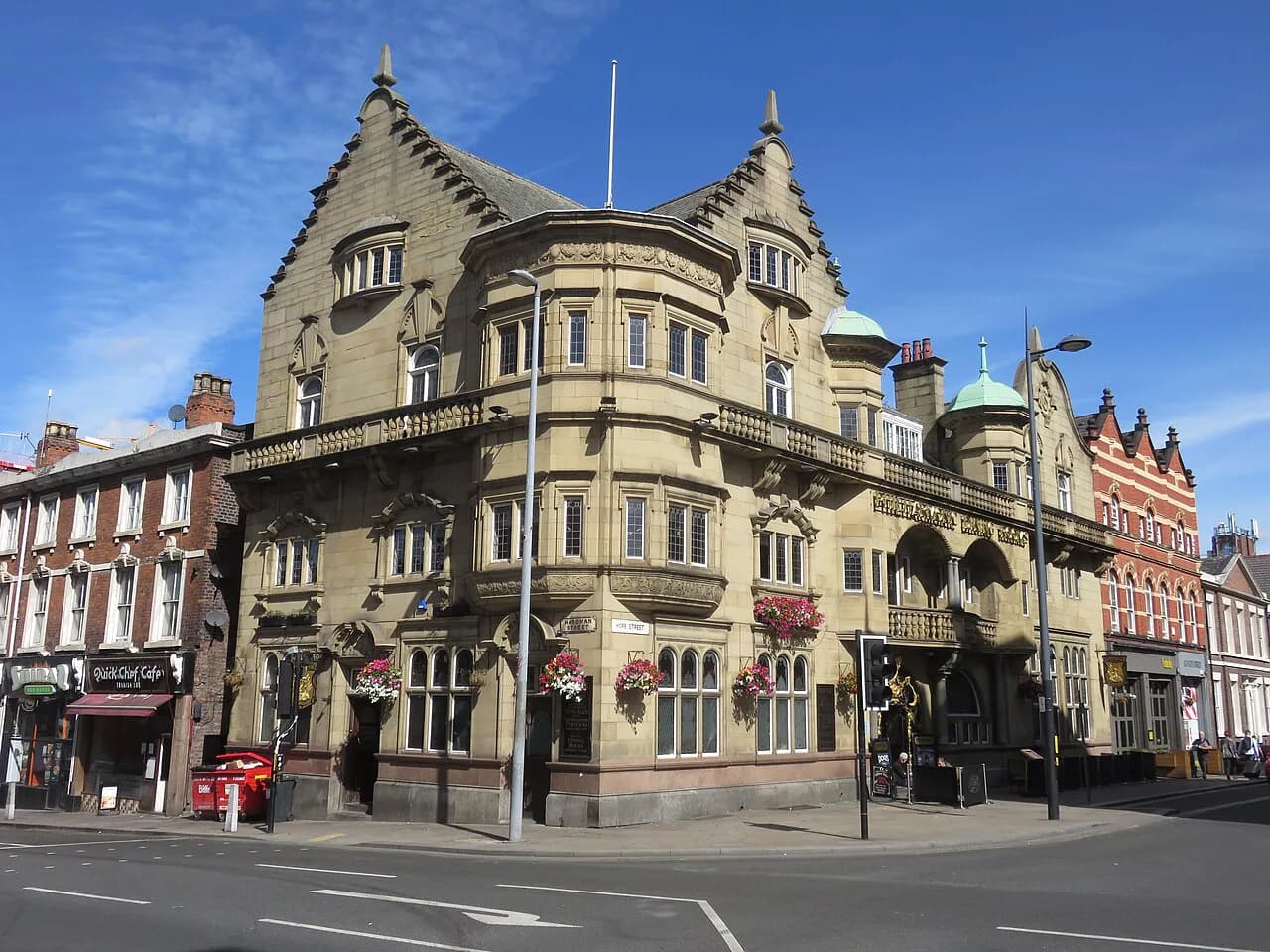
The Philharmonic Dining Rooms, Liverpool: A Visitor's Guide to the Phil

The Philharmonic Dining Rooms is worth visiting for the room, not just the pint: a Grade I listed late-Victorian pub on the corner of Hope Street and Hardman Street in Liverpool, and the building is the main event. Allow 30 to 45 minutes if you want to read the woodwork and the mosaics properly, or a relaxed hour if you are stopping for a drink too. This guide covers where the Phil is, what to look at inside, how long to give it and when to go, with eating and booking points kept to what the pub itself publishes.
A Grade I listed pub, first and foremost
The Phil is a working pub with a heritage listing that puts it in rare company. In 2020 it was upgraded to Grade I, making it the first purpose-built Victorian pub in England to reach Historic England's top grade, according to the Guardian's report on the change. That is the reason to treat it as a sight: you are walking into a surviving example of late nineteenth-century pub design rather than a museum set.
It gained that status on the strength of its architecture and interior, not its beer list. The Guardian describes it as the pinnacle of the gin Palace form of pub, which is the right frame for a visit: look up, look at the counters, look at the doors. Other Liverpool pubs come with their own histories, but the Phil's appeal is the fabric of the building.
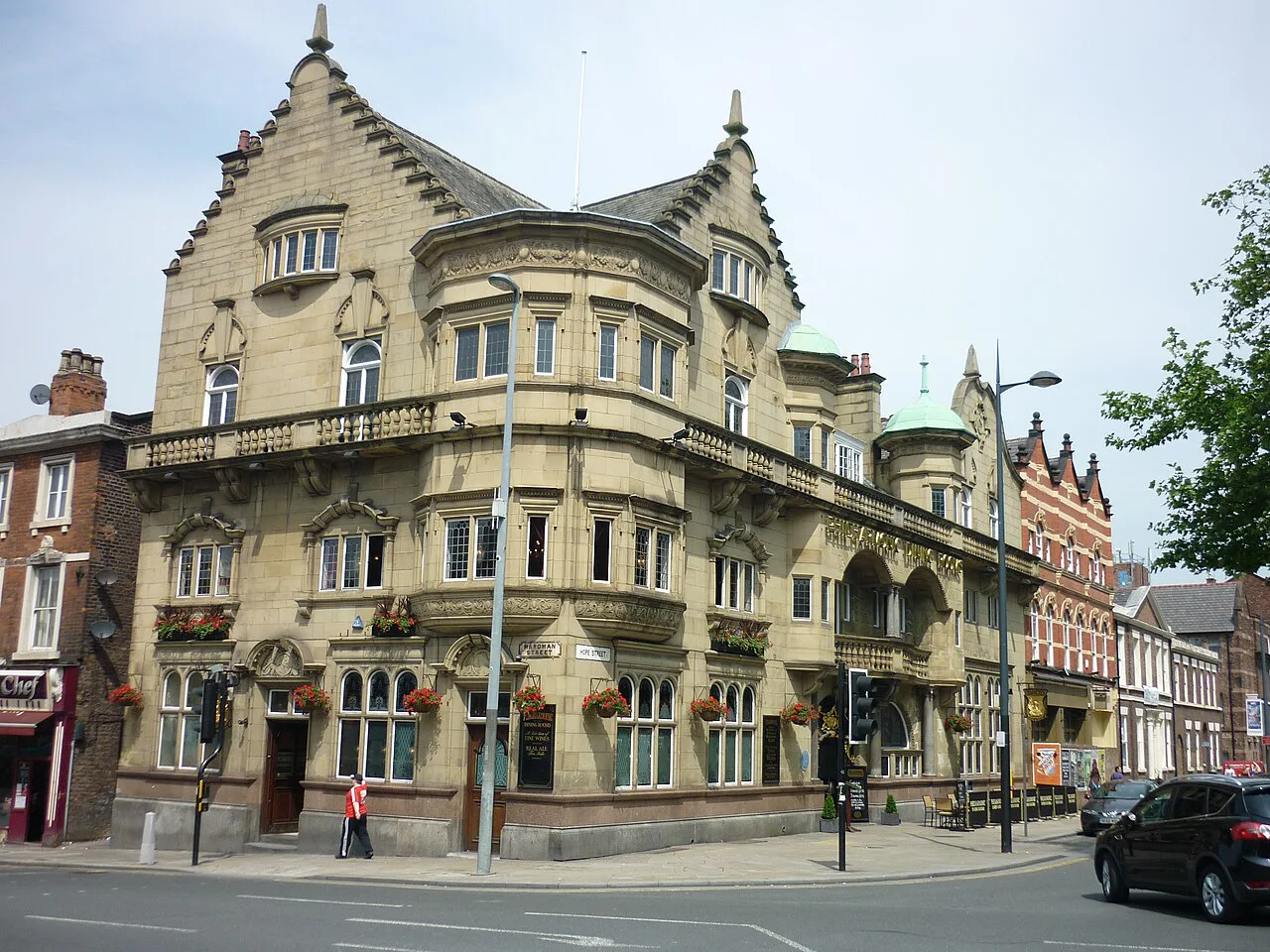

Where it is and how to find it
The pub stands at the corner of Hope Street and Hardman Street, diagonally across from the Philharmonic Hall. It sits on the same stretch of Hope Street that links the city's two cathedrals, so it works naturally as a stop on a walk between them rather than a separate trip. If you are coming from the city centre, the walk up Hope Street is straightforward and needs no transport.
For a rough sense of scale, the Phil is within easy walking distance of both Liverpool Cathedral and the Metropolitan Cathedral, which sit at opposite ends of Hope Street. That makes it a sensible mid-walk pause: see one cathedral, walk down, look round the pub, carry on to the other. The Hope Street area also has other historic pubs nearby, including Ye Cracke, if you want to compare interiors.
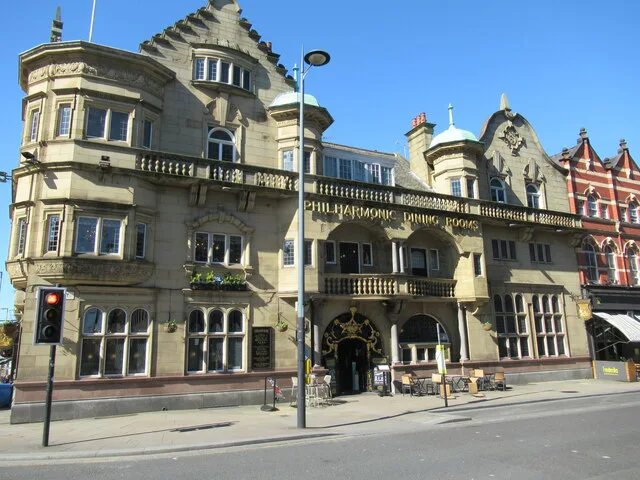

The architect and the build
The Phil was built between 1898 and 1900 by the Liverpool architect Walter W Thomas, and the Guardian places it at the end of the Victorian pub-building boom, sometimes called the golden age of pub design. It was first listed at Grade II* in 1966 before being upgraded to Grade I. Knowing the dates helps you read the decoration: this was a pub built to look wealthy, at the height of the port city's confidence.
What to look for inside
Start with the fittings that survive from the original scheme. The Guardian's description of the interior names elaborate carvings, mahogany fireplaces, mosaic-clad bar counters and art nouveau metalwork, including gates by the designer Henry Bloomfield Bare. These are the details worth slowing down for, because they are easy to walk past on the way to the bar.
Then find the stone reliefs. Carved musicians and musical instruments appear in low relief, a deliberate nod to the concert hall opposite, which gives the pub's decoration a logic beyond generic Victorian ornament. Once you know to look for them, the musical references are one of the most satisfying parts of the room. The maritime references in the decoration connect the pub to Liverpool's history as a port.
If you want to sit somewhere specific, the pub's own page is the place to see how the rooms are laid out and whether tables can be reserved. Do not rely on any single guide for the best seat: the appeal of the Phil is the whole interior, so a stool at a mosaic counter is arguably a better vantage point than a tucked-away corner table.
The gentlemen's toilets
The gentlemen's toilets are the pub's unlikely headline attraction, and they are a genuine survival rather than a stunt. The Guardian reports that the original Victorian fittings remain, including imitation-marble urinals, and that they have become one of the most photographed conveniences in the country. Go and look, take the joke in good humour, and remember you are in a working pub.
The ladies' toilets are a later addition and much plainer, added because the pub began life as a men-only establishment. That detail is the more interesting story: the contrast tells you how the pub was used when it opened. It is also a fair warning not to oversell the toilets to anyone in your group expecting equal spectacle.
How long to allow and when to go
Budget 30 to 45 minutes if the building is the point of your stop and you plan to walk the room, read the reliefs and see the toilets. A quiet daytime slot suits detail-spotting far better than a busy evening, when the room fills and the counters are crowded.
If you want a different historic pub nearby to compare it with, Peter Kavanagh's on Egerton Street, a short walk away, has its own eccentric carved corbels and landlord-designed tables with channels for spilt drinks. The two make a good pairing: the Phil is grand and ornate, Peter Kavanagh's is odd and intimate. Neither needs a whole afternoon.
Eating and drinking at the Phil
The Phil is run by Nicholson's and operates as a food pub as well as a drinking one, serving classic pub dishes alongside real ales and gin. The menu is the pub's own and it changes, so check the current offer on its page before you plan a meal around it.
Beer choice is part of the appeal for anyone interested in real ale, and CAMRA has been involved in protecting historic pub interiors like this one. Ask at the bar what is on that week, and treat the food as solid pub cooking rather than destination dining. If you are making a night of it, other worthwhile pubs on this side of the city include The Baltic Fleet, Liverpool, a short walk towards the waterfront.
Booking and what to check before travelling
Opening hours are the one thing worth confirming before a special trip, since they can change with the season and with events at the concert hall opposite. Nicholson's publishes the pub's hours and booking arrangements on its own page, which is the version to trust over anything second-hand.
For larger groups, or if you specifically want a table for food rather than a drink at the bar, booking ahead is the safer move. The pub's website is also where food service times sit, so check those separately from the general opening hours.
Nearby: what to add to a Hope Street walk
The Philharmonic Hall is directly opposite, which is why the pub exists in this form, and both cathedrals sit at either end of Hope Street. That gives you a natural short walk with the pub in the middle. Other Liverpool options worth knowing about include the Lion Tavern near Moorfields, a compact historic pub with a strong beer reputation, or the Liverpool Gin Distillery on Castle Street if you want a drink with more of an organised visit.
If you want a sit-down coffee or lunch nearby instead of a pub stop, Lovelocks Coffee Shop is a straightforward option in the area.
Is the Phil worth building a walk around?
Yes, if you go for the room rather than the meal. The Phil is a rare pub where the building itself justifies the detour, and 30 to 45 minutes of looking properly is time well spent. Pair it with a Hope Street walk between the cathedrals and you have a solid half-day.
Check the pub's own page for current hours and food service before you travel, especially if you are coming across the city for it. If you only have time for one historic pub interior in Liverpool, make it this one, and go earlier in the day when you can see the detail.
Explore more Liverpool guides
Frequently Asked Questions
What was John Lennon's favourite pub in Liverpool?
There is no reliable claim that the Phil was John Lennon's favourite pub. The Beatles did drink at the Phil in their early years, and Paul McCartney returned in 2018 with James Corden for a surprise performance, as reported at the time. Treat any 'favourite pub' label with caution.
Does the Philharmonic pub in Liverpool serve food?
Yes. The Phil is run by Nicholson's and serves classic pub dishes alongside real ales and gin. Menus and food service times change, so check the pub's own page before planning a meal around it.
Do you need to book the Philharmonic Dining Rooms?
For a drink at the bar, no. If you want a table for food or you are bringing a larger group, reserve ahead through the pub's own booking page. Booking rules are set by the pub, not by third-party guides.
How long does a visit to the Phil take?
Allow 30 to 45 minutes to see the interior properly, including the carvings, mosaics and the Victorian toilets. Add another 30 to 45 minutes if you are staying for a drink or a meal.