Scouse in Liverpool: What It Is and Where to Eat It
What Scouse is, why the stew gave Liverpool its nickname, and how to order it without a tourist-trap markup. A candid guide to the dish and its variations.
On this page
Scouse is Liverpool's own stew: cheap lamb or beef, potatoes, and root vegetables cooked down until the broth thickens, and it is the dish that gave the city its nickname. This guide explains what goes in the bowl, why the name travelled from sailors' tables to the people of Liverpool, and how to order it sensibly.
It is a budget comfort dish rather than a gastropub set piece, so the best versions tend to be plain, generous and cheap. Read on for the beef-or-lamb argument, the Blind Scouse version for vegetarians, and a realistic idea of where a proper bowl turns up.
What Scouse actually is
Scouse is a one-pot stew of meat, potatoes and root vegetables, cooked slowly enough that the potatoes partly break down and thicken the liquid. That is what separates it from a generic stew and dumplings: there are no suet dumplings on top, and the body of the dish comes from the spuds rather than flour or a roux. It is a leftover-friendly, stretch-a-joint-of-meat dinner, and it should taste like it.
Expect a thick, spoonable bowl rather than a thin broth, with the vegetables soft but still identifiable. The meat is usually cut small so a modest amount feeds several people, which is why the dish has always been associated with thrifty home cooking rather than restaurant showmanship.
Why the dish is called Scouse
The name is widely linked to lobscouse, a sailors' stew that travelled around northern European ports and took root in a busy dock city. Liverpool's docks made a cheap one-pot meal a working staple, and the people who ate it became known as Scousers; the dish and the nickname grew up together.
Treat the sailing connection as accepted background rather than a precise history: no one can point to the day the word crossed from the galley to the street. What matters for a visitor is the logic of it, a port city turning a cheap, filling, one-pot sailor's meal into an emblem of itself.

Beef or lamb, swede or carrot: the arguments that decide the taste
There is no single correct meat. Lamb gives a sweeter, richer broth, while beef is firmer and needs longer cooking to soften; either works, and a shoulder or neck cut brings more flavour per Penny than lean stewing steak. Which one is 'right' is a matter of household habit as much as tradition.
On the vegetables, the honest position is that swede and carrot both belong, with potato doing the thickening and onion the base. Purists will insist on one or the other, but the real dividing line is seasoning and patience: an under-salted, hastily cooked Scouse tastes of nothing, while a long, well-seasoned one needs no trickery.
Blind Scouse for vegetarians
Blind Scouse is the meat-free version, made with the same vegetables and potatoes but without the lamb or beef, a way to feed a family cheaply. It suits vegetarians and anyone eating on a budget, and it is not a lesser dish when the stock and seasoning are done properly.
If you are ordering it out, ask what the liquid is built on, because a meat stock would defeat the point; a good kitchen will answer plainly. If the answer is vague, order something else and treat Blind Scouse as a home-cooking project instead.
What to expect in the bowl
A proper bowl arrives thick enough to hold a spoon, the liquid built from the potatoes rather than thickened with flour. Accompaniments vary from kitchen to kitchen, but a plain bowl that tastes of long-cooked meat and root vegetables is a fair signal that someone in the kitchen knows what the dish is meant to be.
Portions are usually generous because the ingredients are cheap, so one bowl is a full meal rather than a starter. Ask whether a smaller bowl is possible if you are eating before a bigger dinner, and skip the bread if the bowl already looks stodgy.
Where to find a bowl in Liverpool
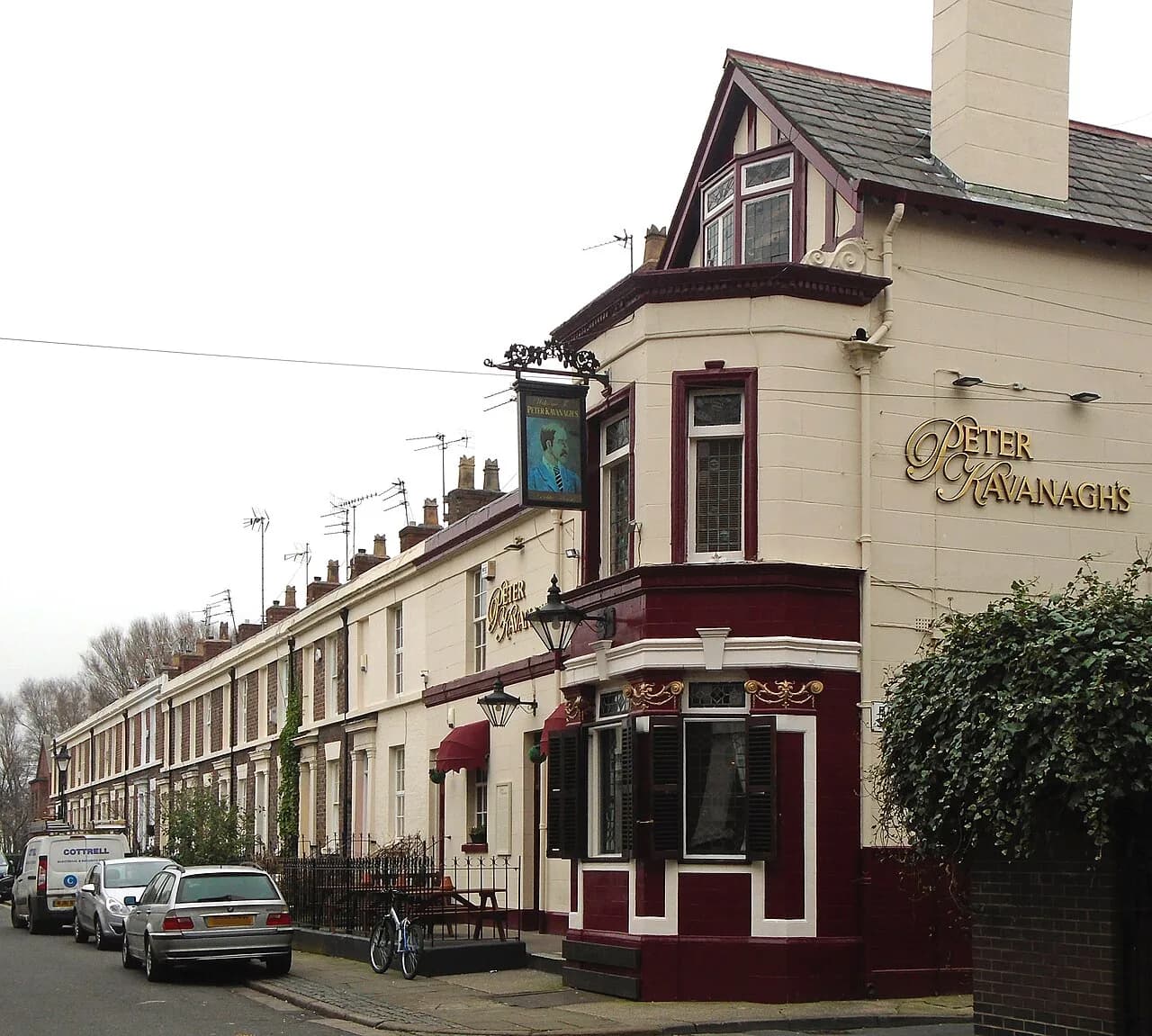
Scouse is home food first, so it turns up most reliably on pub and café menus with a strong local streak rather than in polished dining rooms. The heritage pubs are the obvious hunting ground: the Philharmonic Dining Rooms in the city centre holds a Grade I listing, and the Lion Tavern on Moorfields and Peter Kavanagh's on Egerton Street are both Grade II, so the rooms themselves are worth the trip even where Scouse is not guaranteed.
Elsewhere in the city, the Baltic Fleet on Wapping has a beer garden and a dog-friendly welcome on the edge of the Baltic Triangle, and the Lock and Quay in Bootle adds a canal-side pint to a trip out of the centre. None of these is a guarantee of Scouse on the day you walk in, so ring ahead or check the menu board before you build a day around it.
If you want a wider shortlist of places to eat around the city, the best restaurants in Liverpool are organised by what you are after rather than by postcode, and the Liverpool food guide covers the other local dishes worth ordering alongside a bowl.
Budget bowl versus sit-down Sunday lunch
The cheap route is a pub or café bowl with bread, which is what the dish was designed for and what most locals actually eat. The other route is a sit-down Sunday lunch where Scouse appears as one option among roasts, which costs more and often comes with more ceremony than the stew needs.
Book the sit-down version if you want a table, a proper room and someone else doing the washing up; go casual if you mainly want to taste the dish. Either way, no price is worth quoting from memory, so check the menu on the day rather than trusting a figure from an old review.
Common mistakes when ordering Scouse
The biggest mistake is ordering it where it is a novelty item aimed at visitors: a thin, pale bowl with a garnish on top is not the dish, and it is usually the most expensive version. Look for a short menu, a plain room and a kitchen that cooks it in quantity.
The second mistake is assuming it is always available, because a slow-cooked stew suits a kitchen that makes it in batches and sells it until it runs out. It is a weekday lunch more often than a Saturday-night special, and it is the first thing to disappear when a pub gets busy.
If Scouse is not on, the rest of the city's food does not disappoint: fish and chips, a proper breakfast or an Indian meal are all within a short walk of the centre, and the vegan restaurants cover the meat-free end of the market.
Is Scouse worth trying, and who will like it
Yes, if you like slow-cooked meat, root vegetables and a bowl that fills you up for very little money. It is also the cheapest way to eat something that genuinely belongs to Liverpool rather than to a restaurant group, which makes it a good first meal of a trip.
It will not suit anyone who wants heat, crunch or a light lunch, and it is a poor choice for a quick pre-theatre bite because a good version is cooked slowly and served hot and heavy. Go for it at lunchtime, with a pint, and treat it as the main event.
Making it at home
Brown the meat in batches, soften onion and carrot, then add potato, swede and enough stock to cover, and simmer until the potato starts to collapse and thicken the liquid. Season at the end, not the start, and rest the pot before serving so the broth comes together.
For Blind Scouse, use a good vegetable stock and a little extra root vegetable for sweetness, and finish with pepper and a splash of something sharp. A slow cooker or a low oven does the job with less watching, and the leftovers are better the next day.
Should Scouse be your first meal in Liverpool?
Make it lunch, in a plain pub with a short menu, and order the meat version unless you have a reason not to. Ring ahead or check the board, because a batch-cooked stew is not always on, and a bowl with bread and red cabbage is the version worth your money.
If it is off, eat something else in the city and come back another day; the dish is worth the wait, not a detour into a tourist menu. Liverpool's wider food scene is strong enough that no single bowl needs to carry the trip.
Explore more Liverpool guides
Sources
Notes on eating out in the UK
Optional updates when our city guides change.
You might also like



Continue reading
More guides you'll find useful