The Oldest Pub in Derry: The River Inn on Shipquay Street
Derry's oldest sited bar is The River Inn on Shipquay Street, established in 1684. What each of its bars is for, plus other pubs with real history.
On this page
The oldest pub in Derry is The River Inn at 34–38 Shipquay Street, which dates itself to 1684 and calls itself Derry's oldest sited bar. The wording matters: the site carries the claim, not a single surviving building, and the pub ties its origins to the years before the Siege of Derry. This guide covers what that history amounts to, which of its bars suits which evening, and the Waterloo Street pubs to know for old-Derry atmosphere.
Why 'oldest sited' is not the same as 'oldest building'
A pub calling itself the oldest sited bar is claiming continuous trading on one spot, not the age of the walls around you. The Doherty family has run The River Inn for over 40 years and has extended it into the old Palace Cinema next door, so the interior is a modern complex rather than a preserved 17th-century room.
Hold on to that when choosing where to drink inside the walls. The Shipquay Street address and the cellar level give the sense of continuity; if you want dark wood and snugs that have not moved in a century, a Waterloo Street pub will often feel older even where the licence is younger.
The River Inn today: four rooms and what each is for
The pub runs as a complex of distinct areas. Silver St takes its name from the original name of Shipquay Street and fronts the site, the Cellar occupies the original cellars, the Snug is the small room for a quiet corner, and the Cafe bar faces the street with teas, coffees and homemade food. The kitchen describes a fresh menu seven days a week, with live local entertainment in the evenings.
That layout suits different visits. The Cafe bar is the daytime stop when you are walking the walls and want something warm without a full session; the Cellar is the one to ask for if you want the historic room under the building; Silver St is the busiest, most bar-like space. Groups can book balcony booths or a private party, worth arranging ahead if you are bringing more than a handful of people.
The documented history: punch, horses and Wolfe Tone
The pub's own account explains why the site qualified as an inn. To hold an inn's licence at the time it needed permission to sell punch, to provide accommodation and to stable horses, so the original business was a place to sleep and tie up a Horse as much as a place to drink.
The cellars carry the sharpest story: in 1798 they were used to hold Wolfe Tone on his way to execution in Dublin after his capture in Donegal. Those cellars have since been converted into the Cellar bar, so the most historically loaded room is also somewhere you can order a drink. Treat the story as the pub's account, and ask staff which part of the cellar is original.
Is it a tourist trap? The honest trade-off
The River Inn sits in the busiest quarter inside the walls, and that brings consequences. Expect it to be fuller than the side streets when the city is busy, a menu pitched at a broad audience, and prices that reflect the location rather than a hidden local's boozer.
The compensation is range: you can eat, drink and sit four different ways under one roof, useful with a mixed group or when the weather turns. If your priority is a proper old pub with music and no queue, read the best pubs in Derry and use The River Inn for the daytime or an early drink. Its site carries the menus and reservations pages, so check those for kitchen times and booking.
Peadar O'Donnell's on Waterloo Street for music and grocer-pub character
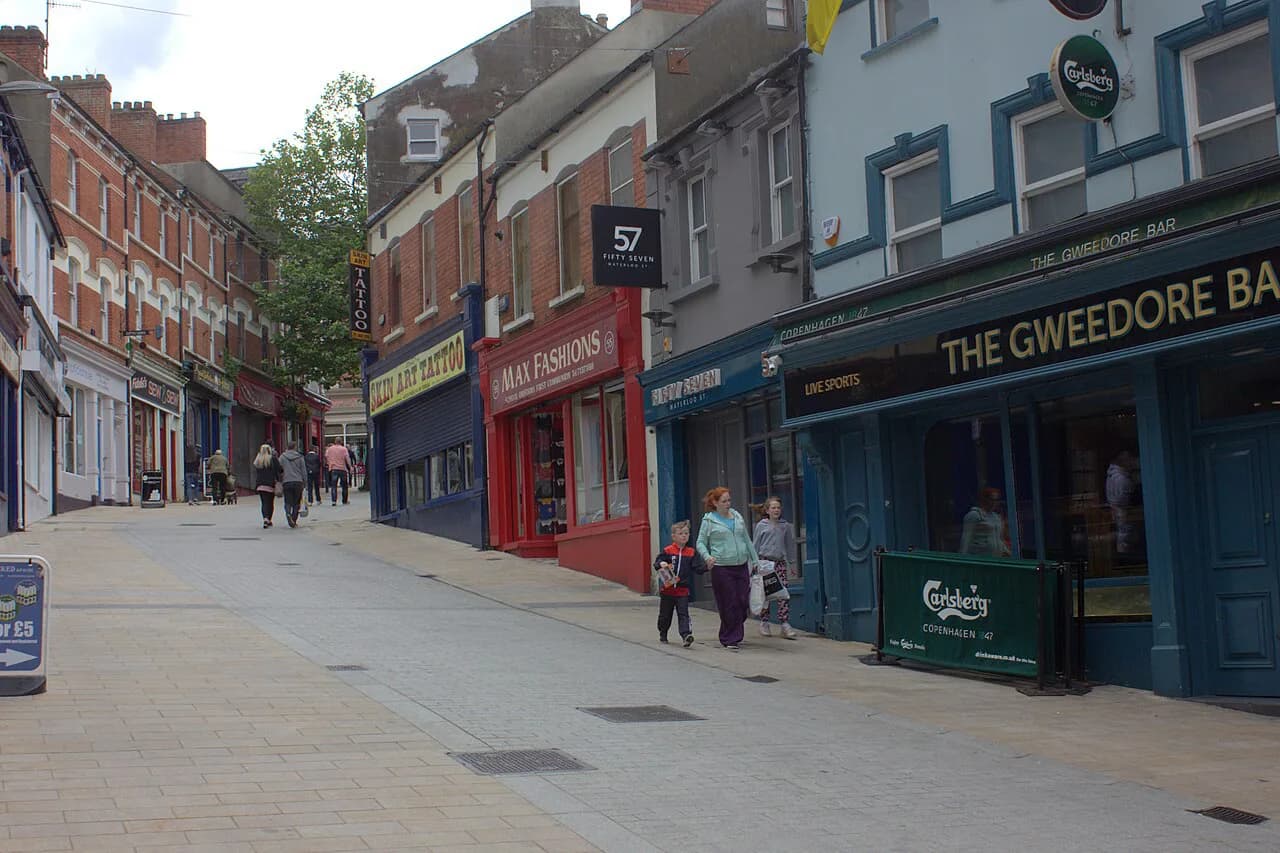
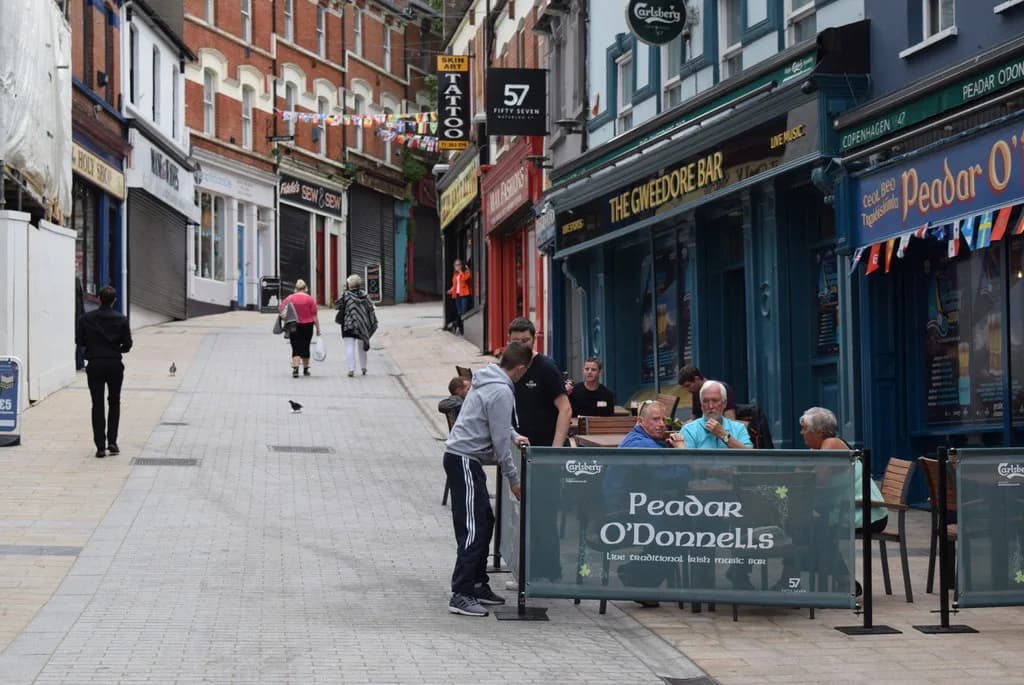
For the atmosphere people mean by old Derry, walk a few minutes to Peadar O'Donnell's at 59–63 Waterloo Street. The building holds three bars: Peadar O'Donnell's itself, the Gweedore Bar and Fifty-Seven Waterloo St. It is known for live traditional and contemporary music nightly, grocer-pub decor and a flag collection, with impromptu sessions from local and visiting musicians.
Choose it for a music night rather than a quiet pint, because the session is the draw, not the seating. The three bars give you somewhere to retreat when the front is packed, and the Waterloo Street position means you can move on without a taxi.
The Dungloe, established 1892, for food and a beer garden
The Dungloe Bar at 41–43 Waterloo Street was established in 1892 and sits under 300 metres from the Guildhall, on the corner of Waterloo Street and High Street. It has a local feel, food and a large outdoor beer garden with a stage, and a reputation for music supporting local bands, traditional players and new talent. The crowd is mixed in age and locally weighted.
Its beer garden is the reason to pick it on a dry evening, and the corner site makes it an easy first or last stop between the walls and Waterloo Street. Food comes alongside the drink rather than as the main event, so treat it as a pub that feeds you well.
Badgers and O'Loughlin's: character over age
Badgers Bar & Restaurant at 16–18 Orchard Street has traded for over 30 years and is known for the Derry Girls mural on the site, making it the obvious stop if that is why you came. It sits close to the city's theatres, so it fills before and after shows, and works as a shopping-day refuel as readily as a night out.
O'Loughlin's Irish House at 27–31 Waterloo Street is a traditional Irish bar with folk bands Thursday to Sunday evenings, a second music option a few doors from Peadar's. Neither trades on a founding date, so pick them for the room and the music. For a sit-down meal, match kitchens to occasions with the pub food Derry guide.
How to slot a historic pub stop into a day inside the walls
Start at The River Inn in the middle of the day, when you can see the Cellar and the Snug without competing for space, then move to Waterloo Street as afternoon turns to evening. Do the walls first, take the Cafe bar or Silver St for a late lunch, and walk the few minutes to Peadar O'Donnell's or The Dungloe when the music starts.
Two practical notes. If you are eating on a Sunday, decide between a carvery and something lighter before you set off, since Sunday lunch in Derry fills the obvious rooms quickly. And if beer rather than history is the point of the trip, plan around the city's brewing and use the Drinking in Derry guide to pick where to finish.
Is the River Inn worth it for the history alone?
Yes if you want the story and the convenience of four rooms in one busy location; no if you are chasing the feel of an untouched old pub. Go for the Cellar, ask about the 1684 licence and the 1798 cellars while you are there, and walk to Waterloo Street for the music afterwards.
Check the pub's own site before a special occasion, since menus, reservations and evening entertainment change with the season.
Frequently Asked Questions
Why does The River Inn call itself Derry's oldest sited bar?
The pub dates its site to 1684 and says it is Derry's oldest sited bar, meaning continuous trading on one spot rather than the age of the current building. Its own account ties the origins to before the Siege of Derry and to the requirements of an inn's licence at the time: permission to sell punch, provide accommodation and stable horses.
Can you visit the cellars where Wolfe Tone was held?
The original cellars have been converted into the Cellar bar, so the room is part of the pub rather than a separate museum. The pub's account says the cellars were used in 1798 to hold Wolfe Tone on his way to execution in Dublin after his capture in Donegal. Ask staff which parts of the cellar are original when you visit.
Sources
Notes on eating out in the UK
Optional updates when our city guides change.
You might also like
Continue reading
More guides you'll find useful