Oldest Pubs in Nottingham: Trip, Salutation or Bell?
Nottingham has three pubs claiming to be oldest: the Trip, the Salutation and the Bell. Here is what each claim rests on and what each is like for a pint.
On this page
There is no single answer to the oldest pub in Nottingham, because three city-centre pubs all claim the title and each claim rests on something different. The Trip, the Salutation and the Bell sit within a few minutes of each other, so you can weigh them up in person over a pint rather than taking a painted date at face value.
This guide sets out what each claim is built on, what the buildings are actually like inside, and how to walk between them from Market Square to Castle Rock. It also covers what to order and where to go next if you want to carry on beyond the famous three.
Why Nottingham has three contenders
Walk around central Nottingham and you will see three confident dates on three very old pub walls: 1189 at Ye Olde Trip to Jerusalem, 1240 at Ye Olde Salutation Inn and 1437 at the Bell Inn. Each building sits over or beside man-made caves cut into the soft sandstone the city is built on, which is part of why the claims feel plausible.
The complication is that a date on a wall is a story about a site, not a survey of a building. The timber frames, roofs and cellars at all three have been altered repeatedly, so a founding legend and a surviving structure can be centuries apart.
A useful rule before you start: ask whether a claim is about when people first drank on the spot, when the current building went up, or when the place was first recorded as a pub under its present name. Those are three different questions, and the answers point in different directions.
Ye Olde Trip to Jerusalem, Brewhouse Yard
The Trip is tucked into the base of Castle Rock in Brewhouse Yard, directly beneath Nottingham Castle, and parts of the pub are carved straight out of the rock. The cave rooms give it the atmosphere people come for: low, snug and slightly eerie, and unlike either of the other two.
Its 1189 date is presented as the year the inn was founded, but even the pub's own material acknowledges the precise year is difficult to verify. The building's projecting timber-framed section is dated by Historic England to the seventeenth century, with substantial remodelling in the eighteenth and nineteenth.
The strongest documentary marker for drinking on the site is a 1760 licence to William Marriott, when the property was recorded as The Pilgrim; the name Trip to Jerusalem appears by the time of a 1799 directory. That gap between legend and paperwork is the whole argument in miniature.
In practice the Trip is the busiest and most tourist-facing of the three, with a beer garden, a family-friendly dining room and a house ale called Olde Trip. The pub currently lists opening from 11am daily and food service ending at 9pm most evenings and 8.30pm on Sundays, so check the day you plan to eat there; dogs are welcome.
Ye Olde Salutation Inn, Hounds Gate
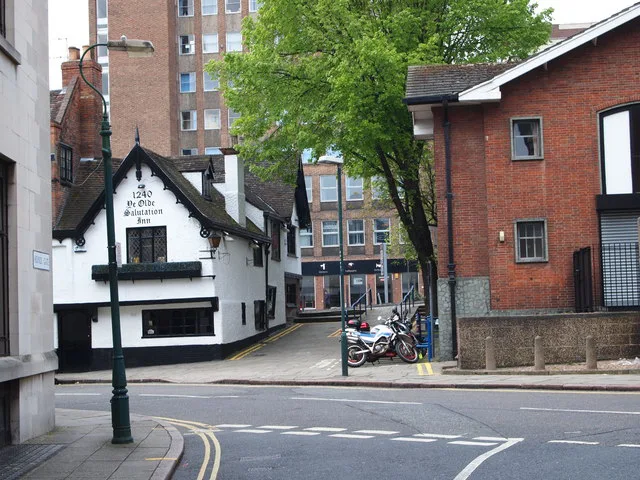
The Salutation on Hounds Gate is a brick-fronted pub with an older jettied timber block behind it and a fine crown-post roof over part of the structure. Tree-ring dating on the site's timbers has been reported as giving a felling range of about 1432 to 1440, which would make the roof genuinely fifteenth century rather than sixteenth-century as sometimes listed.
The cave cellars beneath it are older than the standing building, because the foundations block an original entrance. The popular ninth-century date for those caves is not proven, and a public house on the plot is recorded by 1414 under a much longer name than the sign carries today.
So the Salutation's case is architectural: it has the most convincing medieval roof of the three even if its painted 1240 date overreaches. It is a rock pub these days, with a jukebox and a wide drinks range, which makes it the liveliest of the three in the evening and the least reverential about its own history.
The Bell Inn, Angel Row
The Bell on Angel Row, a minute from Market Square, is the most conventional pub interior of the three: several snugs around a larger bar area at the back. Its painted date of 1437 sits comfortably with the tree-ring testing of its timbers, which places construction in the 1420s, making it the best-supported claim of the trio.
That matters because it reframes the question. The Bell is not the oldest site in Nottingham, but it may be the oldest surviving pub building of the three, which is the claim most visitors actually mean when they ask.
It is also the easiest to use on a day out: central, straightforwardly a pub, and with hand-dug sandstone cellars under the building. If your interest is timber and snug rooms rather than caves and theatre, start here.
How to weigh the claims
Score each pub on three counts: the site, the standing structure and the documentary record. The Trip wins on site drama and loses on verified antiquity; the Salutation wins on medieval roof carpentry and loses on its cave date; the Bell wins on timber dating and loses on glamour.
The archaeological reading, set out by specialists who have studied all three, is that the 1189 date looks like a legend attached in the early twentieth century to tie the inn to Richard the Lionheart's coronation year. That does not make the Trip modern, but it does mean the famous date is storytelling rather than evidence.
If someone tells you the answer is settled, they are probably talking about a different question from the one you asked. Treat all three painted dates as starting points, not verdicts.
A short crawl between the three
Start at the Bell on Angel Row, just off Market Square, then take Hounds Gate for the Salutation a couple of minutes away. From there, cross Maid Marian Way and follow the signs round towards the castle, dropping down Standard Hill to Brewhouse Yard for the Trip.
The whole route is a comfortable walk of under fifteen minutes end to end, which makes it a sensible way to fill an afternoon rather than a full day out. Do it in that order and you finish in the caves at the Trip, which is the right note to end on.
If you are coming back out of the Trip, a slightly longer loop past Castle Gate brings you to the Royal Children, a timber-framed pub with a history of its own. It is not an oldest contender, but it is a good fourth stop and a natural way to extend the walk.
Where to drink nearby beyond the oldest three
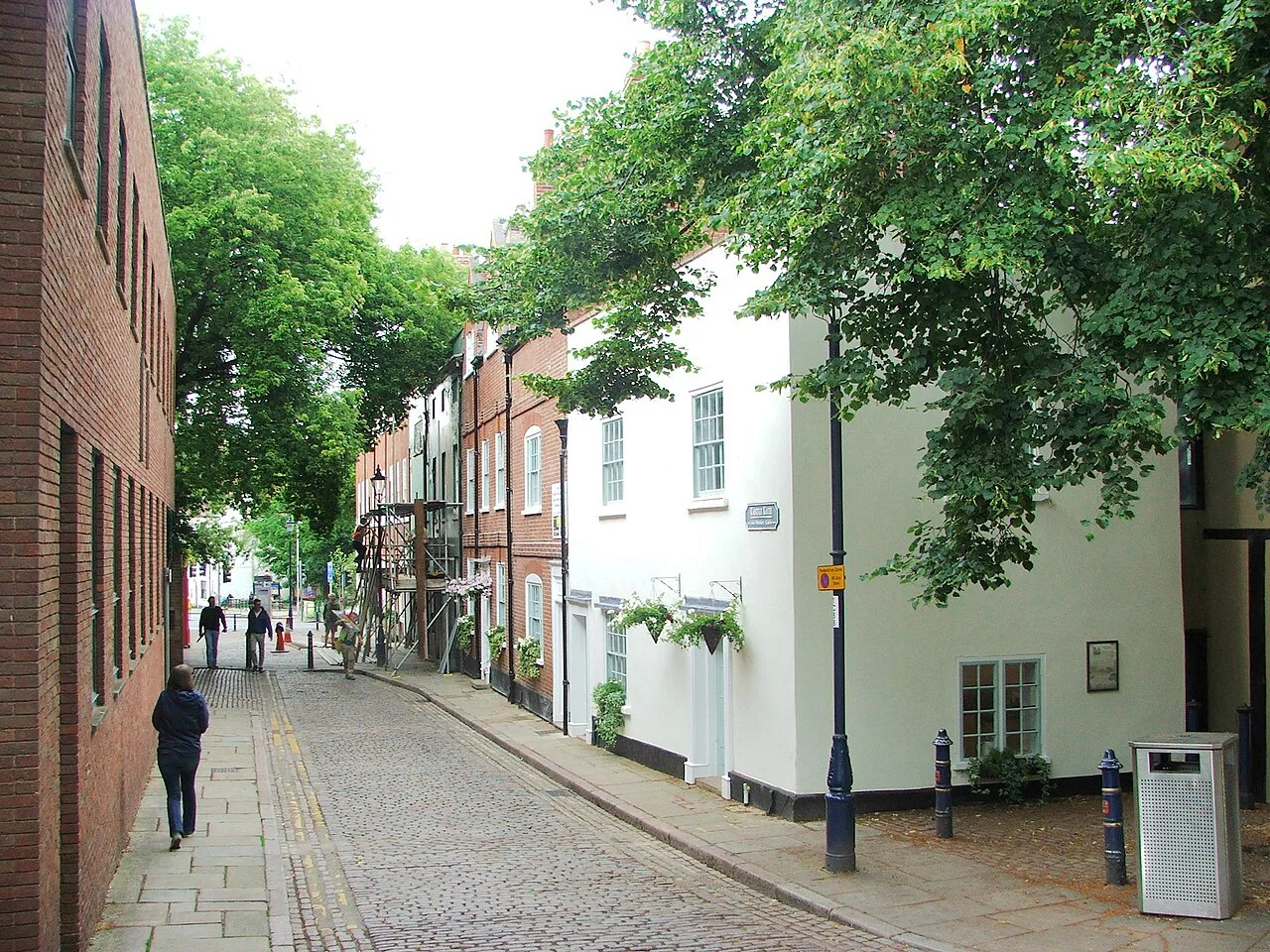
The Royal Children near Castle Gate, a short detour from the Trip, is named after the children of Queen Anne and Prince George of Denmark, who took refuge in Nottingham in 1688. Its traditional timber frame and position by the castle make it a worthy addition to the crawl rather than a rival to the three.
It often serves Harvest Pale from the local Castle Rock brewery, which is a useful introduction to the city's own beer. If that side of Nottingham appeals, the wider scene is worth a separate look, and there is plenty of it to work through.
For outside drinking, the Trip's beer garden is the obvious stop among the oldest three, weather permitting. Other options around the city vary by season and by what is on, so plan a second choice in case your first is packed.
What to order at each pub
At the Trip, order the house Olde Trip ale, described as malty with a subtle sweetness, and treat the cave rooms as part of the experience. Food runs to traditional pub dishes including pies, with vegan, vegetarian and non-gluten options listed.
The Salutation is a rock pub with a broad drinks range, so it suits a round of lagers and cask beer more than a quiet contemplative pint. The Bell is a snug-and-session pub, best approached without a strict plan.
If a Sunday roast is part of the trip, the Trip advertises a Sunday roast as a regular fixture, so check whether you need to book and confirm serving hours before you set out, especially at weekends.
Practical notes: booking, food and dogs
Book ahead for the Trip at weekends and around Sunday lunch, since it is the one of the three that attracts visitors from outside the city. The Salutation and the Bell are more walk-in places, and a group of four or more should expect to look for space rather than reserve it.
Dogs are welcome at the Trip, which is worth knowing if you are walking the crawl with a dog. Opening and serving hours change with the season and holidays, so check the pub's own page on the day rather than relying on this article.
Carry some cash as a backup even though the pubs are set up for card payments, and be aware that weekend evenings in the city centre get busy with people who are not there for the history.
Which of the three gets your one pint?
If you want the photographs, the caves and the atmosphere, go to the Trip and drink Olde Trip ale under Castle Rock. If you want the most defensible claim to stand in a genuinely old building, make it the Bell on Angel Row.
If you have a whole afternoon, do all three in the order above and decide for yourself; if Sunday lunch is the point of the outing, book the Trip's roast before you go. Either way, you will be drinking in buildings where the argument is part of the pleasure.
Explore more Nottingham guides
Frequently Asked Questions
Why is it called the Ye Olde Trip to Jerusalem?
The name is usually explained by the pub's position beneath Nottingham Castle, where crusaders heading for the Holy Land were said to stop for refreshment; the 1189 date on the wall ties into that crusading legend. The name Trip to Jerusalem was in use by 1799, and an earlier licence in 1760 recorded the property as The Pilgrim, possibly after a religious sect that gathered in Brewhouse Yard. Treat the crusader story as tradition rather than fact.
How old is the Ye Olde Trip to Jerusalem?
The pub paints 1189 on the wall, though that precise year is difficult to prove, and the standing timber-framed structure dates to the seventeenth century, with later remodelling. The first clear record of it trading as a public house is a 1760 licence under the name The Pilgrim. The caves and cellars may include medieval fabric but have been substantially altered.
How old is The Bell Inn in Nottingham?
The Bell's painted date of 1437 fits closely with tree-ring dating of its timbers, which places construction in the 1420s. That makes its claim the best supported of the three when the question is about the surviving building rather than the site. It stands on Angel Row, a minute from Market Square.
What is the oldest pub in the Midlands?
There is no settled answer, and Nottingham's own case shows why: founding legends, surviving buildings and licensing records can each point to a different winner. The strongest local case for a surviving old building is the Bell, while the Trip's claim rests on a site tradition. Other Midlands towns have their own contenders, so compare the evidence behind each claim rather than the dates on the signs.
Sources
Notes on eating out in the UK
Optional updates when our city guides change.
You might also like
Continue reading
More guides you'll find useful