
Crown Posada, Newcastle: what to expect from the Quayside's Victorian pub

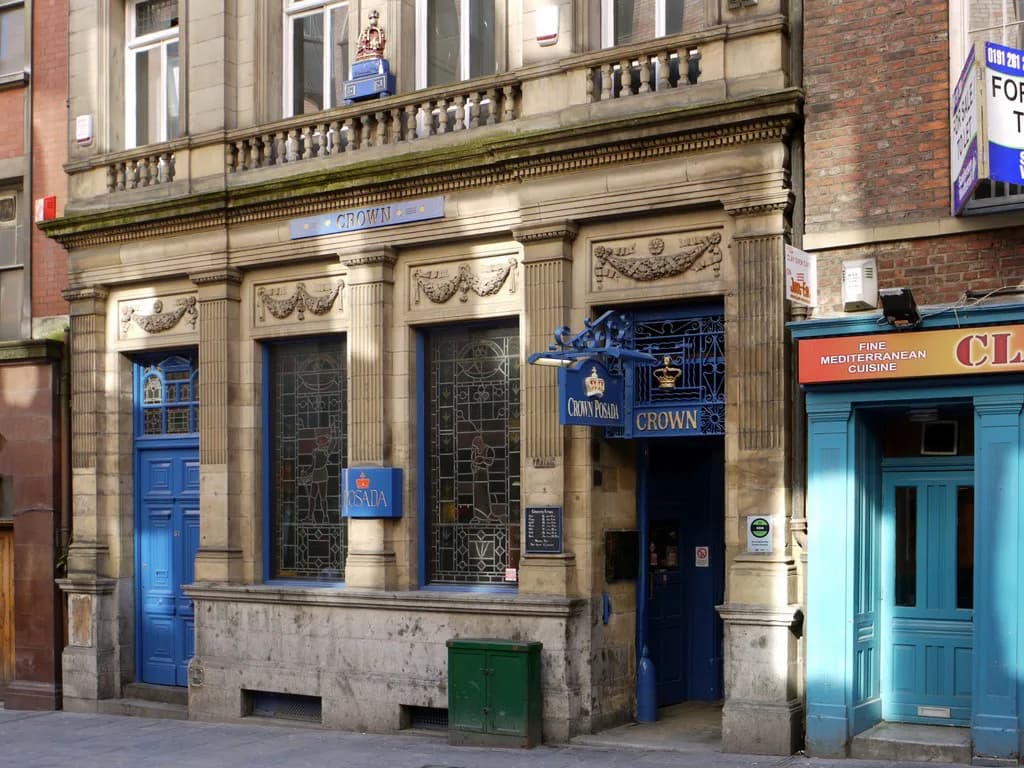
The Crown Posada is worth 30 to 45 minutes of a Quayside walk, not a whole evening: it is a small, narrow Victorian pub where the room itself is the main attraction. It sits at 31 The Side, Newcastle upon Tyne NE1 3JE, a couple of minutes from Grey Street and the Quayside. This guide covers where it is, how to reach it, what to look at inside, what to drink and how to slot it into a day around the Tyne bridges.
Where the Crown Posada is and how to get there
The address is 31 The Side, a steep, curving lane that drops from the city centre towards the Quayside. Manors Metro station is roughly a fifth of a mile away and Newcastle station about two-fifths of a mile, so either works if you are arriving by train or Metro. From Grey Street the walk is only a couple of minutes, which makes the pub an easy add-on to a city-centre stroll rather than a separate trip.
Come at it from the top of The Side and you get the full effect of the building sitting tight against its neighbours, with the river end of the street busy with traffic and footfall. If you are working through several pubs in the area, note that the Bridge Tavern is effectively on the doorstep, so the two can be done back to back.

What kind of pub it is
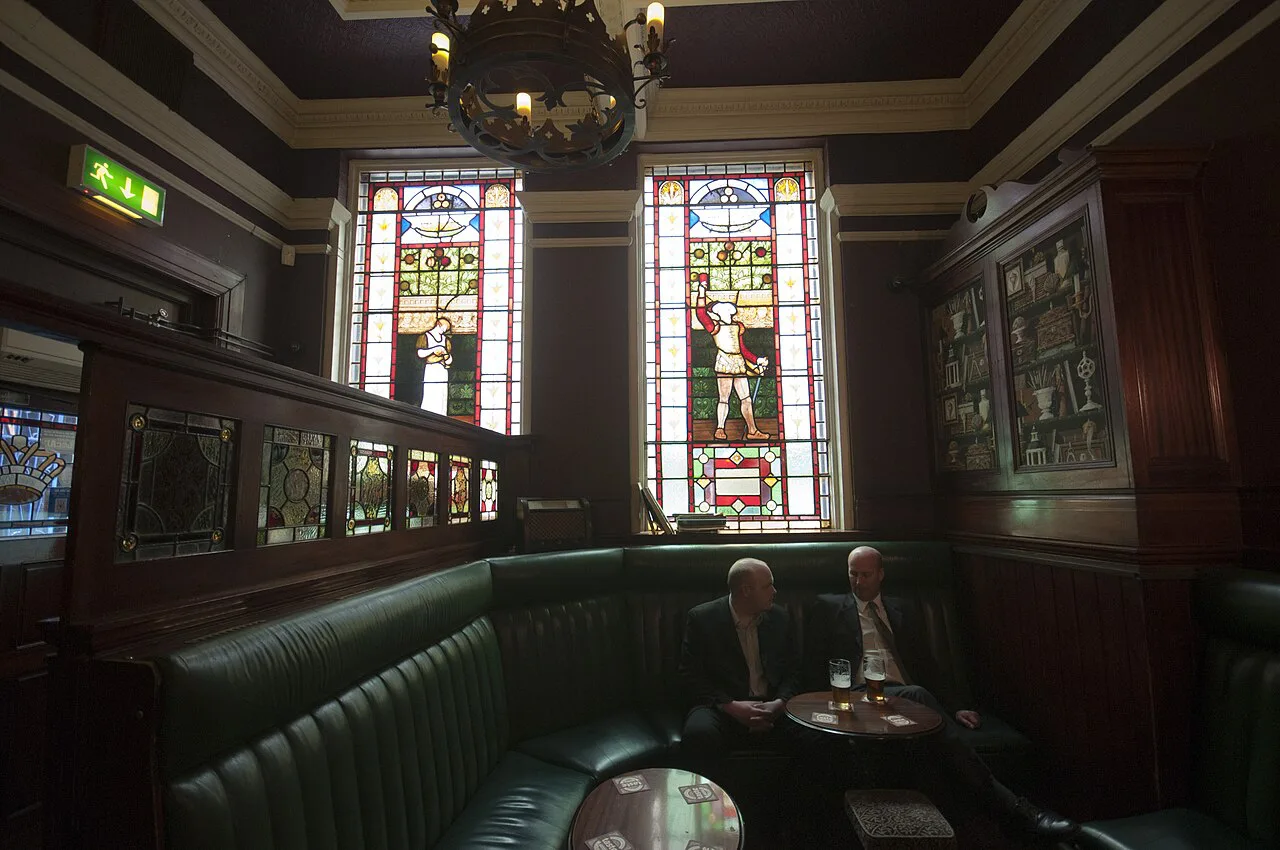
This is a Grade II listed building with a Victorian exterior, an elaborately panelled entrance and original stained glass, and it is a narrow room rather than a sprawling bar. Treat it as a drinking pub with heritage value first and a place to eat second. The compact footprint is exactly why it rewards a short, focused stop: you go for the fabric of the building and a pint, not for a long table and a three-course meal.
Because the room is small, groups of more than four or five will struggle to stay together at busy times. If your plan depends on sitting down as a party, build the visit around the quieter part of the day and keep the pub as one stop on a crawl rather than the base for the whole afternoon.
What to look for inside
Start with the entrance: the panelled doorway and the stained glass are the details most people walk straight past. Inside, the preserved Victorian interior is the draw, and the pub is known for a pair of Pre-Raphaelite-style artworks. Look up and along the bar rather than only at your glass, because the interesting material is on the walls and in the joinery.
A record player is part of the furniture here, and drinking here is still done to vinyl rather than a piped playlist, as regulars have long noted. That detail tells you the atmosphere is deliberate: low-key, conversational and a bit old-fashioned, which suits a daytime visit better than a loud evening session. If recorded music and a quiet corner matter to you, go earlier in the day.
The pub was among 33 British pubs featured in a photography book on great pubs, a useful signal of how the interior is regarded rather than a reason to expect anything grander than a small city boozer. Take the building on its own terms and it delivers; expect a large, polished venue and you will be disappointed.
Beer and drinking
Cask ale is the reason to stand at this bar: the pub is known for well-kept beer with a changing guest list alongside regular local brews, including beers from Allendale and Hadrian Border in recent years. Ask what is on and how long it has been on, because in a small pub with a short turnover the freshest cask is the better pint. If you want a longer, more varied session, plan the rest of your drinking elsewhere.
For a wider choice of beer, Wylam Brewery is the obvious name in the city, and it is a different kind of visit: a modern brewery stop rather than a Victorian pub parlour. Pairing the two gives you the old and the new in one day without either feeling like a compromise. The Free Trade Inn, further along the river, is the other classic stop if your crawl is following the water rather than the streets.
How long to allow and when to go
Allow half an hour if you are ticking off the interior and having one pint, or 45 minutes if you want to settle in and read the room. The trade-off is straightforward: daytime gives you elbow room and a clear view of the stained glass, while evening brings the buzz and the crowd that makes the pub feel alive but leaves little space to stand.
If the room is packed when you arrive, walk five minutes and come back rather than queueing on the pavement; the location makes that easy. The nearest alternatives are a short hop away on the same Quayside stretch, so a full pub does not mean a wasted trip.
Practical points before you set out
The pub serves food, but this is not a restaurant and the menu is not the reason to come; check what is available when you arrive and do not build a meal around it. Opening hours and food service times are not published in a single fixed place, so check the pub's own website or phone ahead on the day, especially for a Monday or a bank holiday. There is no charge to walk in, as you would expect of a city pub.
Do not treat older stories about the pub's origins, including the Spanish sea captain tale, as established history; they are legend rather than record. If you want the documented picture, look at the listed-building description and the pub's own material. That kind of checking takes two minutes and saves you repeating a tall tale at the bar.
Nearby for the rest of the day
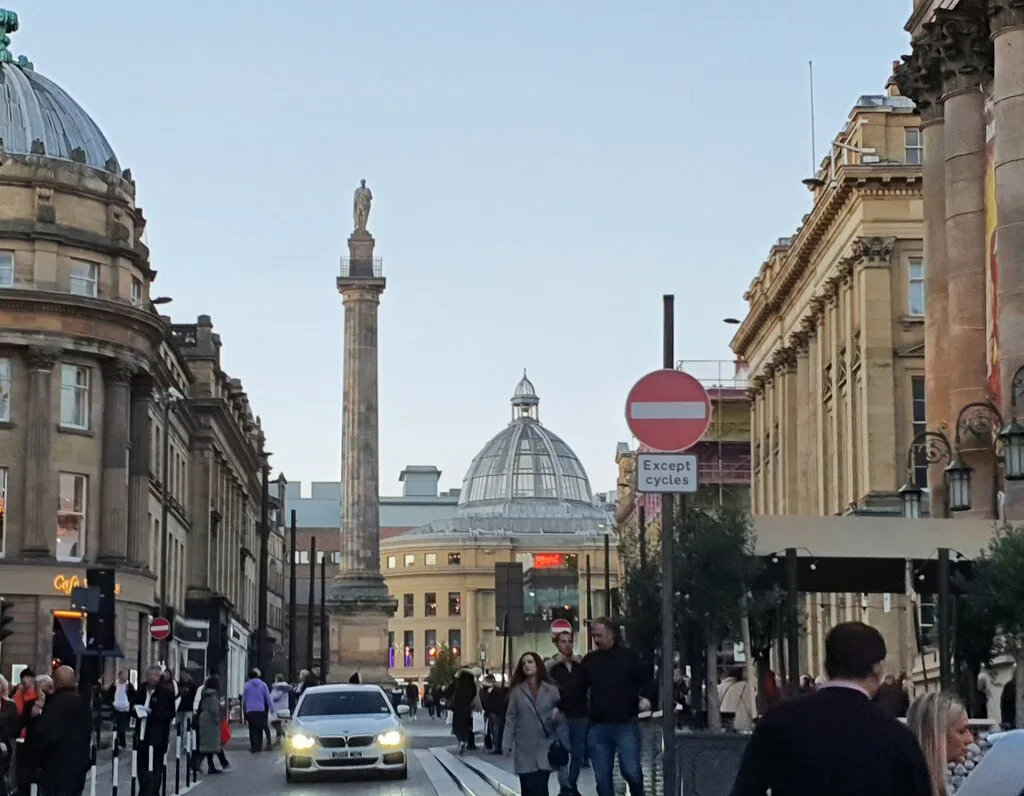
Grey Street is a couple of minutes uphill and gives you the grandest Georgian streetscape in the city, while the Quayside and the Tyne bridges are a few minutes downhill. That puts the Crown Posada at the hinge of a natural loop: streets first, river second, pub in between. Build the walk around that and you will not need a bus.
If you are making a beer-led day of it, Anarchy Brew Co and Tyne Bank Brewery are the other city names worth knowing for a taproom-style stop. There is no need to do all of them: pick one historic pub and one modern brewery and you get a genuine sense of how Newcastle drinks now.

Is the Crown Posada worth the detour?
Yes, if you want a proper Victorian pub interior and a well-kept cask pint within a few minutes of Grey Street and the river. Go for one drink at a quiet hour, look at the entrance and the glass, and move on before the evening crowd arrives. If you came for a long meal or a big group table, choose somewhere else and use this as a stop on the way.
Explore more Newcastle guides
Frequently Asked Questions
What does the name Crown Posada mean?
The name is usually explained through a local legend about a Spanish sea captain who bought the pub for his mistress, where Posada means an inn in Spanish. That story is not documented history, so treat it as a tale told about the pub rather than a fact you can rely on.
Is the Crown Posada the oldest pub in Newcastle?
It is often described as one of the oldest in the city, but claims about rankings and founding dates vary between accounts and should be checked against the listed-building record and the pub's own material before you repeat them. The building's Victorian character is not in doubt; the exact age is the uncertain part.