
The Parrot, Canterbury: What to Expect at the Historic Church Lane Pub

The Parrot is worth a visit for the building as much as the beer: it is one of the oldest buildings in Canterbury, a medieval hall house on Church Lane just inside the old city wall. Allow 30 to 45 minutes if you are only looking and having a drink, or a couple of hours if you are staying for a meal in the first-floor room. This guide covers where it is, which architectural details to look for, how to walk there and what to expect of the food and drink.
Where The Parrot is in Canterbury
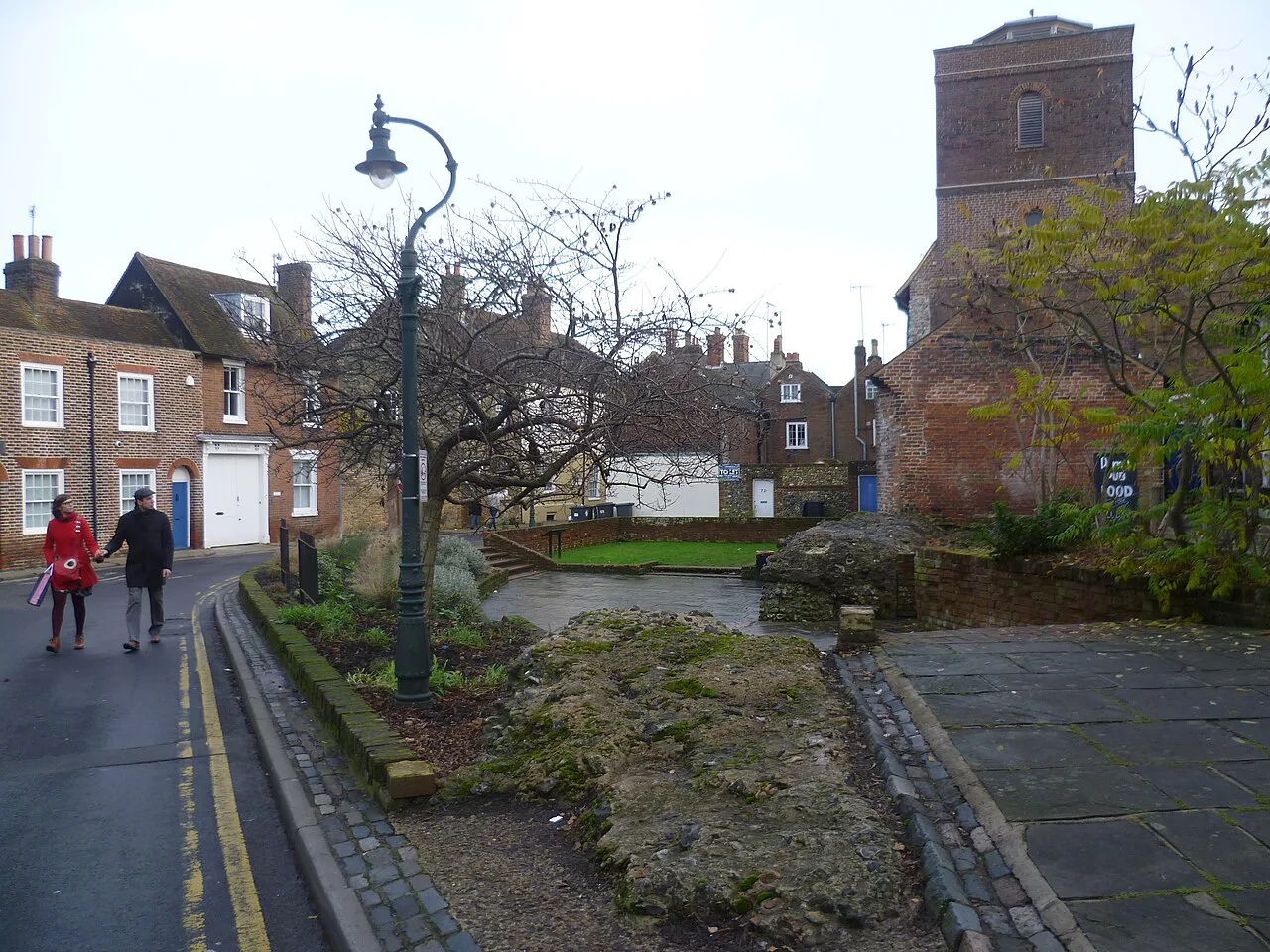
The pub stands at 3-9 Church Lane, a short step from the city centre and just inside the line of the Roman wall. That address explains a quirk of the building: the number spans a whole terrace because the hall house once held seven separate dwellings. The wall itself can still be seen across the public garden at the front, which is the easiest orientation point if you are coming from the main shopping streets.
It is close enough to the cathedral quarter to fold into an hour of wandering, but it sits off the busiest lanes, so the approach is quieter than the High Street. If you are planning a day around the city's pubs, it pairs naturally with a second stop and you can compare options in the wider Canterbury guide.
What the building actually is
The Parrot is a Wealden hall house, a type of medieval timber building with an open central hall and jettied ends. The Canterbury Historical and Archaeological Society dates it to the 15th century and calls it the oldest pub in the city, and it is listed at Grade II. It was originally St Radigund's Hall, named after the monks of St Radigund at Bradsole near Dover, and it spent time as a Girls' club and an art college annexe before becoming a pub.
The date of the building is one place the accounts diverge: some local histories push it back to a 14th-century origin, while the historical society settles on the 15th century. The naming is the more interesting point. The pub traded as Simple Simon's until 2008 before being renamed, and local history notes the Parrot name was revived on a rumour without documentary backing — the pub has since described itself as a Shepherd Neame house, which is the Kent brewer whose beer is now on the bar.
What is not in doubt is the survival of the structure. It was condemned as unfit for habitation in 1937 and slated for demolition, but original details were uncovered during the process and it was restored instead. That rescue is why you can still read the medieval carpentry today rather than looking at a Victorian replacement.

What to look for from the street
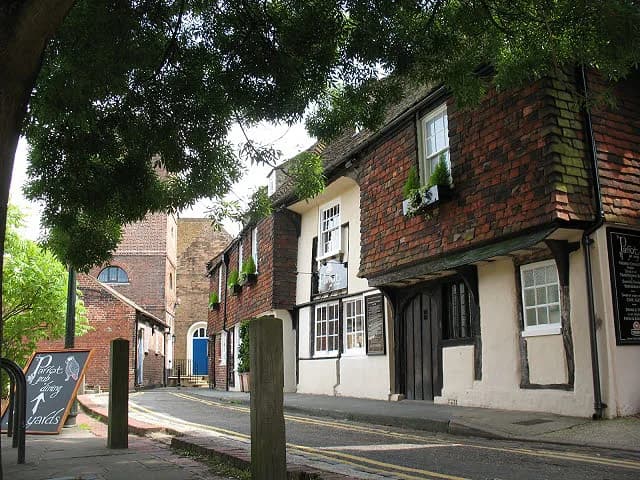
Start on Church Lane and read the frontage before you go in. The hall house shows jetties at each end, where the upper floor oversails the ground floor, with a recessed centre section marking the open hall. The ground floor is stuccoed and the upper storey tile-hung, a mix that makes the building look slightly patched-together, which is part of its charm.
Look at the main entrance for a restored four-centred door with plain spandrels, and note the two original doors with peep-holes, one carved with quatrefoils. Walk round to the courtyard if it is accessible: the brick infill between the timber frame is visible there, along with roof lines suggesting a lost building set at right angles to the hall. The historical society notes the exterior can be viewed at any time, so the frontage is fair game outside opening hours.
What to see inside
Inside, the prize is the roof. Go up to the first-floor restaurant and look up at the Crown posts and brackets, the medieval framing that the historical society singles out as the finest feature of the building. The same room is the main dining space, so the best way to see it is to book a table rather than peer round a door.
Downstairs, keep an eye out for the grey Parrot that gives the pub its name, and for the surviving doors with their peep-holes. Entry is for customers only, which is the one honest catch of a visit: you cannot treat the interior as a free museum. If you only want the architecture, budget for at least a drink at the bar.
Getting there and how long to allow
On foot is the sensible way. Church Lane is a short walk from the city centre, and the pub sits within the ring of streets inside the old wall, so you can reach it from the cathedral end without a bus. The city is compact and pedestrian-friendly, but confirm any bus or parking arrangements before you travel, because the pub's site does not spell these out.
For time, think in three tiers. Fifteen to twenty minutes covers the exterior and a look at the frontage; half an hour to 45 minutes adds a drink and a proper look at the ground floor; two hours or more means lunch or dinner upstairs under the roof. The building rewards slowness, so if you are squeezing it between other stops, do the outside properly and save the interior for a return.
Food and drink at The Parrot
The pub describes itself as a dining pub and serves up to six real ales at the bar, including beer from the Kent brewer Shepherd Neame. The menu runs from nibbles and doorstep sandwiches at lunch to a fuller evening meal, with plenty of vegan and vegetarian choices. The kitchen says it uses seasonal produce sourced locally where possible.
Sunday is the day to plan around: roasts are served from noon until they run out, so an early sitting is the safer bet if the roast is the reason for coming. For the rest of the week, the pub publishes separate opening and food-serving times on its site rather than stating them in one line, so check those before a late-afternoon walk. It is a sound choice if you want a proper sit-down meal with local beer; less so if you want a quick, quiet pint at the bar.
Booking and the first-floor room
Book ahead for dinner and for Sunday lunch, when the first-floor room fills with people who have come for the roasts and the roof. The same space doubles as a function room, seating around 40 and holding up to 55 standing, with original oak-beamed ceilings; if you are organising a group meal, ask about it directly rather than turning up with a party.
Menus, table booking and any seasonal changes are published on the pub's own site, which is also where to look before making a special trip. No menu prices are published in a form this guide can quote, so check the current menu and ask about cost when you book rather than budgeting from old figures.
Who it suits, and the nearby add-on
The Parrot suits history-minded drinkers and diners who want a meal in a room with medieval carpentry overhead, and anyone building a Canterbury day around old buildings rather than shops. It is less suited to a fleeting pint or to a group that wants a plain, modern bar. If you are weighing up several pubs, the Millers Arms, Canterbury and the cherry Tree Canterbury are useful comparisons for a different feel.
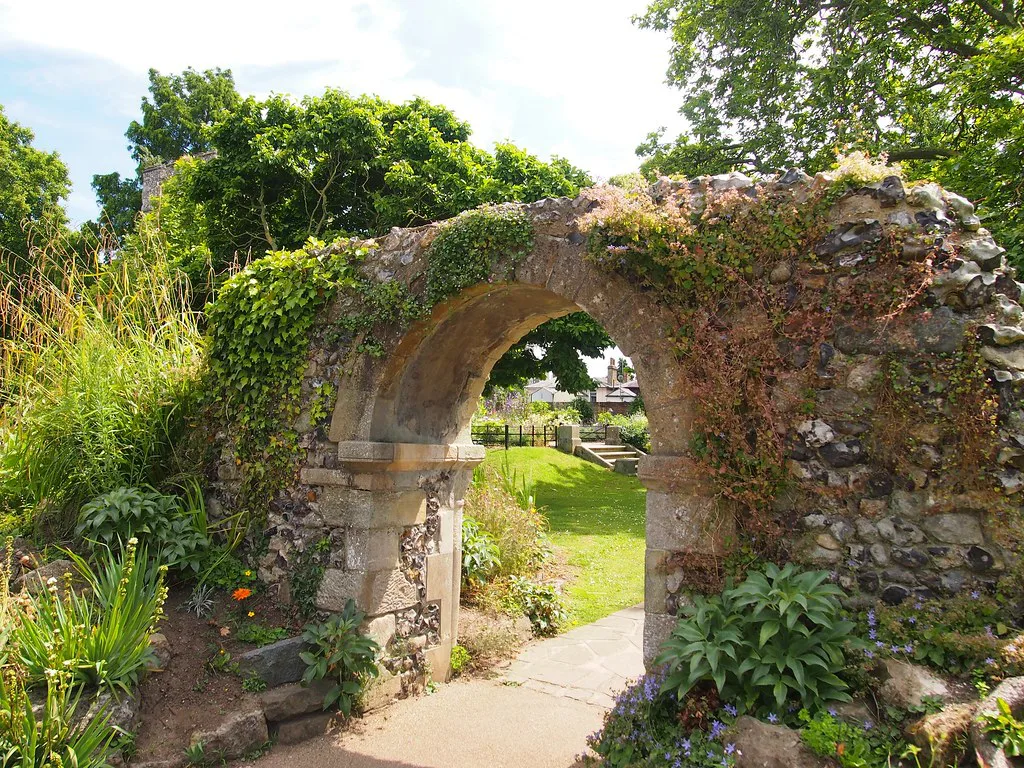
The obvious add-on is right outside: the stretch of city wall and the public garden in front of the pub, which takes ten minutes to walk and gives you the building's original setting. Pair that with a drink inside and you have a compact, satisfying stop rather than a full afternoon.
Is The Parrot worth seeking out?
Yes, if you want architecture with your lunch. Book a first-floor table, arrive early for the Sunday roasts from noon, and spend ten minutes on Church Lane reading the frontage before you go in. Skip it if you only want a fast pint; the customer-only interior makes it a poor bet for a quick look round.
Explore more Canterbury guides
Frequently Asked Questions
What did The Parrot in Canterbury used to be called?
It traded as St Radigund's Hall for most of its history, named after the monks of St Radigund at Bradsole near Dover, and later as Simple Simon's until 2008. The Parrot name was revived after a local rumour that the building had once carried it, although the archive notes no documentary evidence was found.
Is The Parrot in Canterbury dog friendly?
The pub's site and the historical records do not set out a dog policy, so ring ahead before bringing a dog. Ask when you book a table, since any rule may differ between the bar and the first-floor dining room.
Where can I park near The Parrot in Canterbury?
The pub does not publish parking arrangements, and Church Lane sits inside the old wall where space is tight. Plan to arrive on foot from the city centre and check the city's own parking information before you set off.