
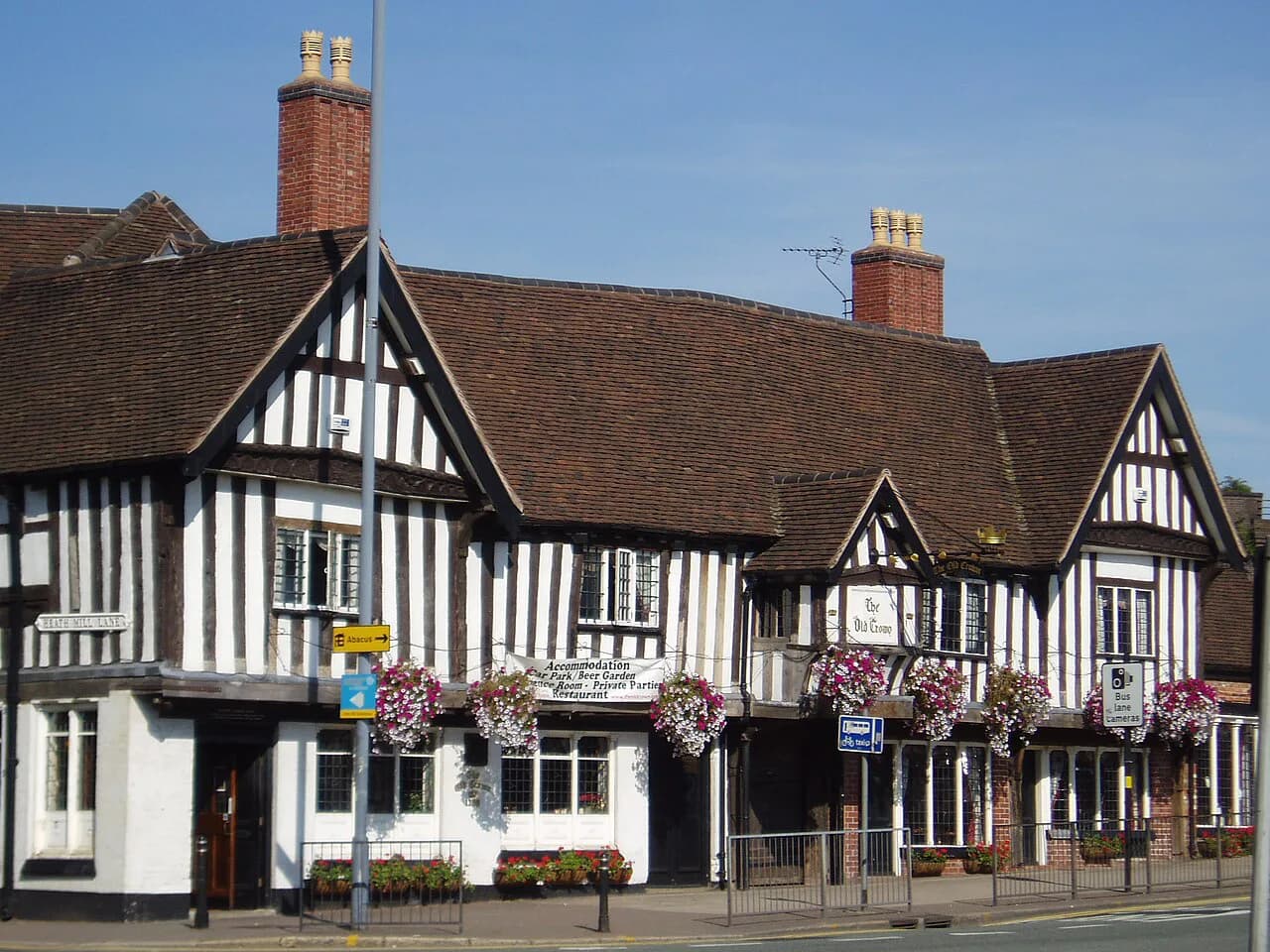
The Old Crown, Birmingham: A Visitor's Guide to Digbeth's Tudor Landmark

The Old Crown is the black-and-white timber-framed building on High Street, Deritend, in Digbeth, a short walk south-east of Birmingham's city centre. Its vaulted history runs from a guildhall and priests' house for the Guild of St. John the Baptist, built between 1450 and 1500, to a pub that trades today. This guide covers what it is, how to reach it on foot, which features to look at from the pavement, how much time to allow and where to check hours before setting out.
Treat it as a look-and-a-pint stop on a Digbeth wander rather than a full afternoon out. The building is the attraction; the pub is open in the background, and anything beyond that is best checked with the pub itself.
What The Old Crown is and where it stands
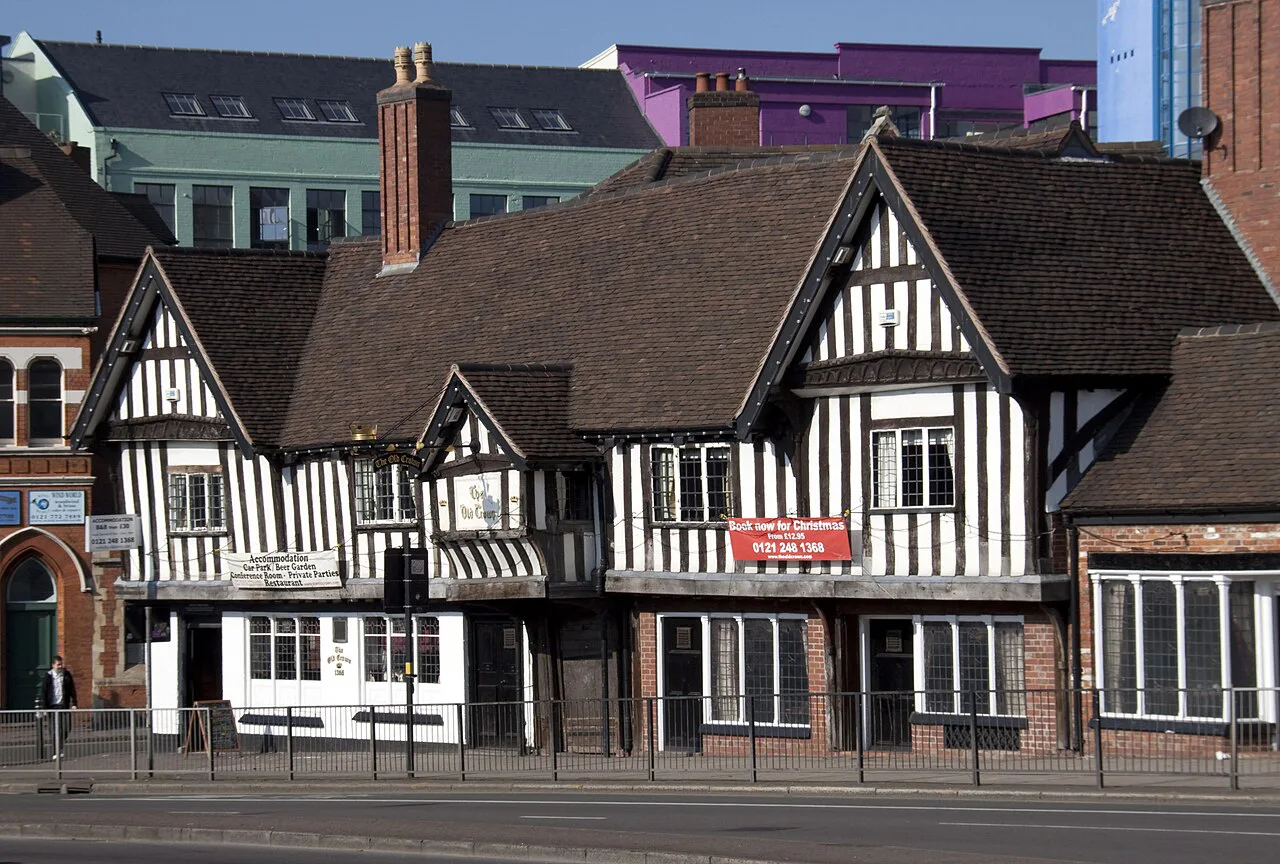
The building sits on High Street, Deritend, in Digbeth, the area south-east of Birmingham's central shopping streets. It is one of the few timber-framed survivors from before industrial Birmingham, and its black-and-white façade with jettied upper floors and a central gabled oriel is the landmark people come to see. The pub trades from the same address, and its own site is the place to check hours, food and events.
Be careful what you book. Digbeth also has a separate budget hotel using the Old Crown name on the same street, with its own check-in times and room rates. None of that applies to the pub; if you want a drink or a look at the building, you want the pub on High Street, Deritend.

How to get there from the Bullring and Moor Street
Walk it. The pub is a short walk south-east of the Bullring and Moor Street station along the Digbeth road, which makes it an easy add-on to a city-centre morning. The walk is flat and signposted by the street itself, and it puts you in Digbeth's creative quarter rather than a tourist strip.
Buses and coaches run along the Digbeth corridor, and the coach station is in the immediate area, so a stop here fits a coach arrival or departure. If you are arriving by train and want a second pub within a short walk, the Wellington Birmingham on the city-centre edge makes an easy pairing.
What to look at from the pavement
Look up, not at the door. The jettied upper floors overhang the street, and the central gabled oriel is the feature that marks the building out from its neighbours. The black-and-white timber framing is original in form and character, and the whole thing is small enough that a slow walk around the outside is the core of the visit.
The building is Grade II* listed, which puts it in a small group of nationally significant structures, so treat the exterior with a bit of respect. Stand back to take it in rather than crowding the door, and save the interior for a drink if the pub is open.
A guildhall before it was a pub
It did not start as an inn. The building served as a guildhall, priests' house and school for the Guild of St. John the Baptist of Deritend, with construction dated to between 1450 and 1500 and some evidence pointing at 1492. That civic origin explains the generous façade and the central oriel, which are grander than a simple alehouse would need.
The shift to a pub came later. The property passed into private hands in 1589, and the first record of it being used as an inn dates to 1626, with further confirmation in 1666. Treat the popular 'oldest pub in Birmingham' tag as a claim worth understanding rather than a fact to quote; the dated history is the more interesting story.
Leland, Rupert and the fight to save it
In 1538 the antiquary John Leland passed through and described High Street Deritend as a pretty street of smiths, cutlers and merchants. He noted a timber mansion house hard by, now identified with The Old Crown. It is a neat way of seeing the building in its street context rather than as a lone exhibit.
During the Civil War the surrounding area became a battleground when Prince Rupert led a raid on Birmingham in 1643. No physical scars remain, but the raid gives the timber walls their most dramatic chapter. Later the building was split into homes, then came under demolition pressure, which local antiquarian Joshua Toulmin Smith fought in 1851, 1856 and 1862.
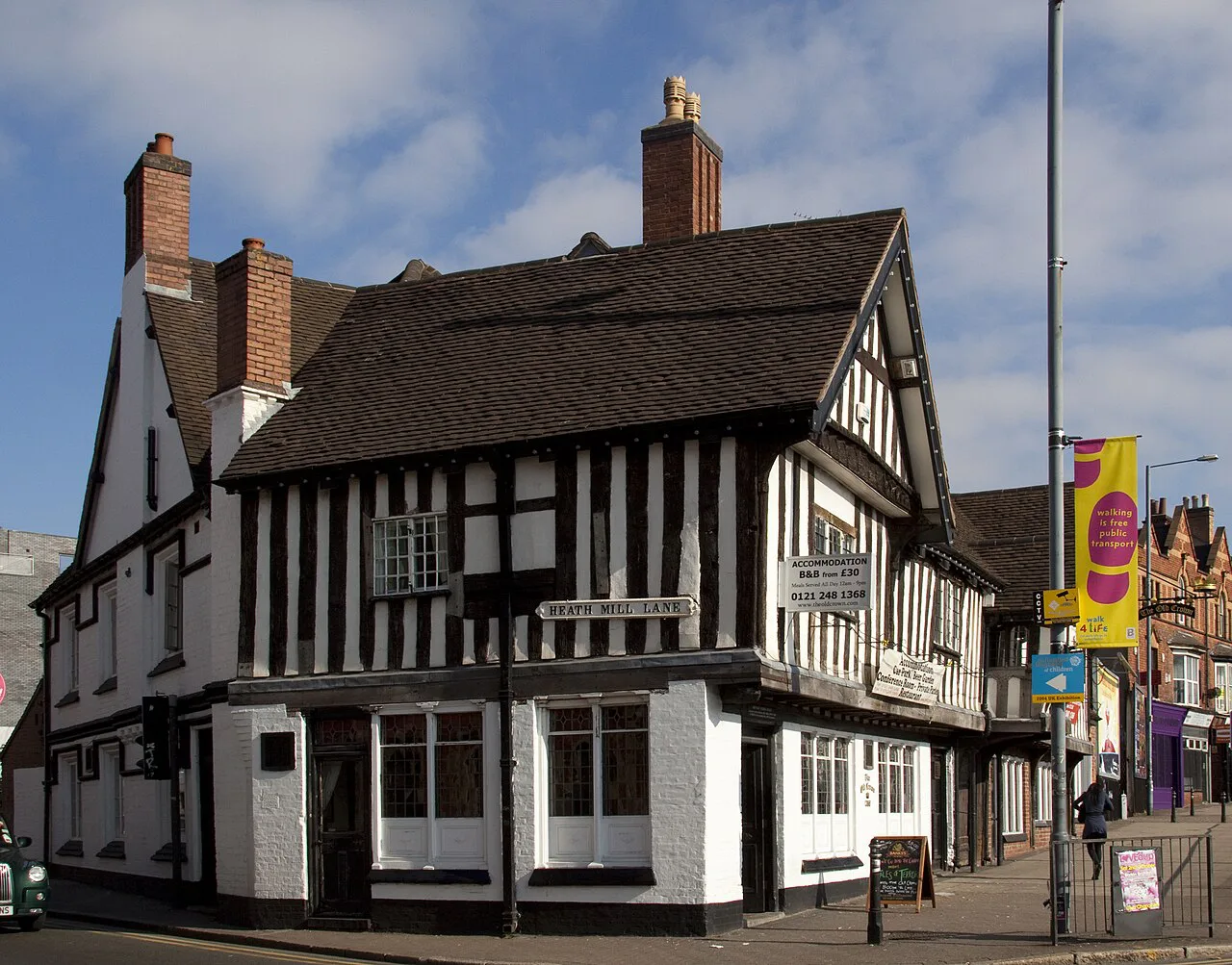

The Old Crown today in Digbeth's creative quarter
The surroundings have changed more than the building has. Digbeth is now known for street art, independent eateries and a busy nightlife scene, so the pub fits naturally into a wander rather than a standalone trip. Steer clear of treating it as a nightlife destination if that is not your thing; a daytime look and a quiet drink is the better plan.
For a second stop, Bartons Arms, Birmingham is an ornate Victorian pub within the wider city and a natural contrast to the Tudor frame here. If you would rather stay on foot in Digbeth, keep it simple: one building, one pint, and a walk back up the road.
Elsewhere in the city, the Woodman Birmingham and Shakespeare Inn Birmingham are options worth a look if you are building a pub day rather than a single stop. Neither is in Digbeth, so plan them for the city-centre end of your route.
How long to allow and when to go
Allow about twenty to thirty minutes for the building and a drink, or more if you are waiting on service. It is not a museum and there is no ticket queue; you are looking at a street façade and then a pub interior. Pair it with a walk around Digbeth's independent food and street art rather than making it the whole outing.
Weekday daytime is the calmest bet for seeing the building unobstructed. Evenings bring a different crowd, and the pub runs quiz nights, with the schedule and any ticket prices on its own listing rather than guessed.
Where to check hours, food and events before you go
The Old Crown's own site is where hours, kitchen times and event details belong, and its ticket listing carries quiz nights. Opening times are not published in the sources here, so check the pub's site or ring ahead. If you want a meal, settle that question before you walk down from the Bullring.
Is The Old Crown worth the walk to Digbeth?
Yes, if you are already heading into Digbeth and want to see a rare timber-framed survivor with a guildhall past. It is not a full afternoon out on its own, and the pub's own site is the place to confirm hours and food before you commit. Budget half an hour and let the building do the work.
Explore more Birmingham guides
Frequently Asked Questions
Is The Old Crown really the oldest pub in Birmingham?
The building is genuinely old, with construction dated to between 1450 and 1500, but it began as a guildhall, priests' house and school for the Guild of St. John the Baptist rather than as an inn. The first record of it being used as an inn dates to 1626. Treat the 'oldest pub' tag as a popular claim and enjoy the dated history instead.
Do I need a ticket to see The Old Crown?
No ticket is needed to look at the building from the street, and it operates as a pub rather than a paid attraction. Anything you spend is on food and drink inside, so check the pub's own site for current details rather than buying anything in advance from a third party.
How do I find it in Digbeth?
It stands on High Street, Deritend, in Digbeth, a short walk south-east of the Bullring and Moor Street. Look for the black-and-white timber frame with overhanging upper floors and a central gabled oriel. Be careful not to confuse it with the separate budget hotel using the Old Crown name nearby.